
A Love Letter to Cancer & Careers
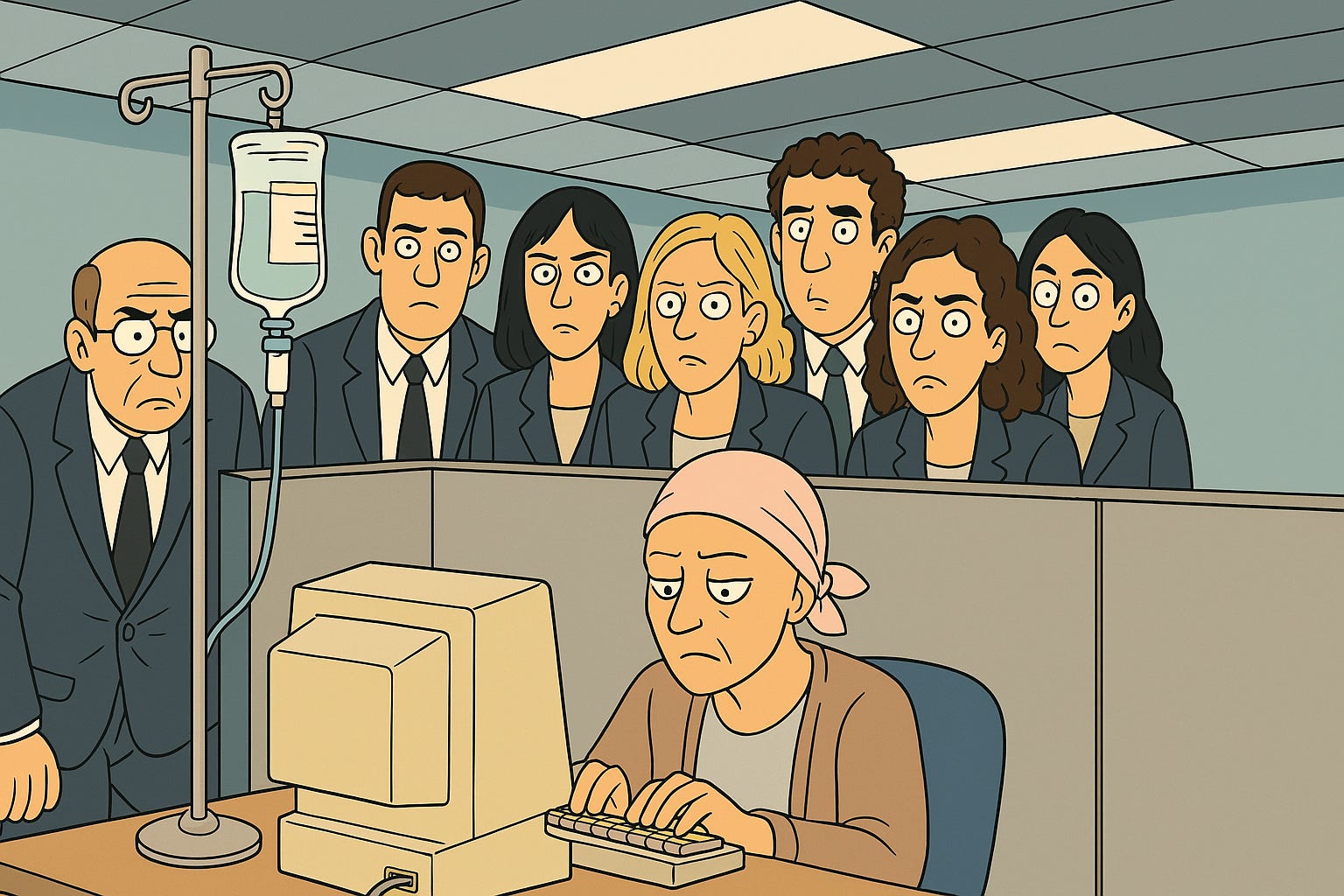
Let’s start with the obvious: Cancer patients work. And they want to keep working. But the workplace still doesn’t know what to do with us.
I’ve known the team at Cancer and Careers for over 20 years. I’ve watched them turn the whisper of a topic—cancer in the workplace—into a national conversation. And their 2024 survey proves just how far we still have to go.
The data speaks loudly. Nearly 90% of people diagnosed with cancer who kept working or tried to work during treatment had real concerns about how that diagnosis would play out at work. One in five weren’t sure whether they should tell their employer. Half were straight-up afraid to say anything at all.
So let me ask you—if you’re afraid to tell your boss you have cancer, what kind of culture is that?
We’re talking about a health crisis, not a character flaw. And yet fear of being treated differently, seen as less capable, or quietly pushed out persists. Women in particular? Even more so.
I lived this. I was diagnosed with brain cancer at 21. It nearly ended my career before it began. Disclosure wasn’t a decision—it was survival. And even then, I had to fight to prove I could still be productive. The system never gave me the benefit of the doubt. I had to earn it. While sick.
That hasn’t changed much. Younger people, especially those under 40, are still more likely to be afraid, more likely to struggle with mental health, and more likely to feel unsupported. Gen Z doesn’t tolerate fluff. They want workplaces that walk the talk. So why are they still dealing with silence and red tape?
Let’s talk benefits. Yes, most people reported having access to *some* benefits. But the moment you scratch beneath the surface, you see the cracks.
Half had sick days. Less than half had PTO. Only 20% could work remotely. A paltry 14% had access to accommodations under the Americans with Disabilities Act. Mental health? Just 11% had access to a workplace coach or counselor. You read that right—11%.
What about disability insurance? One in three said they struggled to access it. Women reported more trouble than men. Younger adults struggled more than seniors. If you think younger people have it easier because we have Slack and Zoom, think again.
Here’s a simple fact: knowing what your employer offers makes everything better. Those who understood their benefits felt more supported, had better mental health, better physical health, and were more likely to stick with their job. But most people don’t understand their benefits. And no one explains them. So we’re leaving people in the dark. On purpose?
Now let’s address the thing companies love to pretend isn’t a problem: culture.
Culture isn’t what your website says it is. Culture is how people treat you when you’re sick. When you’re vulnerable. When you can’t show up at 100% and you’re still doing your best.
In the survey, 90% said they *felt* supported. That’s good. But let’s not break out the cake and balloons just yet. One in ten still didn’t trust their employer. One in three said it was hard to ask for accommodations. And nearly everyone agreed companies could be doing more.
Want to know what matters most? People. The coworkers who scanned documents. The managers who told someone it was okay to take a break. The colleagues who said, “You're not a burden.”
Those moments matter. They stick with you. They help you heal.
So why don’t we teach people how to do that?
More than 70% of respondents said companies should train managers and teams to support coworkers with cancer. Younger people—again—felt this the most. And nearly three out of four said they’d be more likely to disclose their diagnosis if they knew their workplace had training in place.
Which leads us to the pledge. The Working With Cancer Pledge.
Over 90% of people surveyed said they’d trust a company more, and view it more favorably, if it had taken the pledge to support employees with cancer. That’s not performative. That’s policy. That’s leadership. That’s branding with a soul.
So here’s the challenge: What are you doing about this?
If you run a company, do your employees know their rights? Do they feel safe being honest? Do you support managers with tools and training, or just throw them into the deep end and hope they swim?
If you're in HR, is your benefits package written in English, or in legalese no one understands? Do you have a system that works, or one that frustrates the people who need it most?
And if you’re a cancer survivor reading this—you are not alone. The fear is real. The struggle is real. But so is the community behind you. We’ve been pushing for decades. We’re not done.
Cancer and Careers gave us the numbers. Now it’s time for action.
Because no one should have to choose between keeping their job and saving their life