
ASH2024: It Takes Two To Make A Thing Go Right
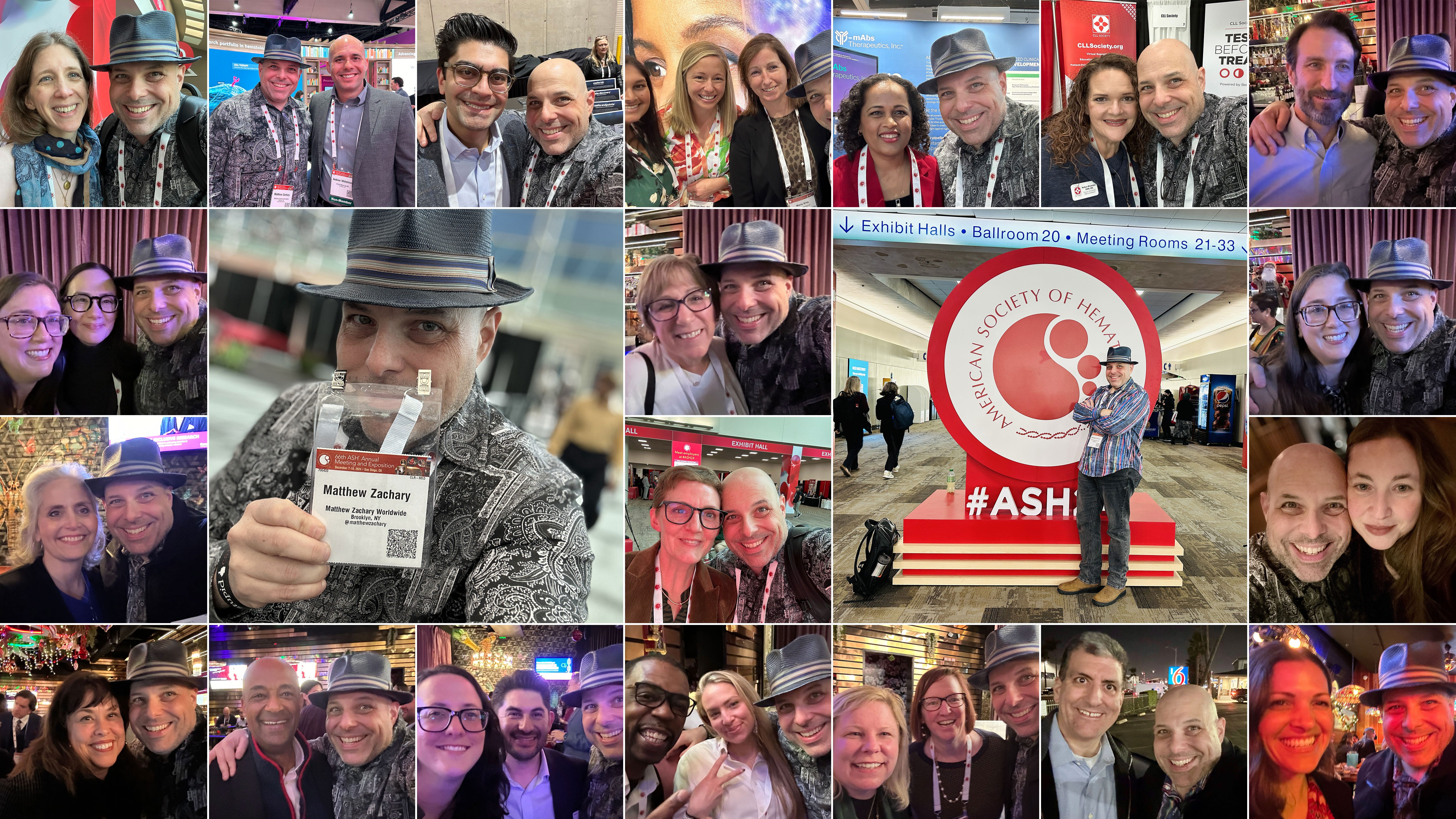
San Diego just wrapped up the 66th American Society of Hematology (ASH) Annual Meeting and Exposition—a dazzling display of cutting-edge science, medical jargon, bizarrely named tongue-twister, therapeutics, expectedly anachronistic ad campaigns, and, of course, the occasional awkward lanyard handshake.
I attended as press, armed with curiosity, caffeine, and a healthy dose of my traditionally sardonic skepticism, to see how this mega event balances progress in blood disorders with the realities facing actual patients, struggling nonprofits, and burned-out advocacy warriors like me.
Cancer Innovations Are Awesome, But Who's Paying?
The scientific breakthroughs this year were space-age Star Trek-level awesome. I'll turn to my medical media colleagues at Healio, MedScape, HCPLive, and others to give you the low-down on the multisyllabic science jargon, but huge strides were made in treatment from everything from Sickle Cell, multiple myeloma, CML, and others.
But we've all seen this movie before, and no one asked for Caddyshack II.
The ending? Sticker shock.
These treatments are incredible, sure, but they come with price tags that make luxury yachts look like bargain buys.
So, who foots the bill?
Will these therapies be accessible to the everyday folks who actually need them, or will they become yet another example of healthcare inequity? It's the billion-dollar (literally) question no one likes to ask too loudly in a room full of pharma reps in tailored suits.
ASH Could Have Done the Advocacy Pavilion Better
While I’d love to gush about an epic advocacy pavilion, there wasn't one. Instead, the majority of hardworking patient advocacy groups found themselves tucked into a small, cramped, and clustered area adjacent to the main action.
These are the people fighting every day to bridge the gap between cutting-edge science and the patients who need it most. But their placement made it all too easy for attendees to breeze past without fully engaging. For a meeting as influential as ASH, this felt like a missed opportunity to showcase the heart and humanity behind the science.
I also heard from several advocates who felt the same.
While they worked tirelessly to make the best of their situation, there was a collective sense that more thoughtful intention could have gone a long way. Other conferences, like SABCS and ASCO, have set strong examples of how to elevate advocacy to be front and center. Here’s hoping ASH can take a page from their book next year.
Advocates are the lifeblood of this ecosystem. Let’s give them the space—and respect—they deserve.
Where Are the Patient Voices?
While we're handing out gold stars, let's pause to look at the bigger picture. ASH is all about science—and that's great—but where are the patient voices? Sure, there were advocates in the exhibit hall, but is there a place for them in the core syllabus?
Patients are the real-world beta testers of all these fancy breakthroughs. They can tell you what it's like to live with blood disorders, navigate treatments, and deal with side effects that sound like rejected horror movie titles.
Imagine a panel where patients share how these innovations could actually impact their lives. It's not just heartwarming—it's essential. Do you want research that sticks the landing? Please bring in the people who live it every day.
Pharma: Less Flex, More Support
Let's talk Pharma.
Their presence at ASH is impossible to ignore. Towering booths. Swanky open lounge-ish things. Enough espresso to supply a small village.
And look, we get it. Pharma is critical for innovation, but the preening is getting out of hand. (Don't get me started on ASCO.) While advocacy groups hustle to fund basic programs, big business makes it rain at conferences.
Would it kill them to redirect a sliver of that marketing budget to advocacy? (Actually, I think that's non-compliant)
Nonprofits are the unsung heroes who bridge the gap between patients and the science that is supposed to help them. More support would be not only nice but also smart.
The Takeaway: Advocacy Shines, But Challenges Persist
ASH walks a tightrope between showcasing future possibilities and addressing current realities. Is this event about what's coming "someday," or what's actually happening "today"? For advocates, that distinction is enormous. We need to care for patients in the trenches right now while also preparing for tomorrow's breakthroughs. Ignoring one for the other? That's a recipe for failure.
The real magic happens when you tackle both fronts: fighting for better access to the treatments that save lives today while driving the innovations that could make those same treatments a footnote tomorrow. This balancing act is messy, complicated, and absolutely necessary. And if we don't do it, who will?
These trade shows are exhausting, energizing, reinvigorating, socially validating, and, more often than not, occasionally eyebrow-raising. IMHO, the advocacy pavilion stole the show, proving that when nonprofits are given the stage (and not shoved into a dark corner), their collective energy makes a statement, reminding attendees that there is a person at the end of the proverbial pill, and they come first.
The patient voice and the lived experience need to be front and center. The industry has always needed to check its priorities, hence, I assume, decades of endless reorgs, anyone?
And we all need to keep asking the uncomfortable questions about access and affordability. (Cough: Health equity)
At the end of the day, it's not just about the science.
It's about ensuring that the science translates into real-world impact. And for that, we need everyone—researchers, phPharmaadvocates, and patients—pulling in the same direction.
Until next year, ASH. Thanks for the steps, the swag, and the reminder that progress takes a village—and maybe a little less flexing.