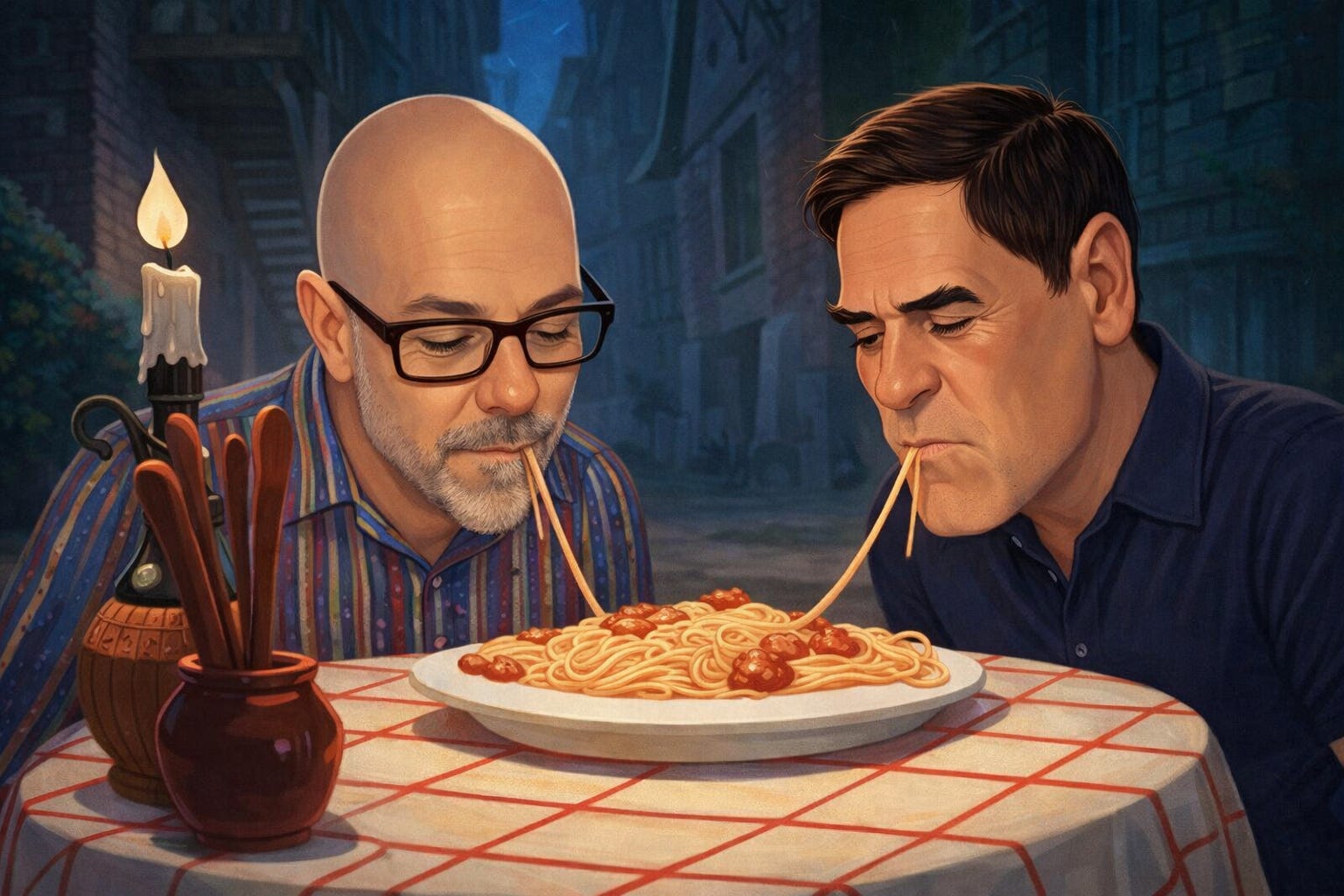
[WHAT IF?] Mark Cuban Ran for President on Healthcare?
Move over, culture wars. Step aside, AI. Enough with the weekly outrage hobby.
The next national election cycle will get shaped by volatility that pollsters and pundits keep struggling to explain. Across states, voters are sending signals that look less like ideology and more like self-preservation. They are reacting to the reality that one insurance letter, one pharmacy counter denial, or one specialist bill can wipe out a family faster than any macroeconomic statistic.
As lawmakers continue to fight over the fate of Affordable Care Act subsidies that lower costs for millions of Americans, it helps to say the quiet part out loud. The system is not failing by accident. It is doing what it was built to do. It moves money upward and pushes risk downward until patients absorb the impact.
America ties coverage to employment, pushes care behind deductibles, and then acts surprised when people treat the system like a threat. A diagnosis can erase savings. A denial can delay treatment. A billing error can spiral into collections. The incentives do not reward health. They reward friction.
Consider the state of the country right now. Premiums rise, deductibles reset, networks shrink, and people who did everything right still end up negotiating with algorithms. Medical debt drives bankruptcy and destabilizes households that looked fine on paper until the moment they needed care. Meanwhile, employers pay more every year, and workers still fear getting sick because the real cost sits outside the premium.
When voters experience that kind of instability, they do not need a partisan argument. They need an explanation for why their lives feel less secure even when they work harder, earn more, and follow the rules. Healthcare delivers that insecurity at scale, and it does so in every zip code, regardless of who you voted for.
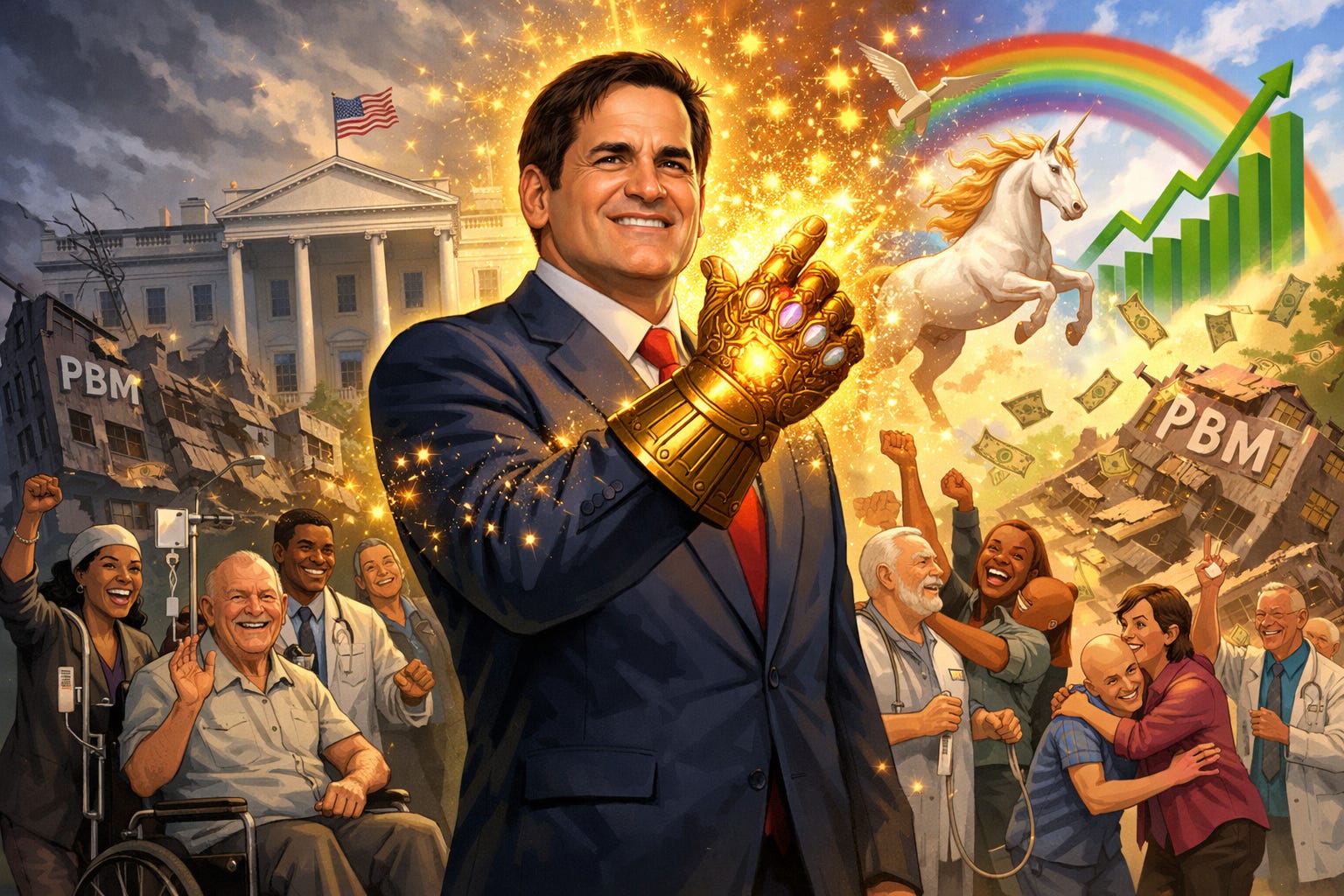
That is where Mark Cuban has an opening that no billionaire, governor, senator, or former cabinet official has ever taken seriously.
What if he ran for president on healthcare, and only healthcare, and treated it as the defining economic issue of American life. Not as a subsection of a platform, not as a debate segment, but as the entire theory of the case for why people vote.
The logic is simple.
A patient electorate already exists. It spans cancer patients, chronic disease patients, survivors, caregivers, and families who have watched someone they love get financially dismantled while trying to stay alive. This constituency does not sit neatly inside any party label, but it shares a common experience. The system treats people as billable events, and it punishes them for needing care.
Mark already understands the architecture of extraction in healthcare. He talks about middlemen, opacity, and incentives that reward denial rather than outcomes. He built businesses by spotting broken markets and forcing transparency. But criticism alone does not move incentives. Social media arguments do not change denial rates.
Complaining does not build power. Elections do.
Healthcare has never had a true single issue voter bloc with enforcement instincts.
The closest analog in American politics is not a think tank or a charity. It is a unified, disciplined electorate that votes the issue every time, funds itself, and punishes opponents without apology. Now imagine that infrastructure for patients.
We The Patients exists to build it.
Not as another advocacy group hoping for a meeting, but as a media, events, and activation engine designed to organize patients at national scale. We collect lived experiences, turn them into measurable patterns, and build a denial engine that makes the most hidden part of American healthcare visible.
Every delayed authorization, every step therapy trap, every network bait and switch, every surprise bill becomes evidence that voters and lawmakers can no longer ignore.
If you want to see why this can work, look at the incentives. Employers gain when employees stop falling out of the workforce due to medical chaos. Markets gain when medical debt stops destabilizing consumers. Pharma gains when patients stay on therapy and outcomes improve. Health systems gain when care plans stop collapsing under administrative friction. The only players that lose are the ones whose margins depend on confusion, delay, and opacity, including PBMs and any business model that profits from the gap between what a doctor orders and what a patient receives.
A Cuban campaign could turn that into a national movement with one clear promise. Patients will vote as patients, and candidates will either align with enforceable protections or lose elections.
Only after you build that electorate do the policy questions become obvious.
What if we “banned bankruptcy from cancer”. We cannot literally outlaw every financial failure in a market economy, but we can create consumer protections that make financial collapse far harder, far rarer, and far less profitable for the system. We can set enforceable guardrails around denials, timelines, transparency, navigation, and patient financial exposure at the moment of diagnosis, when vulnerability peaks and complexity explodes.
That is the downstream argument for a Patient Protection Act. It becomes the largest healthcare legislative opportunity since the Affordable Care Act, not because it copies the ACA’s structure, but because it corrects the ACA’s core weakness. The ACA expanded coverage while insurers kept enormous leverage through design, complexity, and denial. This time, the leverage shifts to patients through elections, enforcement, and consequence.
If Cuban wants to keep criticizing the system, he can. If he wants to do something that would change American politics and American healthcare at once, he can help build the first patient electorate in history, then run as its candidate.
The country has the anger. The states have the signals. The voters have the lived proof. What they lack is a leader willing to treat healthcare as the entire ballot question.
Still waiting for that invite to sit down and chat, Mark.