An Ode to My Bald Brother: Remembering Bryan Bishop
There weren’t many of us back then. And by “us,” I mean young guys with brain cancer who were bald, Jewish, professionally attached to microphones, and constitutionally incapable of discussing our own mortality without making an inappropriate joke. It was not exactly a booming demographic.
I met Bryan Bishop in 2009, not long after he was diagnosed, back when I was still running the I’m Too Young For This! Cancer Foundation and Stupid Cancer was just beginning to find its way around the country. I had been diagnosed at 21, 13 years earlier, when finding another young adult with cancer required roughly the same technology available to Lewis and Clark. There was barely an Internet. By 2009, people like Bryan and me could suddenly find each other without relying on an oncology nurse saying, “You know, there’s another young bald guy you might like.”
That’s more or less what happened, except the oncology nurse was Twitter.
After I learned that Bryan had died, I went back and listened to the episode of The Stupid Cancer Show we recorded together in November 2012. I wanted to hear his voice again. Somewhere in the middle of all the laughing and bullshitting, I heard the two of us telling the story of how we met, something I had long since forgotten.
As it turns out, a mutual connection put us together on Twitter, so I followed Bryan from the Stupid Cancer account.
Bryan, who had never heard of us, suddenly got a notification that “Stupid Cancer is now following you.” His reaction was essentially, “I can’t get away from cancer.” By the time he came on my show, I announced that we had since “fallen very much in love.” I called it a true love story between two bald men, then corrected myself: two bald Jews. Somewhere along the way, we started joking that if we put our bald heads together, we’d make an ass out of ourselves.
There was something about Bryan that immediately felt familiar to me. He had already figured out something I was still learning: cancer could become part of your life without becoming your personality. He had been broadcasting with Adam Carolla for years before brain cancer arrived and was already building a life with Christie, the woman he would marry. He didn’t become interesting because he got sick or discover a voice because he got sick. Cancer barged into a life already in progress, ate everything in the refrigerator, put its feet on the coffee table, and refused to leave.
The cancer culture we inherited was still drenched in battles, journeys, courage, inspiration, triumph and pink. LOTS OF PINK. Everybody was brave. Everybody was fighting. Everybody was expected to discover some profound new appreciation for sunsets. Meanwhile, a lot of us were scared shitless, pissed off, bored, horny, infertile, broke, and wondering why every goddamn inspirational cancer story seemed to involve climbing a mountain.
Bryan understood that humor wasn’t a failure to appreciate the seriousness of cancer. It was one of the ways you survived its seriousness. You could be terrified and funny, grateful and furious. You could acknowledge that you might die without spending whatever time you had left rehearsing your own funeral. Bryan never let cancer define him. He let it inform him. I don’t think I realized then how much that distinction would shape my own life.
Listening to that old interview now is strange. I was 38. Bryan was 34. We’re bullshitting about brain tumors, marriage, sperm banking, Vegas, and Howard Hughes. We sound impossibly young to me now, which is irritating because at 38 I distinctly remember believing I was approximately 700 years old.
What I keep coming back to is Bryan talking about the future. He was getting MRIs roughly every 3 months and knew how easily life could become a series of temporary reprieves. Get the scan. Wait for the scan. Exhale. Repeat. Pretty soon you’re waiting for the next result before buying the house, getting married, having the kid, getting the dog.
“Life is for the living,” he told me. He didn’t want to look back 3, 5, or 10 years later and realize he had wasted that time being hesitant.
What’s renting space in my head today is hearing Bryan talk about that future, not yet knowing that he and Christie would one day become parents to a daughter named Tessa.
Bryan and Christie were engaged when he was diagnosed and married after he finished radiation, when he was still, in his wonderfully clinical terminology, “pretty messed up.” During our interview, I called Christie his better half. Bryan immediately asked, “You’re talking about my wife, right?” because apparently even a malignant brain tumor cannot disable the Jewish husband’s constitutional obligation to make that joke.
Then he got serious. “I cannot overstate how important she is to me and how great she is.” He talked about everything she had carried with him and said something that sounds very different today: “When you’re the caretaker, you’re just as much in it as the sick person.”
Later in that same conversation, we talked about fertility. Bryan had banked sperm before radiation, and he and Christie were beginning to seriously discuss having a child. Again, he came back to the danger of spending your life worrying about “what if next.” They were ready, he said, to put the wheels in motion.
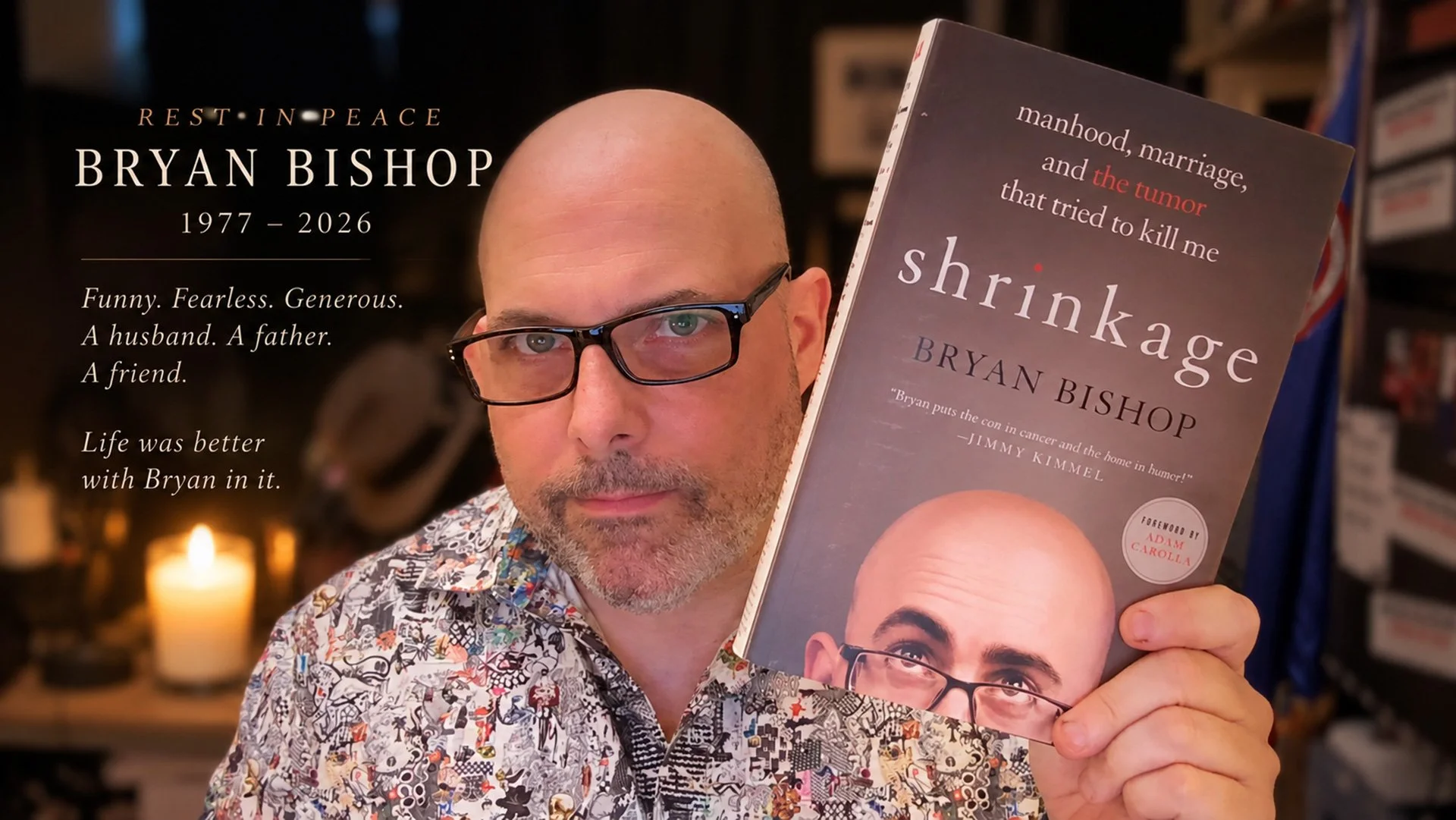
The man on that recording didn’t know Tessa yet. He was talking about her anyway. And then Bryan did what he said he was going to do. He lived. He and Christie became parents. He wrote Shrinkage: Manhood, Marriage, and the Tumor That Tried to Kill Me. He made radio, podcasts, and movies. He spoke, advocated, raised money, and made a lot of people laugh.
Our lives kept moving too. Careers, marriages, parenthood, podcasts, books, cancer conferences, occasional lunches, and the Internet becoming steadily more intolerable. The young adult cancer movement grew up around us, and eventually we did too, although I object to that characterization on procedural grounds.
Over the last 25 years, I have lost more friends and colleagues to cancer than I know how to count. Grief is not a frequent-flier program. Nobody gets Platinum Status because they’ve been to more funerals. But when you live in Cancerland long enough, you develop scar tissue because you have to. Eventually you learn how to absorb terrible news, show up for the people who need you, and somehow still remember that you have a conference call at 8am.
That isn’t callousness. It’s survival. But every once in a while, someone finds a way through the scar tissue.
Bryan did.
I spoke to him a couple of months ago. He told me what was happening. I knew things weren’t good, and knowing didn’t help. Bryan died on September 18. He was 48.
I keep wanting to manufacture some wisdom out of this because, for better or worse, I have spent most of my adult life metabolizing cancer into language. Surely, after 30 years of survivorship, I should be able to produce a useful paragraph about mortality on command.
I don’t have one. And maybe I don’t need one because I don’t want Bryan’s death to become a lesson about hugging your children tighter or remembering that life is short. I certainly don’t want to turn my friend’s death into a LinkedIn post about resilience. Bryan already said what he wanted to say about all of that 14 years ago.
Life is for the living.
At the end of our interview, I invited him to the 2012 OMG! Cancer Summit for Young Adults in Las Vegas. Bryan announced that he was going to Vegas immediately and staying until April, which somehow led us into a discussion about Howard Hughes and the prospective length of his fingernails. I told him how glad I was that we had become friends and promised that whenever I was in Los Angeles, I’d make a beeline to see him and Christie for lunch.
He wished us a happy Thanksgiving and hung up. I turned back to the microphone.
“Bryan Bishop, everybody. He’s a really cool guy.”
14 years later, I don’t have anything wiser to add.
He really was.
Rest in peace, my brother. I will see you in the next life. But not yet.
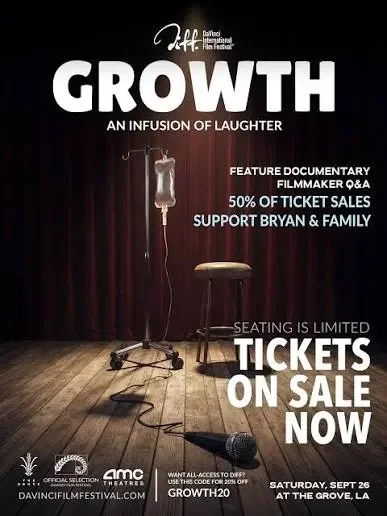
P.S. One of the last things Bryan gave the world was Growth, a documentary he wrote about finding laughter in the face of cancer. It premieres in Los Angeles on September 26 at the DaVinci International Film Festival at The Grove. I can’t think of a more Bryan thing to leave behind.