American Healthcare Isn’t Broken. It Was Built This Way.

Every institution in healthcare is organized to protect its interests. The patient is the exception.
We have called American healthcare “broken” for so long that the word has become almost comforting. Broken implies somebody knows where the toolbox is. Replace the defective part, tighten a few screws, pass another law, convene another blue-ribbon commission, hire McKinsey to produce 94 slides explaining the screwdriver, and eventually the machine should work the way it was supposed to.
But I’ve spent 30 years inside this machine, and I’m increasingly convinced we have the diagnosis wrong.
American healthcare did not accidentally become a $5 trillion Rube Goldberg machine populated by insurers, hospital systems, pharmaceutical companies, pharmacy benefit managers, employers, government programs, consultants, investors, lobbyists, trade associations and enough administrative infrastructure to land the Space Shuttle. (That was a long sentence)
These institutions arose for different reasons at different moments in American history, then spent generations doing what institutions do: protecting themselves.
Insurers organize around insurers. Hospitals organize around hospitals. Pharma organizes around pharma. PBMs, employers, physicians, investors, unions and trade associations all understand the assignment. They have data, expertise, relationships, lobbyists, money and political leverage.
The patient has a portal password reset. 🤦🏻♂️
I don’t mean insurance executives, hospital CEOs and members of Congress meet in a secret room underneath a volcano to invent new ways to make a woman with breast cancer cry over an explanation of benefits. This isn’t SPECTRE. They don’t have to. Everyone can rationally pursue their own interests and still produce a system in which the only person without organized leverage is the person the entire enterprise supposedly exists to serve.
We see the results every day. People fight insurance denials while they are sick. Families receive bills written in what appears to be Klingon with a dollar sign attached. Physicians and patients wait on prior authorizations from people who have never been in the exam room. Employers spend staggering sums on healthcare while their employees struggle to use the benefits purchased for them. Drugs can exist without being accessible. Insurance can exist without reliably insuring. Having a doctor does not necessarily mean being able to see one.
For decades, our answer to this has been remarkably consistent: Get the patient to tell a better story. I say, Meh.
I know this business because I helped build some of it. I survived brain cancer at 21 and founded Stupid Cancer because the young adult cancer community I needed did not exist. I have spent most of my adult life helping patients find one another, navigate the system, tell their stories, advocate for themselves and demand something better. Patient advocacy has built extraordinary communities around cancer, rare disease, disability, Medicare, Medicaid, mental health, medical debt and caregiving. Those communities have saved lives and changed policy.
But somewhere along the way, we confused community with constituency.
Cancer patients organize around cancer. Rare disease families organize around rare disease. Seniors organize around Medicare. Caregivers organize around caregiving. Each fight is legitimate, necessary and usually underfunded. Meanwhile, the industries shaping healthcare arrive already organized, carrying spreadsheets.
The identity sitting above all of these communities has been hiding in plain sight: patient.
Patient.
Democrat, Republican, independent, commercially insured, on Medicare, cancer patient, diabetes patient. Healthcare is one of the few remaining American experiences with the decency to screw us indiscriminately. Eventually, almost everyone gets a look at the system from the wrong side of the reception desk.
We saw something ugly happen when that shared experience had nowhere constructive to go. The public reaction to the killing of UnitedHealthcare CEO Brian Thompson in December 2024 exposed an enormous reservoir of anger about insurance denials and American healthcare. Long before Luigi Mangione pleaded guilty to federal charges this August and admitted to the shooting, he had become a vessel for some of that rage.
Violence is not advocacy. Murder is not political representation. But pretending the public reaction was merely another internet sewer fire allowed us to avoid asking why so many people recognized something in it.
That wasn’t patient power. It was what happens in its absence.
A credible patient constituency would also be useful to nearly every legitimate participant in healthcare.
For example:
Market access needs to know whether people can actually obtain therapies.
Medical affairs needs to know what happens outside controlled clinical environments.
Employers need to understand what healthcare costs and administrative friction do to their workforce.
Investors need to know how access, affordability, regulation and public sentiment move markets.
Policymakers could use something besides dueling industry studies and the occasional devastated person testifying before Congress.
Instead, almost everything we know about patients is collected through somebody else’s institutional lens. We know them as claims, diagnoses, covered lives, utilization patterns, adherence rates, clinical trial participants, market segments and survey respondents. In other words, healthcare has enormous amounts of data about patients and remarkably little independent information from patients about what they collectively want.
Every organized interest walks into the room with numbers. Patients still walk in with anecdotes.
Stories matter. I have spent a career telling them. They expose what data can hide and remind people that “covered lives” are, inconveniently, lives. But stories cannot carry the entire burden of representation. If patients are going to function as a constituency, their experiences, beliefs, priorities and behaviors have to become measurable.
There is precedent. Ralph Nader and the consumer movement did not destroy the automobile industry. They changed what consumers, regulators and markets expected from it. Safety eventually became part of the product rather than an eccentric request from people who preferred not to be impaled by their steering columns.
Healthcare needs its own counterweight.
That should not frighten anyone doing honest work inside the industry. Companies can make money when patients can access useful innovation. Employers benefit when healthcare works. Markets benefit from clearer signals. Policymakers benefit from knowing what voters actually want. Companies delivering genuine value should benefit when patients can distinguish value from extraction.
Patients will disagree about plenty, because patients are Americans and apparently disagreement is our national cardio. A constituency does not require unanimity. It requires enough common interest to make collective representation possible.
After 30 years doing this work, I no longer believe organizing people only after healthcare happens to them is enough. Every institution shaping American healthcare deliberately organizes to advance and protect its interests.
Maybe the people healthcare exists for should try that.
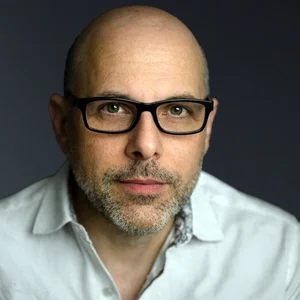
Matthew Zachary is a brain cancer survivor, patient advocate, founder of Stupid Cancer and author of “We the Patients: Understanding, Navigating, and Surviving America’s Healthcare Nightmare.”