
What Matters Most: An MSKCC Special Event
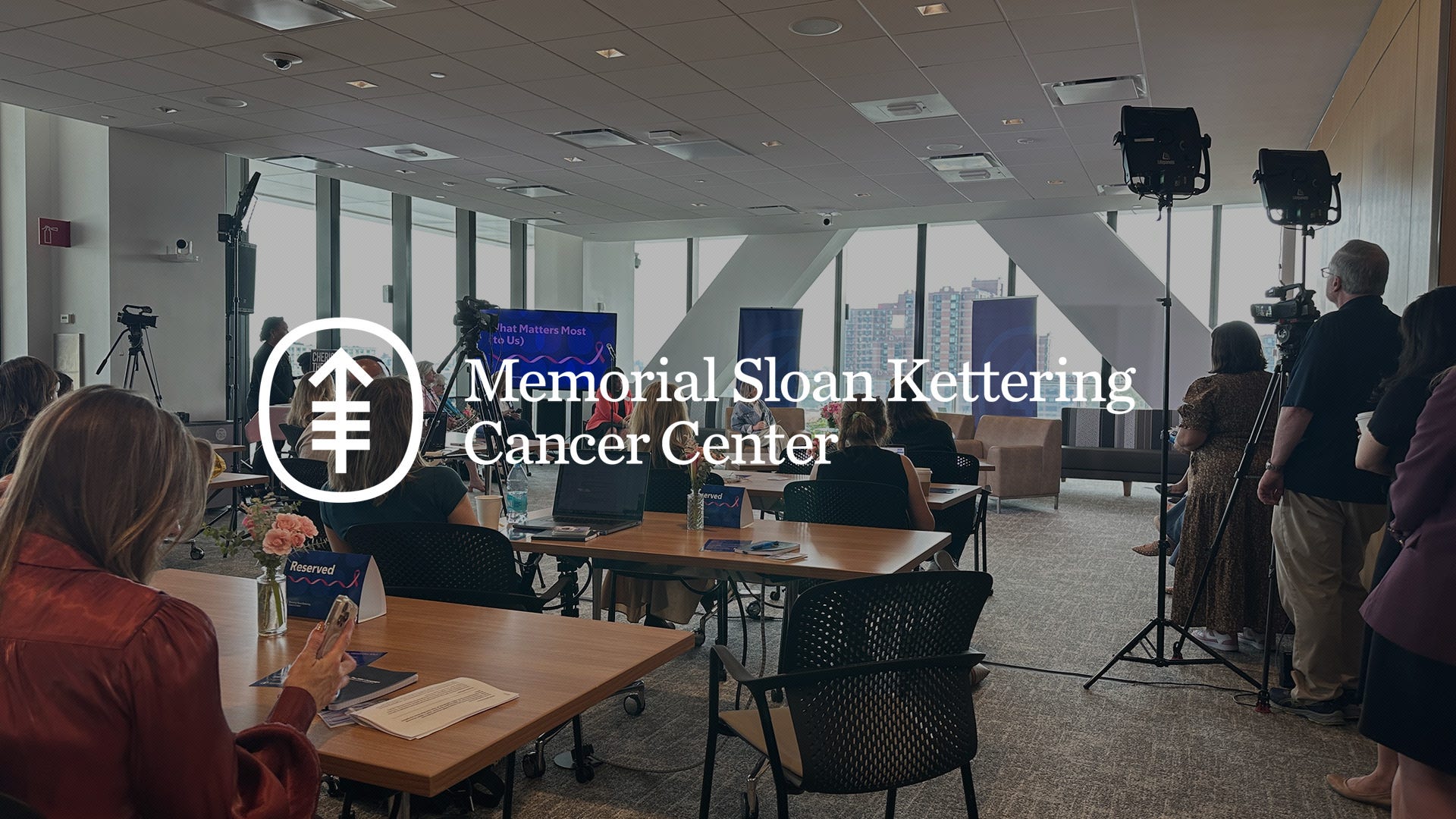
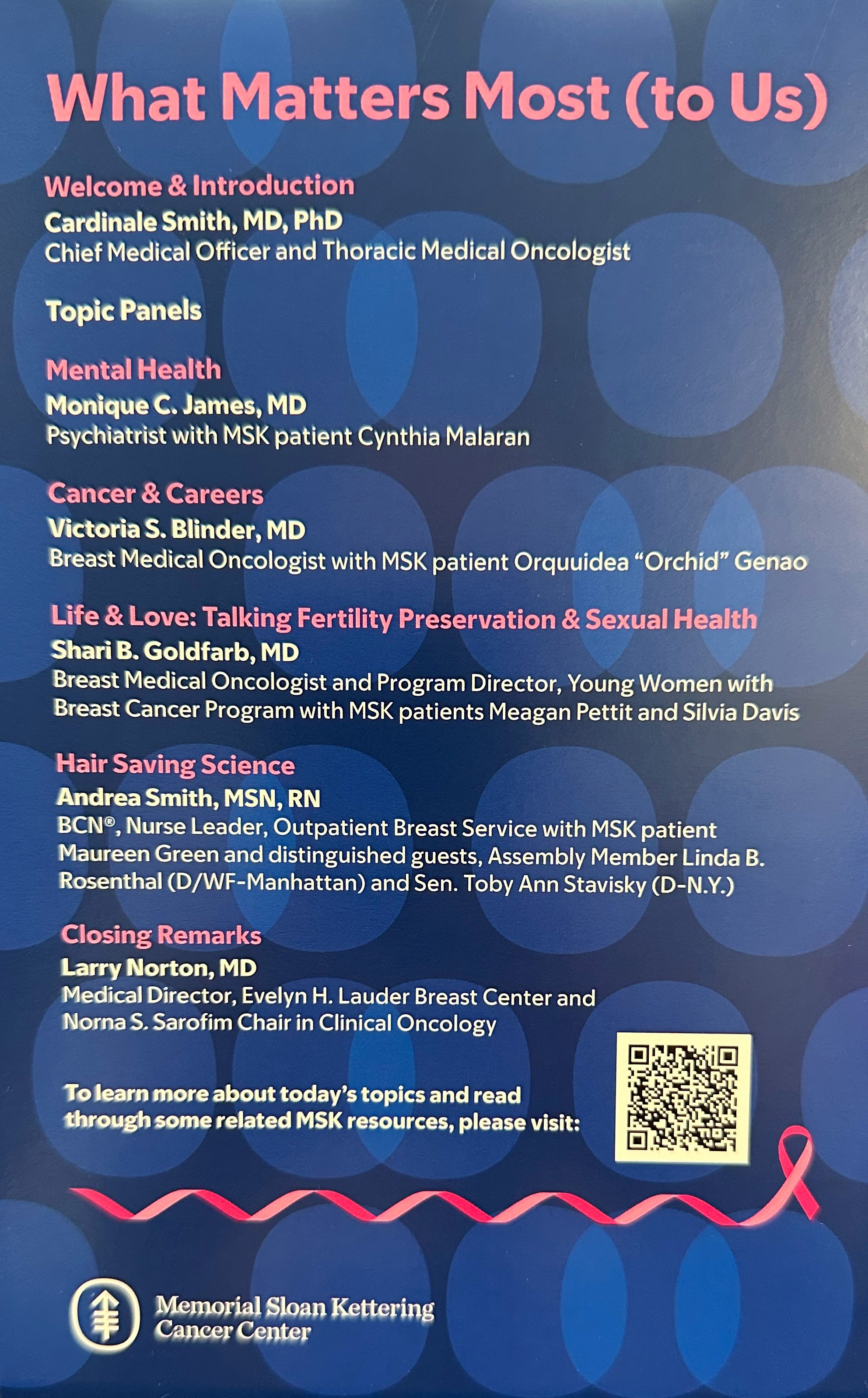
I sat through a media day at Sloan Kettering this week. Panels on mental health, fertility, sex, work, hair, survivorship. Smart people on stage. Brave patients telling their stories. Clinicians showing up with honesty instead of jargon. It was well produced and well delivered. It was also the same program we were begging the world to pay attention to twenty years ago.
“Your cancer diagnosis is your journey. This is for you to come back to yourself and figure out how to get through it.
That was Cynthia Malaran, a ten-year survivor, talking about therapy and music as her way back to sanity. Back in 2004 we were screaming about the same thing under the banner of Stupid Cancer: treat the whole patient, not just the tumor. We got laughed at. Now it’s a polished panel at Sloan. That’s progress, even if it feels overdue.
The fertility session hit familiar nerves too. Two young women described the scramble to freeze eggs and embryos while oncologists told them to start chemo tomorrow. Insurance battles. Financial toxicity. Panic. Fertile Hope was founded more than twenty years ago to address this exact crisis. Lindsay Norbeck, Joyce Reinecke, and later the Alliance for Fertility Preservation carried that torch. The Young Adult Cancer Alliance fought to put this issue into the bloodstream of oncology culture. And yet in 2025 women are still making life-altering reproductive decisions in a week, praying their insurer won’t leave them broke.
“I had to make a lot of decisions very quickly, which overall made the whole process a lot more stressful and brought up questions of delaying treatment, which made me nervous about my cancer spreading.”
That could have been any YA survivor twenty years ago. Different voice, same story.
Then came Cancer and Careers. Dr. Victoria Blinder sat down with Orchid Genao, a police officer who had to trade her dream of a sergeant’s promotion for a metastatic diagnosis. Orchid’s story cut through the room with no varnish. Cancer and Careers has been pushing this conversation since 2001. How do you keep your job when you’re tethered to infusions and follow-ups. Employers are more open now, but paychecks and promotions still take the hit. The room heard that loud and clear.
“I wasn’t able to do overtime at work, so that’s where the struggle comes into play. I’m living paycheck to paycheck.”
Then scalp cooling. This is where the day turned historic. New York State Senator Toby Ann Stavisky and Assembly Member Linda Rosenthal walked in as the first lawmakers in America to make insurance coverage for scalp cooling a legal requirement. Five years of work to pass a bill that guarantees patients the right to preserve dignity and privacy during chemotherapy.
It’s sad that we need a law to force insurance companies to act like humans, but that’s the reality. And in this case, New York made history. Credit where it’s due. Stavisky and Rosenthal deserve thanks for doing the work, fighting through the sludge, and making New York the first state to protect this right. Now the question is simple: what will it take to see this in all fifty states.
“I was really afraid I would look in the mirror and not recognize myself.”
That’s Maureen Green, whose advocacy helped push the legislation across the finish line. Her story is now baked into state law. That matters.
The day closed with Larry Norton, Sloan’s marquee oncologist, talking about the future. Circulating DNA, artificial intelligence, precision drugs. The science is sprinting. The culture and policy grind along. That tension hung over the whole program.
So yes, Sloan gets my Siskel and Ebert rating. Two thumbs up. The patients were centered, the clinicians kept it human, the legislators delivered a first-in-the-nation win. But sitting there as a thirty-year survivor, the déjà vu was hard to ignore. Stupid Cancer fought to mainstream these conversations when nobody wanted to listen. Fertility. Jobs. Mental health. Identity. Hair. We dragged them into the light. And three decades later, we’re still repeating the script.
The applause is earned. The question is whether we’ll still be applauding the same panels in 2045—or if the system finally catches up to the people it claims to serve.
Editor’s note: I did my best to capture and spell every name correctly from the event transcript. If I botched yours, apologies in advance. Let me know and I’ll fix it.