100 Cancer Survivors Just Got Named to a Very Special List None of Us Ever Asked to Be On
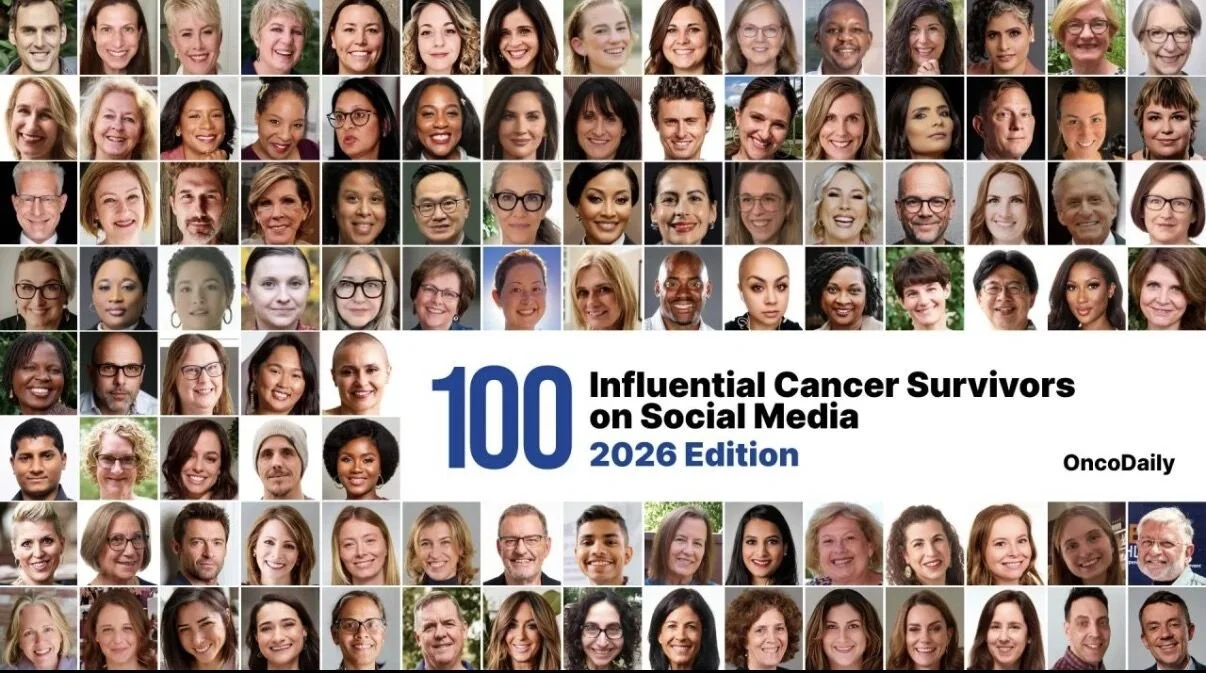
OncoDaily just published its list of the 100 Influential Cancer Survivors on Social Media for 2026, and I’m honored to be on it. But the truth is, this isn’t really about me. It’s about what a list like this actually represents, and why it matters far beyond social media vanity metrics, follower counts, blue checks, algorithms, or whatever other digital confetti we’re all supposed to pretend means something.
Because no one on that list campaigned to become influential by getting cancer.
None of us set out to become “content creators” because we thought surviving a life-threatening disease would be a clever branding strategy. We got welcomed into the club nobody asks to join, and then many of us made the same strange, exhausting, deeply unglamorous decision: we chose not to hide the hardest chapter of our lives. We chose to talk about it in public. We chose to drag the private terror, the grief, the rage, the absurdity, the bureaucratic nonsense, the medical trauma, and the survivor’s guilt out into the open where other people could find it.
That choice matters more than a list.
Somewhere right now, someone just got the phone call. Someone is sitting in a waiting room trying not to pass out while pretending to understand what an oncologist just said. Someone is rage-Googling their prognosis at 2 a.m. Someone is feeding symptoms into AI and getting a horror screenplay in response. Someone is trying to figure out whether the pain they’re feeling is normal, whether their fear is normal, whether they are normal. Someone is quietly wondering if they’re the only person in the world who feels this terrified, this isolated, this furious, this overwhelmed.
And what they need in that moment is not a hospital brochure written by committee.
They need another human being who has been there.
That, to me, is what this list actually represents. Not influence in the modern social-media sense, which is often just a euphemism for visibility with a ring light. It represents people who took some of the worst days of their lives and turned them into someone else’s lifeline. It represents athletes, actors, physicians, parents, writers, advocates, nonprofit leaders, accidental public figures, and ordinary people who discovered that cancer leaves you with a choice: disappear into your own private wreckage, or use what happened to you to make the road slightly less terrifying for the person behind you.
The people on this list chose the second path.
That doesn’t mean they did it because it was noble. A lot of us did it because silence started to feel intolerable. Because once you’ve seen how badly the system fails patients, it becomes hard to shut up. Once you’ve lived through the confusion, the paperwork, the indignities, the waiting, the side effects, the insurance denials, the loneliness, the “just stay positive” nonsense, the cheerful institutional gaslighting, and the weird pressure to become an inspirational mascot for your own suffering, speaking up starts to feel less like a hobby and more like an obligation.
If we didn’t do this, a lot of it simply would not get done.
The American healthcare system does not reward vulnerability. It does not incentivize candor. It does not make room for patients to tell the truth in public about what it costs, what it breaks, what it steals, what it delays, or how often it leaves people to fend for themselves while calling that “care.” Social platforms don’t exactly optimize for pain either. LinkedIn is not built for fear, scans, recurrence, ostomy bags, neuropathy, infertility, trauma, debt, grief, or the thousand tiny humiliations that can come with trying to survive in public. None of these platforms were designed to hold the full weight of what it means to be sick.
And yet people keep showing up anyway.
They show up from infusion chairs and hospital beds. They show up from survivorship clinics, from NED anniversaries, from hospice rooms, from recurrence, from remission, from the parking lot after a terrible appointment, from the strange emotional no-man’s-land that comes after treatment when everyone expects gratitude and closure and what you actually feel is disoriented, angry, and permanently altered. They show up when they’re scared, when they’re exhausted, when they have no business comforting anyone else because they’re still trying to steady themselves.
They show up because someone else once showed up for them.
That’s the hidden economy of survivor advocacy. Most of it is unpaid. Much of it is invisible. It doesn’t fit neatly into a résumé bullet or a performance review. There is no salary for answering DMs from newly diagnosed strangers. No bonus structure for telling the truth about survivorship. No stock options for publicly explaining prior authorization hell, scanxiety, body image after surgery, caregiver burnout, financial toxicity, or the bizarre loneliness of “good” prognosis cancers that still blow up your life. There’s no formal credential for becoming the person another patient clings to because you posted the thing they were too ashamed to say out loud.
But this is how the culture changes. This is how patients stop feeling like case numbers and start recognizing themselves as part of a community. This is how a scared 27-year-old with a new diagnosis finds a 52-year-old survivor and realizes there might actually be an after. This is how caregivers realize their resentment and fatigue don’t make them monsters. This is how people learn what questions to ask, what rights they have, what side effects are worth flagging, what language to use when an insurer tries to play dumb, what resources exist, and what it sounds like when someone tells the truth without sanitizing it into a hospital fundraising gala speech.
So yes, I’m grateful to be included on this list. Truly. Recognition is nice. It’s meaningful to know that this work lands somewhere beyond the void. But I also know that every list like this is incomplete by definition. For every person named, there are thousands of survivors, patients, caregivers, bereaved family members, and advocates doing the same work with a fraction of the visibility and none of the applause. They’re writing posts no algorithm rewards. They’re texting newly diagnosed friends at midnight. They’re helping decode pathology reports. They’re driving people to chemo. They’re translating medical jargon into plain English. They’re raising money, building nonprofits, moderating support groups, leaving comments on strangers’ posts so nobody feels alone, and quietly keeping entire communities stitched together with emotional duct tape.
Those people belong on this list too.
So to everyone who made the OncoDaily 100, thank you for refusing to disappear. Thank you for making your survival mean something beyond your own chart. Thank you for choosing visibility when invisibility would have been easier. Thank you for telling the truth, even when the truth was messy, undignified, politically inconvenient, medically complicated, or personally expensive.
And to everyone doing this work without recognition, without a platform, without a title, without a logo, without a podcast microphone, without a verified account, without any of the shiny trappings that make the internet pay attention, I see you too. You are not adjacent to the work. You are the work. You are the reason the rest of us keep posting.
Most of all, to anyone reading this who was just diagnosed, or who loves someone who was, here’s the only part that really matters: welcome to the club nobody wanted to join. We hate that you’re here. We’re furious that you’re here. We know how terrifying the first days can be, and we know how quickly your world can split into a Before and an After. But you are not alone in this. Not even a little.
There are people ahead of you on this road who have been waiting for you whether they knew your name or not. People who know what it means to sit in the fear, to lose control, to fight for answers, to bargain with God, to stare at the ceiling at 3 a.m., to laugh at wildly inappropriate moments because the alternative is breaking in half. People who understand the language you’re about to learn against your will. People who can help you make sense of what feels senseless.
We’re here. We’re loud. We’re tired. We’re pissed as hell. And we’re not going anywhere.
Welcome to 2026. Call it the Year of the Patient. The sick shall inherit the ballot, the microphone, the comments section, and every room where decisions get made without us.
If this hits home, tell your story. Tag the survivor, caregiver, doctor, nurse, advocate, friend, spouse, parent, sibling, or internet stranger who made you feel less alone when your life cracked open. Let them know what their voice meant to you.
And if you’re new here, my condolences and my thanks. Stick around. Stay loud. There’s room for you with the rest of us.
If you want, I can do the next layer and package this for publishing with:
* a sharper SEO title + meta description
* a Squarespace excerpt and slug
* a LinkedIn cutdown version
* a Substack version with a stronger opening hook and CTA to comments