The Resilience Playbook: Cancer, Congenital Chutzpah, And Why American Healthcare Is Exhausting Everybody
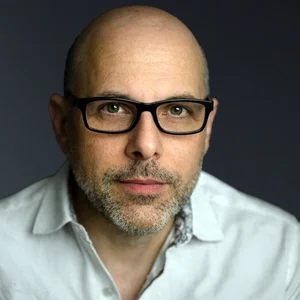
At 21, I knew exactly what I wanted to do with my life. I was going to become a film composer. I had spent more than a decade studying classical piano, music theory, orchestration, and everything else necessary to follow in the footsteps of John Williams. I was writing music, producing theater, and preparing for graduate school. For a kid who had started playing piano because he thought it might impress girls, things had worked out remarkably well.
Then my left hand stopped cooperating.
I initially assumed I needed more practice. When that didn't help, I started compensating by changing how I played. Eventually, the headaches, coordination problems, and neurological symptoms became impossible to ignore. In January 1996, I underwent surgery for a brain tumor that fundamentally altered the future I'd spent my adolescence preparing for.
Thirty years later, I still describe what happened as the theft of my identity. Cancer took away the professional future I understood, including much of the physical ability required to pursue it. Everything that followed required figuring out who I could become when the person I'd intended to be was no longer available.
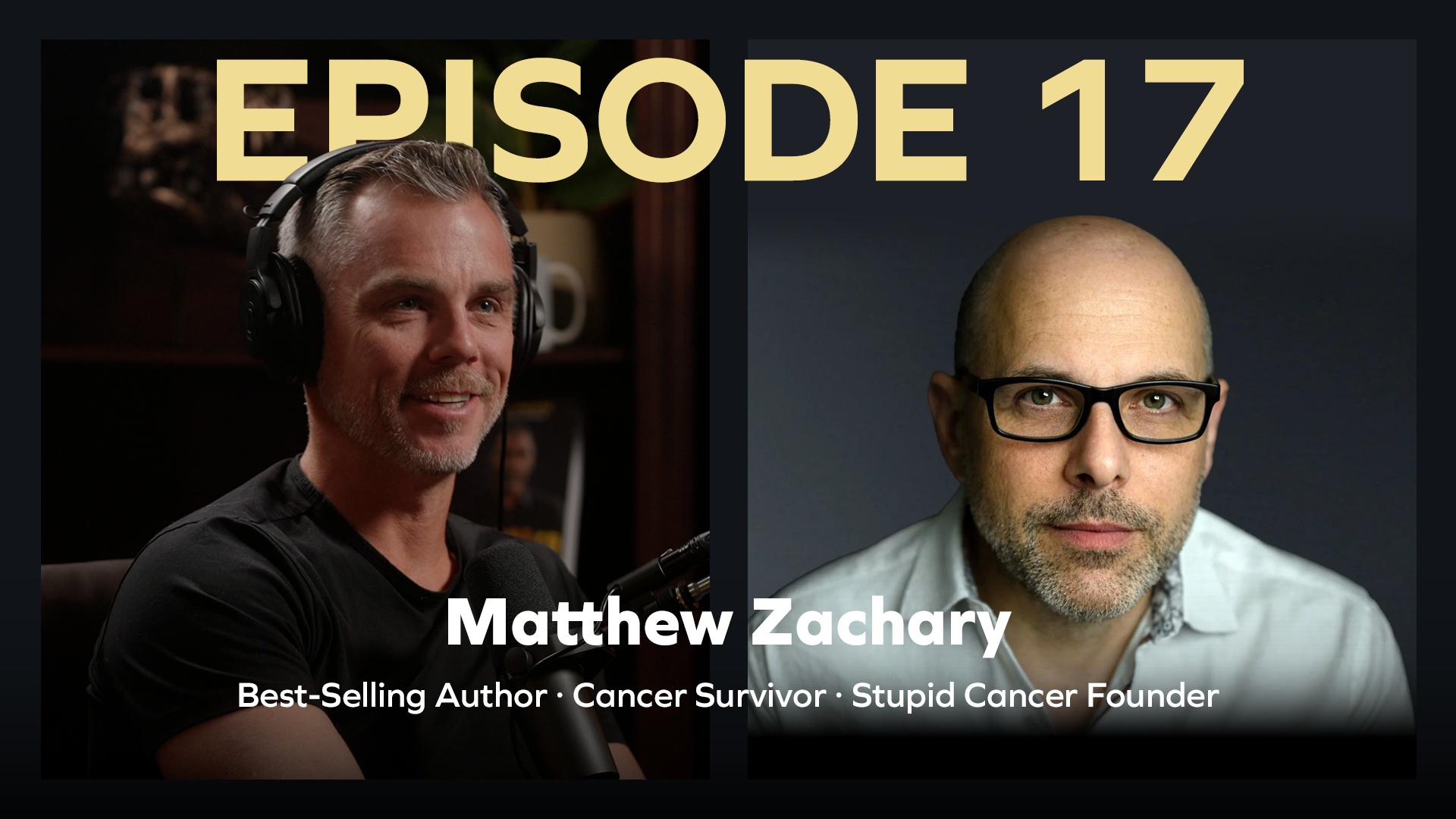
That was where my conversation with Cole Rodgers and Alex Brassell on Episode 17 of The Resilience Playbook began. Cole wanted to understand the person who existed before cancer, how that experience shaped everything afterward, and what resilience actually means when life changes without asking permission.
We covered considerably more territory than I expected, including the superiority of 1980s music, the questionable wisdom of giving an 11-year-old a trumpet, and the peculiar circumstances that eventually brought me into patient advocacy.
But the conversation also exposed something I've been wrestling with for years: why so many intelligent, committed people working inside American healthcare are exhausted, and why their efforts so often fail to produce the changes everyone agrees are necessary.
The Life I Didn’t Plan
One of the more interesting things about surviving cancer at 21 is that you're expected to be grateful for getting your life back, even when the life you get back bears little resemblance to the one you lost.
I eventually recovered enough neurological function to play piano recreationally, record music, and perform occasionally. But the professional trajectory I'd envisioned was gone. Instead of graduate school and Hollywood, I spent nearly a decade in advertising, learning marketing, branding, technology, and communications.
That detour became unexpectedly useful.
Through a series of connections, including meeting another young brain cancer survivor named Craig Lustig, I discovered an emerging movement concerned with what happened to people after cancer treatment ended. In the late 1990s, young adult cancer survivorship barely existed as a recognized healthcare category. The assumption was that surviving treatment meant the important work was finished.
Anyone who had actually survived treatment knew better.
Young adults faced distinctive problems involving fertility, education, employment, relationships, insurance, and long-term complications. The healthcare system had few established ways to recognize those needs, much less address them.
That realization eventually led me to found Stupid Cancer in 2007. We helped build a national community around experiences that had previously been treated as isolated exceptions. Over time, young adult oncology developed dedicated research, clinical programs, professional standards, and a much stronger advocacy infrastructure.
I spent 14 years leading that organization, and I'm enormously proud of what we accomplished.
But the experience also taught me something that has become increasingly difficult to ignore.
You can build an extraordinary community, improve standards of care, influence institutions, and help countless people without fundamentally changing the economic and political incentives that determine how American healthcare operates.
For a long time, I believed the next compelling patient story might persuade someone with authority to do the right thing.
I've become considerably less optimistic about that strategy.
The Three Words That Explain A Lot
Cole works in employee health and benefits consulting, which gave our conversation an interesting dimension. He's accustomed to sitting across from employers and benefits professionals responsible for purchasing healthcare, managing costs, and helping employees navigate increasingly complicated coverage arrangements.
During our discussion, he described something he'd been hearing repeatedly from clients, consultants, and human resources professionals.
Three words: "I am tired."
One client had described losing the sense that she could meaningfully influence healthcare outcomes for the people her organization employed. Costs continued rising. The market became more complicated. Every year introduced another collection of vendors, interventions, and promises.
And the people responsible for making healthcare work were exhausted.
I recognized the sentiment immediately.
After nearly three decades inside patient advocacy, I've experienced my own version of that exhaustion. It has little to do with losing enthusiasm for helping people. I still believe deeply in the importance of patient support, navigation, education, and advocacy.
The exhaustion comes from repeatedly confronting problems whose underlying incentives remain unchanged.
I described it to Cole as futility.
There's a difference between being tired because you're working hard and being tired because the work doesn't appear capable of changing the conditions that make it necessary.
Consider prior authorization. Employers, physicians, patients, and benefits professionals can spend enormous amounts of time developing workarounds, improving communications, hiring navigators, and helping people appeal denials.
Those interventions can be genuinely valuable. They can also become permanent operating expenses required to manage obstacles that shouldn't exist in the first place.
The people helping patients navigate those obstacles deserve enormous credit. But eventually, someone has to ask why we're spending so much money and human effort navigating around problems that powerful institutions have little incentive to eliminate.
That question takes us somewhere considerably less comfortable than another discussion about healthcare innovation.
Follow The Incentives Upstream
Much of the public conversation about American healthcare focuses on the organizations patients encounter directly: insurance companies, hospitals, pharmaceutical manufacturers, pharmacy benefit managers, and the increasingly elaborate collection of intermediaries that determine what care costs and who pays for it.
Those organizations deserve scrutiny.
But their behavior is shaped by legislation, regulation, lobbying, market structure, and financial incentives that developed over generations.
The American healthcare system didn't arrive at its current condition through a single disastrous decision. Its architecture reflects decades of political compromises, employer-sponsored insurance arrangements, industry consolidation, and policies that frequently reward financial performance without adequately protecting patients.
That history is central to my book, We the Patients: Understanding, Navigating, and Surviving America's Healthcare Nightmare.
I wanted readers to understand how the machinery developed because the familiar explanation that healthcare is simply broken has become an excuse for avoiding harder questions.
Broken things are supposed to be repaired.
But what happens when the organizations benefiting from the current arrangement have little reason to support meaningful repairs?
Cole understood this from the employer perspective. His clients confront the financial consequences every year. Employees experience those consequences when they become patients.
The same system produces different forms of exhaustion depending on which side of the transaction you're standing.
And despite the enormous amounts of money involved, patients remain surprisingly weak participants in the political decisions governing their care.
From Community To Constituency
This was where our conversation took an unexpected turn.
I started describing the idea behind We the Patients: determining whether Americans could be recognized as a measurable political constituency based on their shared interests as patients.
Cole naturally approached the concept through the language of community. He asked what it would take to mobilize large numbers of patients and survivors to influence healthcare policy.
It's a reasonable question, particularly from someone familiar with organizations trying to improve healthcare through collective action.
But I kept returning to a different starting point.
Before mobilizing people, we need to establish whether they recognize shared political interests across diagnoses, insurance arrangements, employment situations, and party affiliations.
A constituency has influence because decision-makers understand how its members might behave on issues affecting them. Farmers, veterans, seniors, and other established constituencies don't need to agree about everything. Their influence comes from identifiable interests that politicians cannot safely ignore.
Patients have never been systematically organized around that kind of independent civic identity.
We've organized around diseases, experiences, and communities. Those efforts have accomplished extraordinary things, but they haven't established whether patient identity itself can influence political behavior.
That's the hypothesis I want to test.
Independent polling and research could help determine whether Americans share recognizable patient priorities, whether those priorities cross traditional political divisions, and whether they could translate into measurable civic action.
The answers might be encouraging. They might be disappointing. We don't know yet.
And that's precisely why the research needs to happen before anyone starts declaring victory.
Cole's questions helped expose how easily the familiar language of community can obscure the more difficult question of political identity. It was an unexpectedly useful moment in a conversation that had begun with childhood piano lessons.
Resilience Without The Hallmark Card
Toward the end of the episode, Cole asked what single piece of advice I'd offer someone facing extraordinary adversity.
My answer probably won't appear on an inspirational poster anytime soon.
It's going to get worse before it gets better.
I don't say that to discourage anyone. I say it because excessive optimism can become its own form of cruelty when people are facing circumstances they cannot control.
Not everyone has the resources, personality, support system, or sheer congenital chutzpah to navigate a catastrophic diagnosis successfully. Telling someone to become their own advocate assumes they possess abilities and opportunities that may simply be unavailable.
I was fortunate. I had family support, access to medical care, professional skills I could repurpose, and people like Craig Lustig who opened doors I didn't know existed.
Those circumstances influenced what I was able to accomplish. They shouldn't become the standard against which everyone else's resilience is measured.
The same principle applies to American healthcare.
We cannot keep demanding extraordinary resilience from patients while accepting institutions that make ordinary survival unnecessarily difficult.
Cole and Alex created space for a conversation that moved from personal identity and survivorship to employer benefits, political power, and the limitations of traditional advocacy. We laughed considerably along the way, which seems appropriate when discussing a healthcare system that increasingly resembles a very expensive theater of the absurd.
But I keep returning to Cole's exhausted client.
Somewhere, a benefits professional is trying to make coverage work for employees. A physician is fighting another denial. A patient is wondering how to pay for treatment. An advocate is telling another heartbreaking story to someone who promises to listen.
They're all working extraordinarily hard.
The institutions determining the rules can afford to wait them out.
That's a peculiar definition of resilience for a country that spends so much money on healthcare.