The Future Looked Strangely Familiar: A Love Letter To The CancerBuddy Mobile App
I went to a cancer retreat and found something I thought we’d lost.
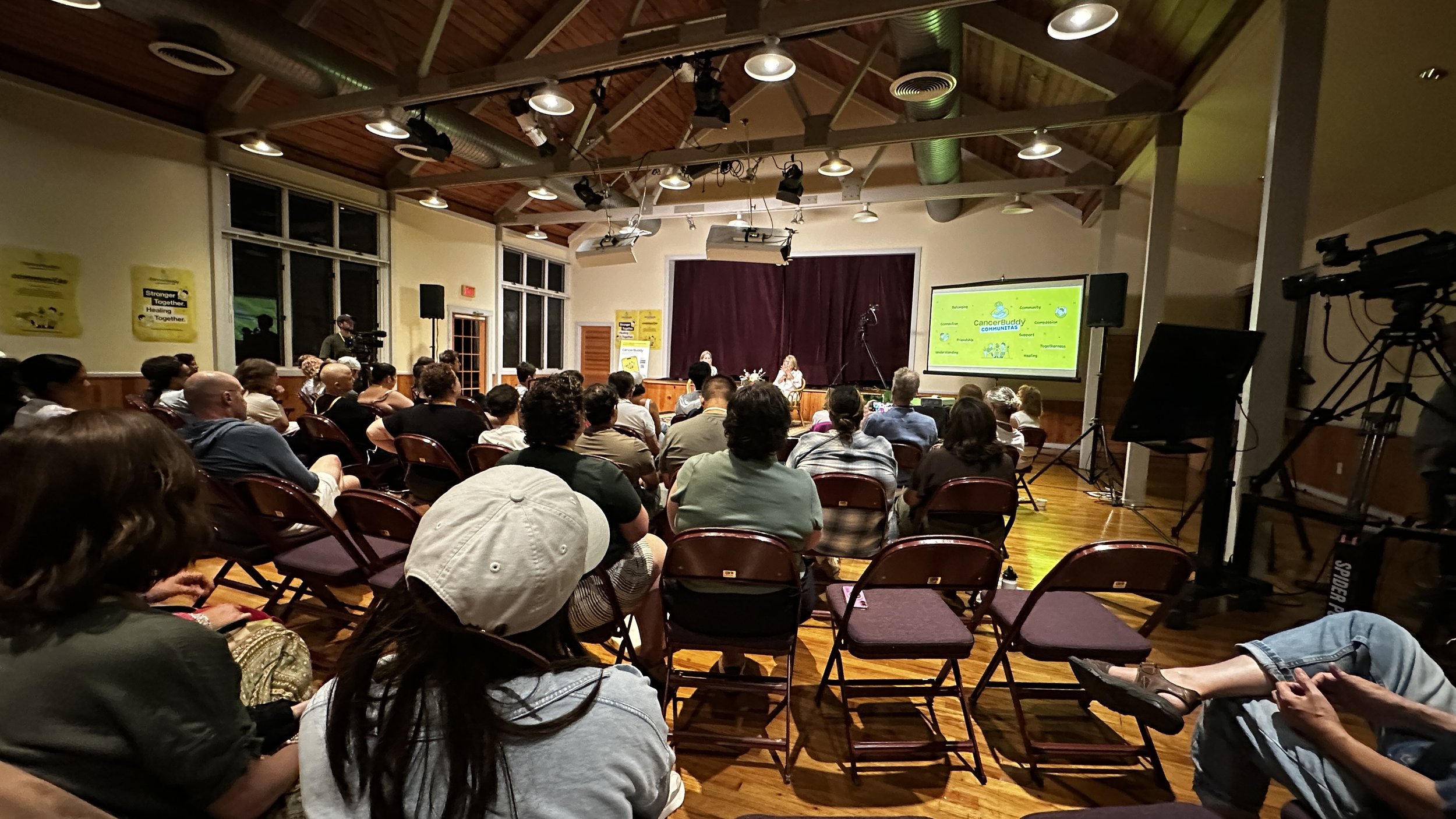
Last weekend, I found myself at the Omega Institute in Rhinebeck, New York, surrounded by cancer patients and survivors doing something I haven’t seen enough of in recent years: being together
They were in their twenties, thirties, forties, fifties, sixties and seventies. There were an unusual number of men, at least unusual to someone who has spent decades discovering that men with cancer are considerably easier to recruit for golf tournaments than conversations involving vulnerability. People were meditating. Doing qigong. Talking about nutrition, stress, trauma and emotional well-being. Joe Dispenza was on the program, which is no small get in the mind-body universe.
I had been invited by my friend Christina Merrill, founder and CEO of the Bone Marrow & Cancer Foundation, to speak at its inaugural CancerBuddy Communitas retreat and sign copies of We the Patients. The books never arrived, either because of a shipping problem or God’s editorial judgment, so the signing became a meet-and-greet. It may have been more appropriate anyway.
Somewhere during all of this, I had the strange sensation that happens more often now that I’ve been doing this for thirty years.
I had seen pieces of this future before.
When I was diagnosed with brain cancer at 21, almost thirty-one years ago, there wasn’t much language for what happened to you after cancer. There certainly wasn’t a young adult cancer “space.” There was barely a young adult cancer sentence. You had pediatric cancer and adult cancer, and somewhere between them were people like me wandering around wondering where everybody went.
Most of my friends went off to college while I stayed home waiting to find out whether I was going to die. Support services were virtually nonexistent. Mental health was something other people needed. Trauma was what happened in Vietnam. If treatment ended and you were still vertical, everyone was delighted. “But you look great” was practically a survivorship care plan.
Walk it off. Rub some dirt on it. Have you tried not having cancer?
I was also extraordinarily lucky, although I didn’t understand that at the time. Somehow, in my twenties, I crossed paths with people like Bernie Siegel, Andrew Weil, Deepak Chopra and Herbert Spiegel, men who were talking about mind and body, meditation, hypnosis, stress, consciousness and healing when much of conventional medicine regarded the whole neighborhood with the enthusiasm of a Jewish mother discovering her son had joined a drum circle.
I wasn’t exactly receptive myself. I was 21. I wanted my hair back. I wanted my friends back. I wanted my life back. I wanted someone to tell me I wasn’t going to die. The finer points of consciousness could wait.
Some of it sounded weird to me then. Some of it still sounds weird to me now. Age has not completely disabled my Gen X factory settings. But one of the privileges of living longer than you once expected to is getting to watch ideas migrate from the fringes toward the center. You don’t have to subscribe to every theory about human consciousness to recognize that the territory has changed enormously. Trauma matters. Mental health matters. Stress matters. Connection matters. Meditation can matter. Quality of life matters. Being declared cancer-free and actually being okay are two entirely different propositions.
None of that transformation happened by itself.
There were people hacking away at it long before I arrived. Later came organizations like Planet Cancer and First Descents, creating experiences where people affected by cancer could be around other people who didn’t require the footnotes. Then came Stupid Cancer, which I founded in 2007 around young adults who had spent far too long falling between the cracks of pediatric and older-adult cancer care.
My work has always been preoccupied with the shoulders we stand on. I wrote We the Patients as, among other things, a history lesson about how American healthcare became American healthcare. I made The Cancer Mavericks because movements acquire mythology remarkably quickly, and mythology has a habit of sanding off the fingerprints of the people who actually built things. History is a teacher, a warning and a prologue. It is also useful for reminding those of us with sufficiently healthy egos that almost nothing began when we arrived.
There are plenty of people standing on my shoulders today. I’m proud of that. But I am standing on a hell of a lot of shoulders myself. Christina and I stand on many of the same ones. We came into this work differently and built different things, but she is one of my people. She stayed.
There is something to be said for staying.
At Stupid Cancer, we spent years creating physical community. CancerCon became part conference, part reunion, part family gathering for a family nobody had volunteered to join. We were trying to solve the profound loneliness of being the only person you knew whose life had been interrupted by cancer while everyone around you was getting drunk, getting laid, getting jobs, getting married or otherwise participating in the regularly scheduled programming of young adulthood.
Eventually we started wondering whether we could put some of that inside the phone everyone was suddenly carrying around.
We called it Instapeer.
The elevator pitch, if Tinder had been sufficiently embedded in the cultural vocabulary at the time, would have been Tinder for cancer. Swipe right on medulloblastoma probably wasn’t going to make the App Store screenshots, but the premise was simple: cancer patients, survivors and caregivers should be able to privately find people like themselves based on diagnosis, age, stage, geography and experience.
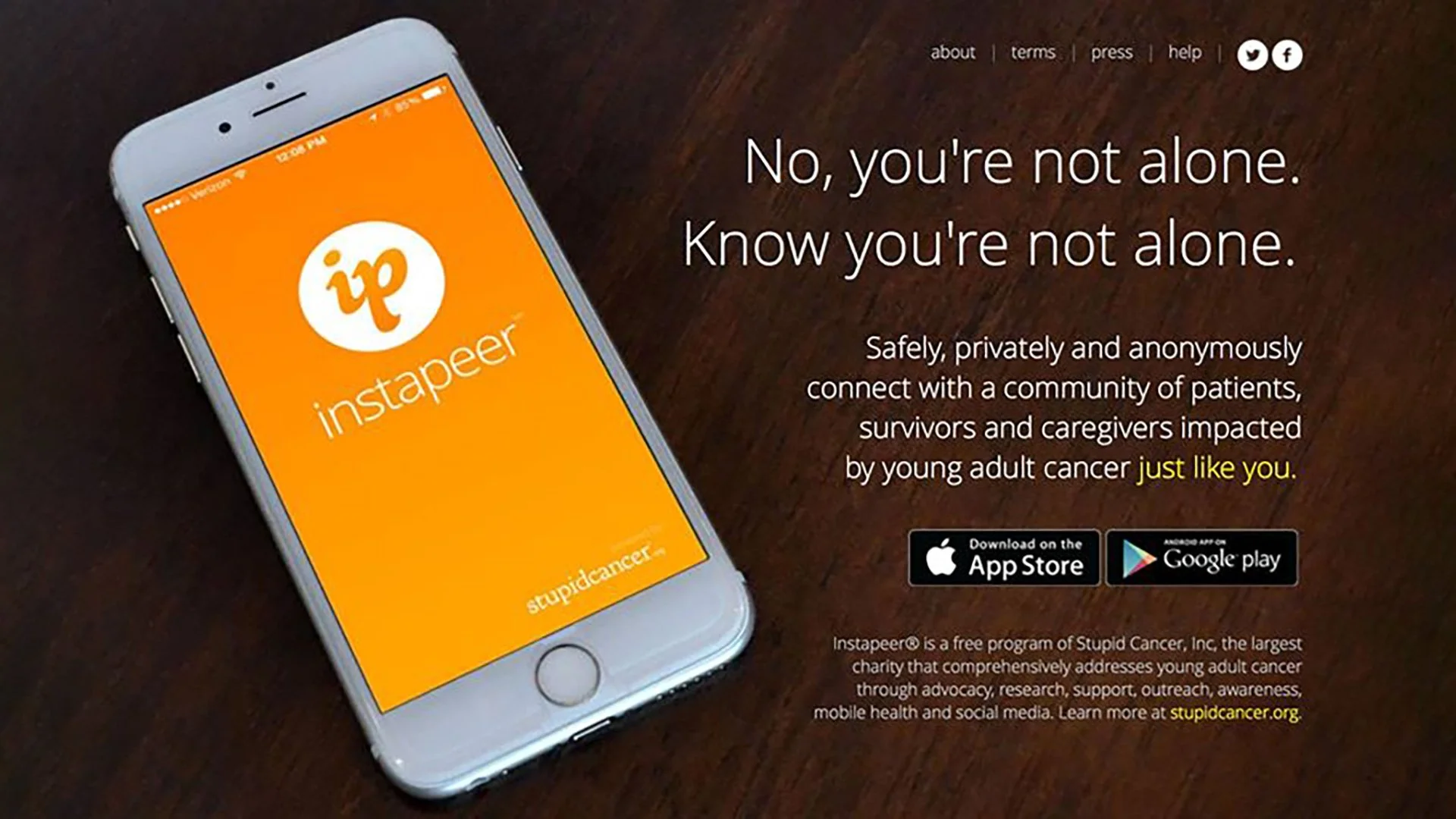
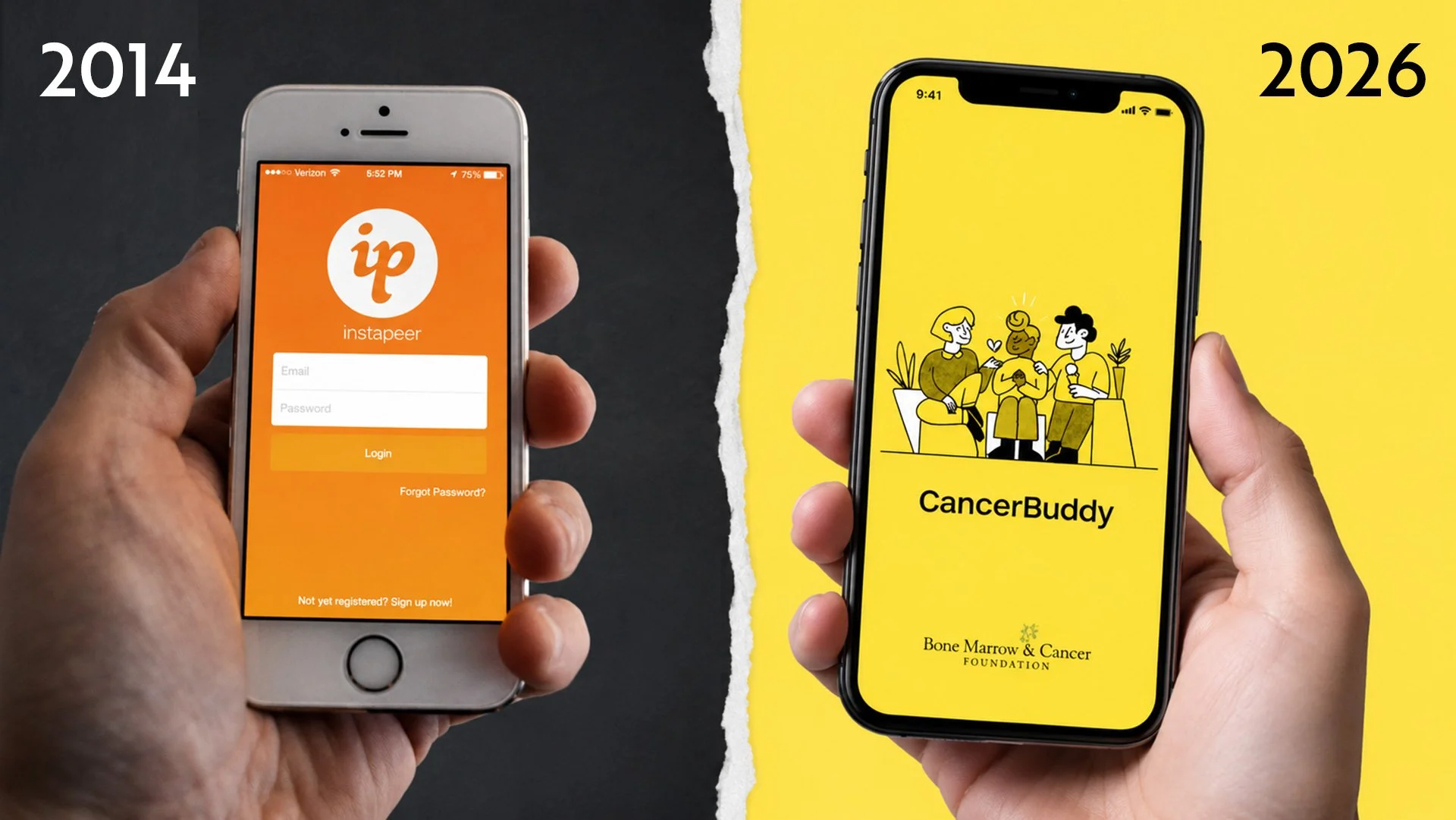
We started developing Instapeer in the early 2010s and launched it in 2015. People used the hell out of it. Within roughly its first year, hundreds of thousands of interactions had taken place. It eventually evolved into the Stupid Cancer App, expanded into moderated communities, accumulated thousands of users, won an award and became the subject of published research. At one point Instagram opposed our trademark application for Instapeer, which was flattering in roughly the same way being threatened by the biggest kid in middle school could theoretically be described as flattering.
We raised money. We built it. We rebuilt it. We learned things. We made mistakes. We kept going.
And eventually it died.
That is the part of innovation mythology we usually remove because it screws up the keynote presentation. We prefer the garage followed by the breakthrough followed by the standing ovation. We are less interested in the thousands of perfectly good ideas that work, prove something useful and then disappear because the money runs out, the technology changes, the organization changes, the market isn’t ready, the founders screw something up or Tuesday happens.
For years I thought of Instapeer as one of those failures. Not a catastrophic failure. Nobody went to prison. There is no Netflix documentary. We had simply built something I believed should exist, demonstrated that people wanted it, and still couldn’t make it endure.
Which brings me back to Rhinebeck.
CancerBuddy uses technology to connect cancer patients, survivors and caregivers with people who understand what they are going through. There are obvious echoes of what we tried to do years ago, and I would be lying if I said some tiny founder-shaped part of my brain didn’t occasionally whisper, Well, we were doing this shit in 2015.
I allow him his moment. Then I tell him to sit down.
Because once I was actually at CancerBuddy Communitas, the app wasn’t what interested me. The people were.
We had spent years trying to take the strange intimacy of meeting another cancer patient who immediately understood you and put it inside a phone. A decade later, I was standing at Omega watching CancerBuddy complete the circle. It had helped people find one another through technology and then brought them back into a physical space where the technology could quietly get out of the way.
Community became technology. Technology became community again.
That feels much closer to progress than somebody winning the race to be first.
And there were other signs of it everywhere I looked. This wasn’t a young adult cancer retreat. There were people in their twenties and people in their sixties and seventies. The number of men struck me immediately. After decades of watching men prove remarkably resistant to organized vulnerability, here were men of different generations voluntarily spending a weekend built around connection, stress, nutrition, meditation, qigong and emotional well-being without anybody having to disguise it as a golf tournament.
Cancer culture used to inherit the same vocabulary of masculinity as everything else. Be strong. Fight. Stay positive. Don’t burden anyone. Agency was easily confused with stoicism. Yet here were people entertaining the possibility that surviving something terrible does not obligate you to pretend it wasn’t terrible.
Then there was Joe Dispenza.
He has become a phenomenon in the mind-body world, a modern descendant of a conversation I first stumbled into as a terrified 21-year-old encountering Siegel, Weil, Chopra and Spiegel. I retain enough skepticism to keep both eyebrows operational, but what struck me wasn’t whether I agreed with every claim being made. It was that nobody seemed to find this conversation particularly strange anymore.
Thirty years ago, the question was whether you survived. Now there is room to ask what survival did to you.
That is not a small cultural change.
Neither is seeing retreats like this return. Planet Cancer held retreats. First Descents built extraordinary experiences around the same fundamental recognition that human beings sometimes need to get away from the machinery of illness and be around people who understand. Other organizations built their versions. Some survived. Some disappeared. There are fewer of these places today than I wish there were, which made watching the Bone Marrow & Cancer Foundation create one feel less like nostalgia than continuity.
Maybe that is why I have always had such a complicated relationship with the word progress. It sounds too orderly. Progress is what you see in pharmaceutical commercials, usually represented by an attractive 58-year-old couple inexplicably kayaking before breakfast. Real progress has never behaved that way.
It feels more like an ebb tide. You solve one problem and congratulate yourself for approximately eleven minutes before the water pulls back and reveals sixty more problems you didn’t know were there. We got better at keeping people alive, which was obviously preferable to the alternative, and then discovered that being alive after cancer comes with an entire catalog of complications nobody had thought terribly hard about. Trauma. Isolation. Fertility. Sex. Careers. Money. Relationships. Identity. Fear. The strange experience of returning to a world that kept moving while yours had stopped. So we built things.
My generation built a lot of shit from scraps.
The people before us did too. We took machetes into parts of the jungle because there weren’t roads yet. Sometimes we cleared enough brush for somebody behind us to see farther. Sometimes we built something that lasted. Sometimes we built something that collapsed. Sometimes somebody else arrived ten years later with better tools, better timing and another idea about where the path should go.
That isn’t erasure. That’s the bargain.
Cancer patients themselves shouldn’t have to care about any of this. Nobody newly diagnosed should be required to study the Dead Sea Scrolls of cancer advocacy before receiving help. They didn’t apply for membership in this community. They don’t need to know who invented the retreat, who built the first support program, which organization created which app or whose shoulders are underneath whose.
History is our responsibility, not theirs.
I care about history deeply, but history and credit are not the same thing. History teaches the next person where the rocks are. Progress lets them sail farther. If the only acceptable outcome of advocacy is that everyone remembers who did it first, we’re not advocating. We’re branding.
And despite everything I write and scream about American healthcare, there is another uncomfortable truth. Even if somebody handed me a magic wand tomorrow and I somehow unfucked health insurance before lunch, cancer would still be cancer. People would still be frightened. They would still grieve. They would still lose pieces of themselves and wonder what replaces them. Medicine cannot provide everything a human being needs after hearing the words “you have cancer.”
People would still need people.
We cannot catch everyone when they fall. We never have. It is regrettable that we need this enormous ecosystem of organizations underneath them in the first place, but we do. And every support group, retreat, community, app and strange experiment is another attempt to put something in the water before the next person falls in.
I still have the Instapeer mug.
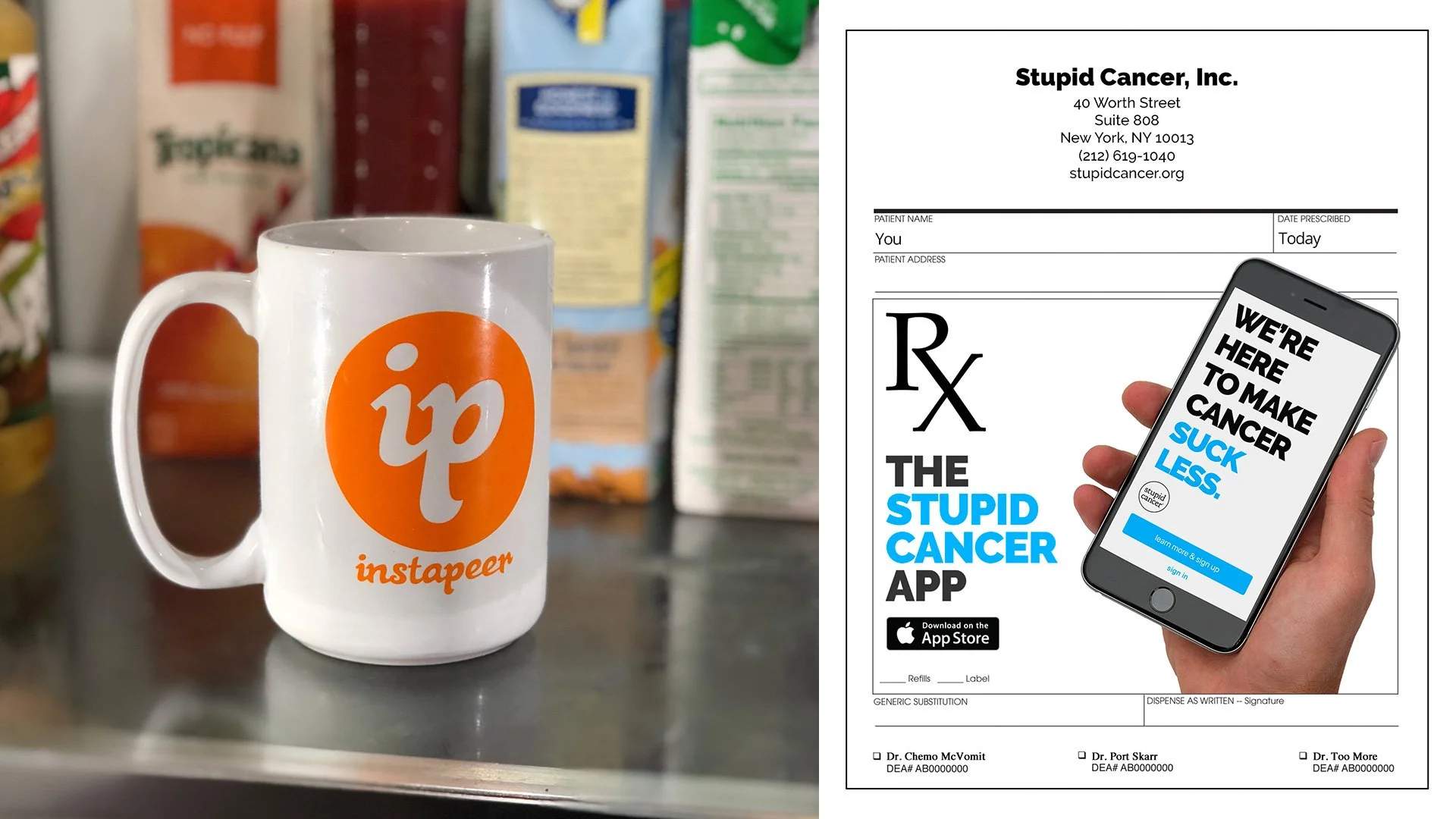
It has the bright orange logo on it, a souvenir from a future we tried to build before we quite knew how to keep it alive. I also have an old photograph of the app running on my iPhone. For years those things felt like artifacts from something that failed.
They feel different to me now.
Someone diagnosed with cancer today doesn’t need to know what Instapeer was. They don’t need to know Planet Cancer’s history, which retreat came first, who fought which battle before they arrived or that Instagram once had lawyers concerned about the name of our little cancer app.
That’s for people like me to remember.
The person in the water has more immediate concerns. They need something to grab.
After thirty years of watching the tide go in and out, watching organizations appear and disappear, watching radical ideas become ordinary and impossible ideas become infrastructure, I think I finally understand that the buoy doesn’t have to have my name on it.
I’m just glad there are more of them in the water.