The Y-Chromosome Patient at the Women’s Health IT Conference

I spent 3 days recently at a conference built primarily for women working across healthcare technology and Health IT, where I was almost certainly the least qualified person in the room to talk about either. This was intentional.
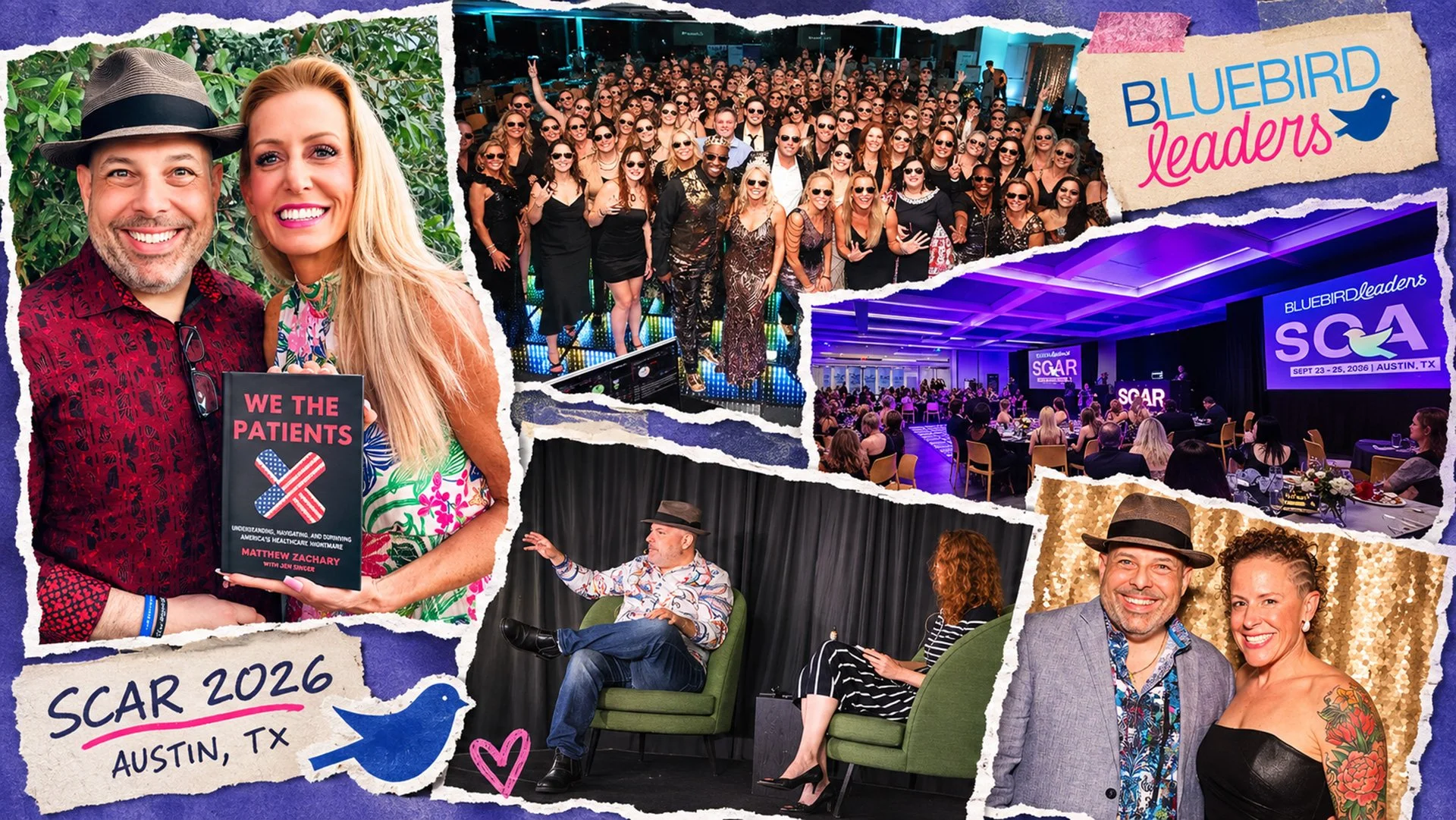
SOAR is the annual conference of Bluebird Leaders, a community of women working across healthcare IT, technology, finance, operations, consulting, and executive leadership. These are people who build things, buy things, implement things, fix things, manage things, and are generally expected to make enormously complicated healthcare institutions function. I do none of those things. I am the person those things eventually happen to.
That distinction has occupied much of my thinking lately because American healthcare has become remarkably sophisticated at inviting patients into conversations without necessarily giving them any meaningful power inside those conversations. We have patient advisory councils, patient experience departments, patient engagement programs, patient advocates, patient representatives, patient panels, and an endless appetite for patient stories. We have become very good at listening to patients. We have been considerably less interested in what happens when patients can impose consequences.
That was somewhere underneath the conversation I had onstage in Austin with Tracy Rentz. We started where conversations about my life usually start: I was 21 years old, studying to become a concert pianist, when brain cancer detonated that particular career plan. We talked about what it meant to have cancer as a young adult in the mid-1990s, how I eventually became an advocate, and how much has genuinely changed for people diagnosed with cancer since then.
And a lot has changed. People survive diseases they once died from. Treatments have become more precise. Entire fields of supportive care and survivorship have developed. Young adults with cancer, who were essentially invisible as a distinct population when I was diagnosed, are now recognized as having needs that are neither pediatric nor traditionally adult. These are better problems to have, a phrase I use deliberately because progress does not mean the problems disappeared. It means we earned the privilege of confronting new ones.
Surviving cancer, after all, does not magically remove you from American healthcare. Quite the opposite. It can turn healthcare from something you occasionally encounter into infrastructure you depend upon for the rest of your life. And once healthcare becomes infrastructure, the question changes. It is no longer simply whether the medicine works. It becomes who controls the infrastructure, whose interests determine how it operates, and what power the people who depend upon it actually possess.
That is where our conversation eventually went. Tracy asked about the argument I make in We the Patients: that the American healthcare system can produce terrible experiences for patients while still functioning largely as it was designed to function. Importantly, that argument does not require believing that the people working inside healthcare are bad people. In fact, one of the things I was reminded of repeatedly during my 3 days at SOAR was how many extraordinary people are trying to do good work from inside institutions whose incentives, rules, economics, and bureaucracies they did not personally create.
That matters because healthcare reform is too often reduced to a morality play. Patients are good. Industry is bad. Find the villain, expose the villain, replace the villain, and presumably the credits roll while everyone receives an affordable MRI. It is emotionally satisfying and structurally useless. Systems do not require evil people to produce terrible outcomes. They require incentives that reward certain behaviors, institutions organized to protect their interests, and insufficient countervailing power from the people living with the consequences.
For most of my adult life, I thought giving patients a voice was part of the answer. I helped build communities where people could find one another, tell their stories, advocate for themselves, organize around diseases, participate in research, speak to policymakers, and demand to be included in decisions being made about them. All of that mattered. Much of it still matters enormously. But somewhere along the way, I began to wonder whether we had confused having a voice with having power.
Every major stakeholder in American healthcare understands the difference. Hospitals have organized interests. Insurers have organized interests. Pharmaceutical companies have organized interests. Employers have organized interests. Physicians have organized interests. They have associations, lobbyists, government affairs teams, economic data, political relationships, and clearly articulated consequences when policymakers threaten those interests. Patients have extraordinary organizations too, but we remain fragmented across diseases, diagnoses, demographics, insurance arrangements, nonprofits, and individual stories.
Stories can change minds. They can humanize statistics, expose injustice, raise money, influence culture, and occasionally embarrass somebody important enough that something gets fixed. But a story is not a constituency. A constituency exists when people recognize a shared interest, organize around it, and make institutions understand that ignoring that interest carries consequences.
That is the experiment underneath We the Patients. Can being a patient become a civic identity? Not a disease identity in which cancer patients organize over here, diabetes patients over there, rare disease somewhere else, and caregivers in another ballroom entirely, but a shared identity built around the rather inconvenient fact that virtually every American eventually enters the same healthcare system with remarkably little leverage over the institutions determining what care costs, what gets covered, what gets denied, what gets delayed, and what happens when something goes wrong.
Which is why the most interesting thing about Austin was not that I said any of this. It was where I said it.
I was sitting in a room filled largely with people who spend their careers inside healthcare institutions, technology companies, consultancies, health systems, and other parts of the machinery I have spent years criticizing. I had spent the previous 3 days listening to them talk about leadership, technology, transformation, innovation, and the realities of trying to change healthcare from the inside. Then, for 45 minutes, they gave the microphone to someone who has spent 30 years experiencing that machinery from the other end. Tracy took the conversation from my own history into what has and has not changed and ultimately into the question of what patients can actually do about the system they inherited.
And then something happened that I keep thinking about.
When Tracy opened the conversation to the room, one of the questions she remembers being asked was: “What can we do to support you and your movement?”
That question interests me far more than whether people agreed with everything I said. Agreement is cheap. Healthcare conferences manufacture agreement by the metric ton. What interested me was that people who spend their professional lives working inside the system were asking how they could help create power for the people living on the receiving end of it.
Because perhaps the divide we keep drawing between healthcare “insiders” and patients was never quite as clean as we imagined. Everyone in that room had a title, an employer, an area of expertise, and some relationship to the machinery of American healthcare. But none of those credentials grants immunity from becoming the person in the gown. Eventually the conference badge comes off. Somebody gets sick. Somebody’s spouse gets diagnosed. Somebody’s parent needs care. Somebody’s child gets denied. The insider becomes the patient, and the system they understand professionally becomes the system they must suddenly survive personally.
Maybe that is where a patient constituency begins. Not by convincing 330 million Americans to agree on healthcare policy, because God help anyone attempting that particular group project, but by recognizing that underneath all our other identities sits one we have never learned to organize around.
We are already patients.
We just haven’t learned what that could mean.