Someone Left the Light On: An Ode to the Cancer Support Community
I don’t remember exactly when I first walked into Gilda's Club in NYC or The Wellness Community of New Jersey. It would have been sometime in the late 1990s, after brain cancer had rearranged my life and before I had any useful vocabulary for what had happened to me.
I was in my early twenties, which made cancer itself statistically weird and cancer support even weirder. There was no young adult cancer movement yet, no AYA oncology infrastructure, no social media, no online universe where I could type a diagnosis into a search box and immediately locate 12,000 strangers who had also been poisoned, radiated, operated on and sent back into civilian life with no idea what to do next because survivorship meant "Walk it off."
Mostly there were support groups, and mostly the people in them were much older than I was. They were kind and welcoming and had experienced many of the same things I had, except they also had mortgages and grown children and retirement accounts while I was still trying to figure out whether I was ever going to have a career, get married or live long enough for any of those questions to matter.
We shared a disease. We did not share a life.
I went anyway. Once. Maybe twice.
This was long before Stupid Cancer, before I met Craig Lustig, before young adult cancer became the cause around which I would eventually organize a considerable portion of my existence. At The Wellness Community, I found a mentor in a woman named Eunice Jadlocki, who became an early mentor and guide at a time when I didn’t know I needed either. I don’t remember having some cinematic epiphany with Eunice. There was no swelling John Williams score. She was simply an adult who understood this strange world better than I did and was willing to help me find my footing in it. At 22, I probably thought I was just talking to someone who knew some things.
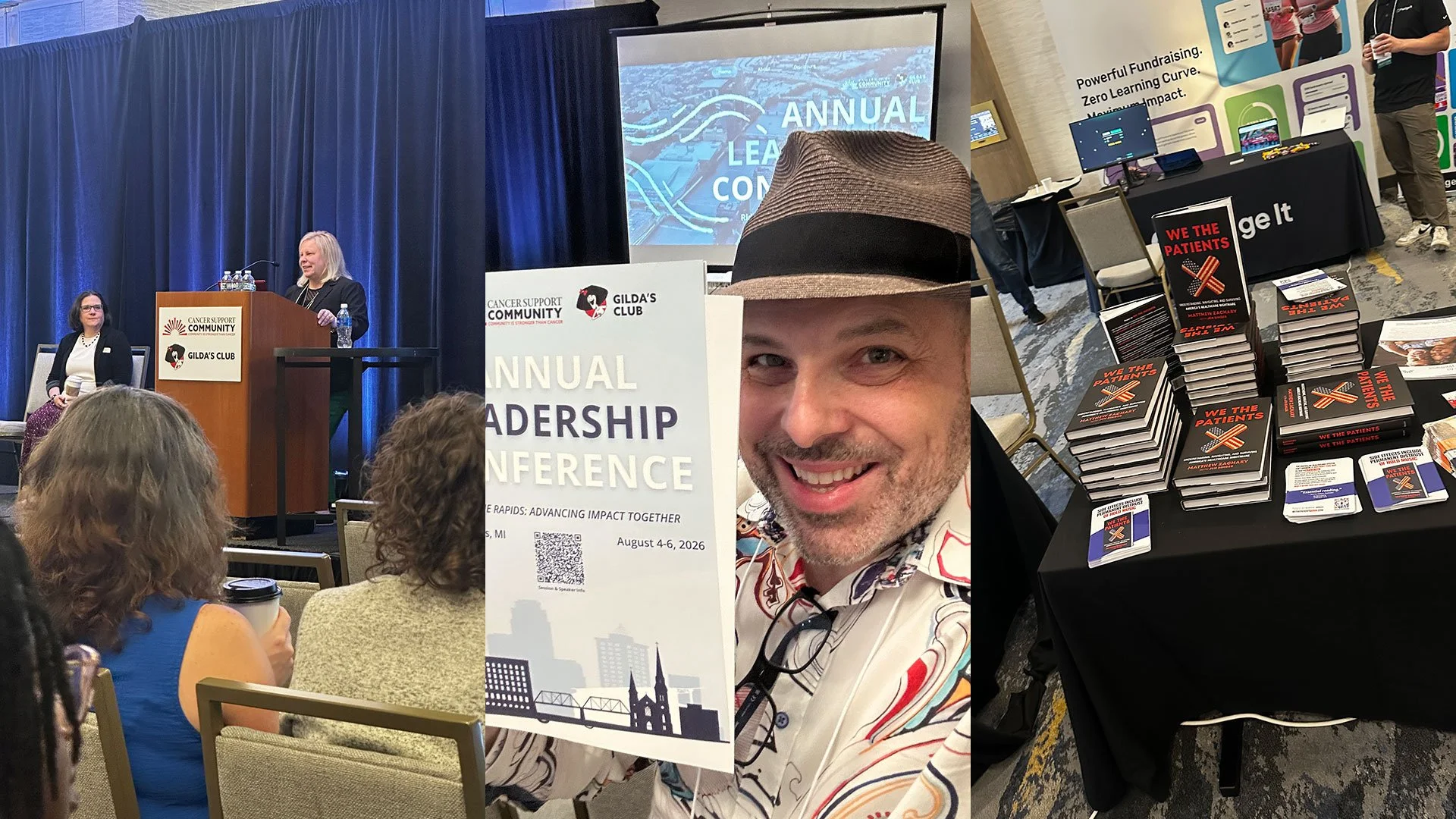
Now at 52, I understand that people like Eunice are often the difference between being technically alive and having some idea how to live. I hadn’t thought about that chapter of my life in a very long time until I found myself recently at the annual meeting of the Cancer Support Community, the organization The Wellness Community eventually became after joining forces with Gilda’s Club in the late 2010s.
I had been invited to speak to leaders from across the network, and there was something objectively bizarre about standing in front of this particular room nearly thirty years later. I have spoken at hundreds of conferences. I have spent enough of my adult life under fluorescent hotel ballroom lighting to qualify for some kind of Marriott combat pension. But this one felt different, and I didn’t understand why at first.
Maybe it was the map.
At one point, a slide went up showing the Cancer Support Community network spread across the country: local Cancer Support Communities and Gilda’s Clubs, university locations, healthcare partners, dots scattered from California to New Jersey and up into Canada. It was impressive in the conventional nonprofit sense of the word, but what I kept thinking about was how improbable the whole thing looked to me. Not because cancer support is improbable.
Because physical cancer support is.
For twenty years, practically every institution in America has been told that the future is frictionless, digital and scalable. Healthcare has been particularly susceptible to this religion. We have portals and platforms and apps and virtual navigation and digital therapeutics and artificial intelligence, all promising to remove inefficiency from the human experience. Some of this technology is genuinely extraordinary. Some of it is a website wearing a Patagonia vest. But the underlying assumption has been remarkably consistent: the room is obsolete. The building is inefficient. The person sitting across from you can eventually be replaced by something cheaper, faster and available in the App Store.
And somehow, Cancer Support Community kept the rooms, and that began to feel more important as the meeting went on.
During one session, people were asked what they were hearing from patients about access, coverage and affordability. The answers appeared in a word cloud on the screen: transportation, high deductibles, out-of-pocket costs, insurance, prior authorization, lost coverage, housing, medical costs, oral cancer drugs, out-of-network providers.
I spend much of my life now writing and speaking about exactly these things, so none of the words surprised me. What surprised me was seeing them here, in this room, among people whose jobs are ostensibly about cancer support.
Because this is cancer support now in the upside down.
The American cancer experience has expanded far beyond the disease itself. A patient can receive spectacular medicine and still be financially destroyed by receiving it. A treatment can exist and remain functionally inaccessible because an insurer says no. A person can have one of the best oncologists in the world and no reliable way to get to the cancer center.
A caregiver can become a navigator, benefits expert, transportation coordinator, amateur pharmacist, insurance appeals specialist and full-time emotional support system while continuing to hold down the job that provides the insurance making all of this possible in the first place.
Somewhere along the way, surviving cancer became inseparable from surviving healthcare.
There are people working very hard upstream on these problems. I am one of them now. We argue about legislation and regulation and payment models and insurance reform and patient protections and all the other levers that might eventually make the machinery behave differently. That work should rent space in everyone's head.
It may be some of the most consequential work I’ve ever done. But sitting in that room reminded me that while everyone upstream is trying to change the direction of the river, somebody still has to stand downstream and catch the people being carried away by it.
And that is CSC at it's core ethos.
I met brave leaders who know the patient whose insurer denied something and who know what happens the next morning. People who understand that transportation is not a transportation problem when missing the ride means missing chemotherapy. People who recognize that a caregiver can be collapsing while insisting everything is fine. People who can help somebody navigate the practical absurdities of being sick in America, but who can also do something considerably less sophisticated and perhaps considerably more important: sit with them.
We don’t have particularly good economic language for that kind of value. American healthcare knows how to price a PET scan down to the decimal point. It knows how to create a surprise bill for an infusion, negotiate a drug rebate, calculate an out-of-network facility fee and generate a 17-page EOB for why a procedure that costs $14,000 somehow costs $31,000 when performed across the street. But the system becomes strangely illiterate around the value of a person who knows what to say when somebody is terrified.
There is no CPT code for showing up after the appointment ends.
I put that line on one of my closing slides. There were others:
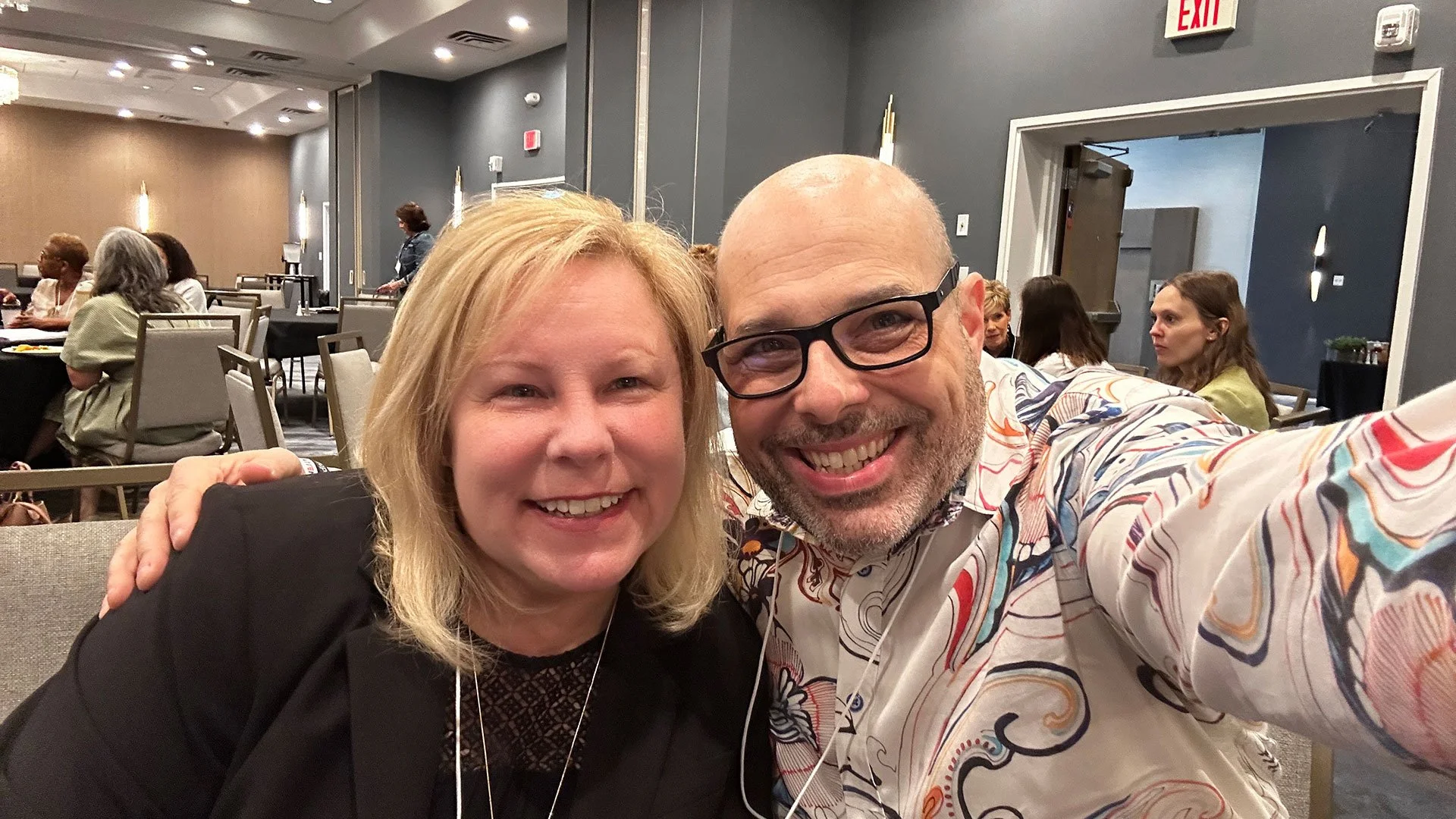
Thank you for making sure no one faces cancer alone.
Thank you for meeting needs that don’t fit on a prescription pad.
Thank you for believing cancer support is healthcare.
I meant them as acknowledgments of the people sitting in front of me, many of whom spend their careers doing work that is largely invisible to anyone fortunate enough not to need it. But while I was standing there, another thought began bothering me.
I had needed it.
Not this exact organization, not in its current form, and certainly not in some perfectly designed way. Gilda's Club and The Wellness Community were not built for me when I was 22. In fact, the absence of something built for people like me became part of the reason Stupid Cancer eventually existed. For years, that was how I understood the story: there was a gap, I experienced the gap, and eventually I helped build something to fill it. Nice clean origin story.
Cue VH1 Behind the Music. Fade to commercial.
Age has made the story less clean. The truth is that before I built my community, somebody else’s community let me through the door. It wasn’t exactly what I needed, but Eunice was there. Other people were there. There was a place where cancer did not require an explanation, at a moment when nearly every other part of my life did. I could enter a room where nobody thought it was unusual that I was frightened, angry, confused or wondering what the hell came next. I didn’t find my generation there. I didn’t find the movement I would eventually help create.
But I found evidence that people could build something around the proposition that a person with cancer deserved more than competent medical treatment. I suspect that idea lodged somewhere in me.
Thirty years later, I have become deeply skeptical of institutions. That skepticism has been well earned. I’ve watched healthcare organizations consolidate, rebrand, merge, professionalize, monetize, optimize and occasionally disappear into PowerPoint decks explaining their own transformation. I’ve watched “patient-centered” become a marketing phrase used by companies whose business models sometimes depend on making patients miserable. I’ve watched entire industries emerge to solve problems created by other industries, all of them billing somebody along the way.
And then there are these places. Still there.
Not frozen in amber. Not pretending the cancer experience of 2026 looks anything like the cancer experience of 1996. The problems on that word cloud made that abundantly clear. But still operating from an idea that has survived every technological revolution and healthcare management fad of the past three decades: sometimes the intervention is another human being who gives a shit.
I have used the word “advocate” for most of my career, and I have come to distrust it almost as much as “thought leader.” It has become broad enough to describe nearly anyone who has ever attended a healthcare conference with a lanyard. My own definition has gotten much simpler. Advocacy is making somebody else’s life suck a little less because you know something they don’t know, or because you can do something they can’t do alone.
That’s what Eunice did for me before I knew enough to call it anything. It’s what thousands of people across this network are still doing for people whose names I will never know.
By the time I finished speaking, I understood why the meeting had felt different. I wasn’t visiting another organization. I had wandered back into an early chapter of my own story, one I had largely forgotten because so much happened afterward. Stupid Cancer happened. The young adult cancer movement happened. The Internet happened. My career happened. Marriage and children and middle age happened. Cancer advocacy grew into healthcare advocacy, which grew into an increasingly unreasonable desire to understand why this entire system seems capable of producing medical miracles while simultaneously requiring patients to fax things.
Life piled thirty years on top of that 22-year-old until I could barely see him anymore.
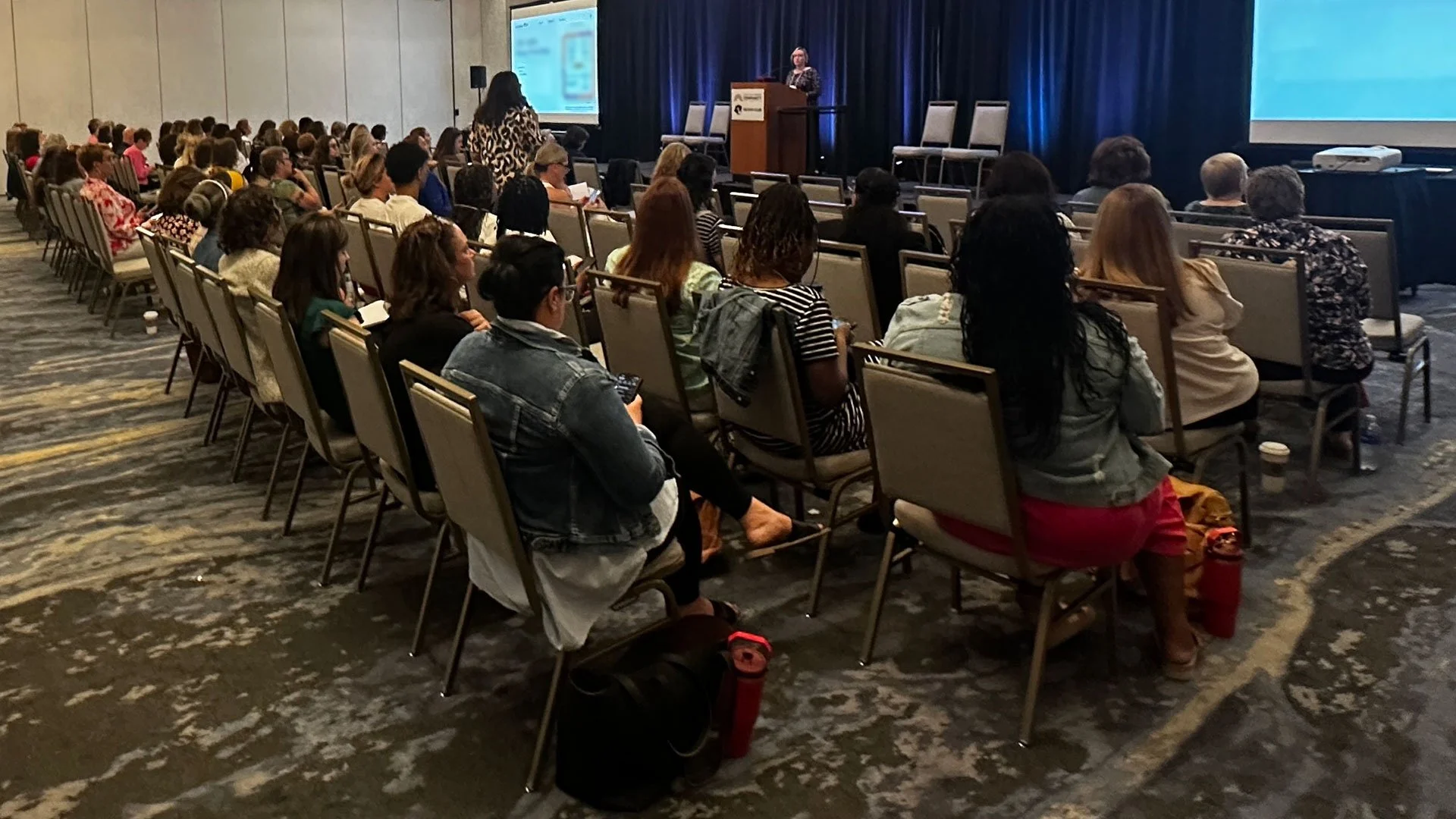
And then I walked into a hotel ballroom and there he was.
But I could suddenly see the continuity between the young man who needed somebody to help him understand what came next and the man standing at the front of the room talking about what patients need now. I had spent years thinking about everything that changed because people like me demanded something different. I had thought much less about the people who were already standing there before we arrived.
So this is a thank you to Cancer Support Community, but probably not the conventional kind.
Thank you for changing.
Thank you for surviving.
Thank you for understanding that the needs surrounding cancer have grown more complicated, not less.
Thank you for doing the work that doesn’t fit neatly inside the healthcare economy’s definition of healthcare.
And thank you for keeping the rooms.
Because long before I understood what advocacy was, long before I knew I would spend my life doing any of this, long before young adults with cancer had organizations built specifically for them, I walked into one of those rooms.
It wasn’t mine.
But somebody let me stay anyway.
Thirty years later, I finally understand what a gift that was.