The Chemical Safety Gap: How Incentives Still Outpace Protection

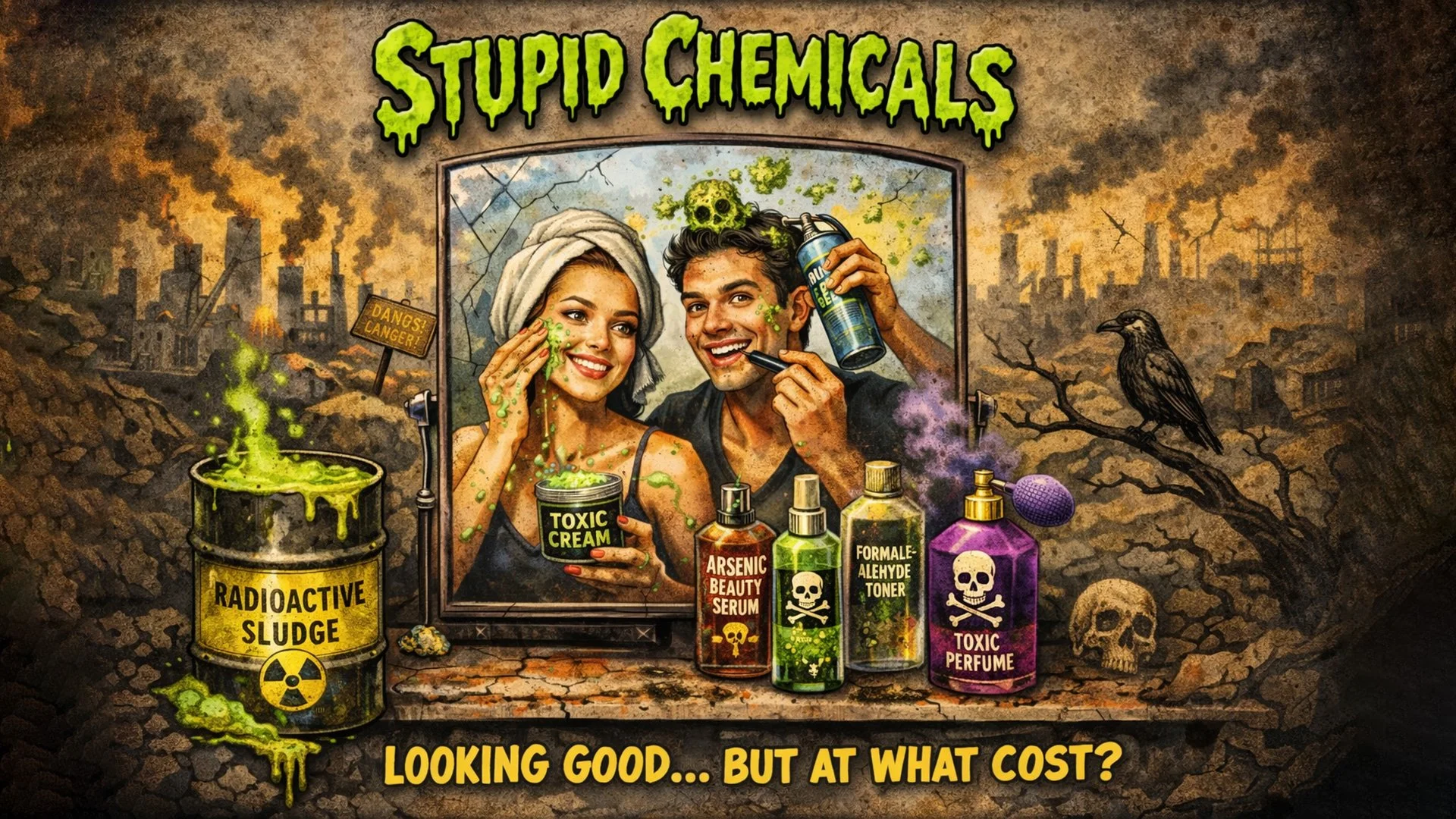
Twenty years ago, the United States operated under a chemical safety framework that assumed exposure remained acceptable until proven catastrophic. The question today is whether that assumption ever changed or whether it simply evolved into a more sophisticated version of the same risk transfer.
In the early 2000s, fewer than 2 percent of chemicals in commerce faced meaningful regulatory scrutiny under the original Toxic Substances Control Act. The burden of proof sat in the wrong place. Regulators had to demonstrate harm after widespread exposure rather than requiring manufacturers to demonstrate safety before market entry. That structure did not emerge by accident. It reflected a deliberate balance between industrial growth and public health, one that consistently favored speed to market over long term risk mitigation.
I participated in this fight before most people paid attention. Stupid Cancer aligned with Breast Cancer Action and Safer Chemicals Healthy Families to push for reform at a time when few outside environmental health circles understood the stakes. We saw the data early. We saw the rise in young adult cancer incidence. We saw the disconnect between scientific evidence and federal oversight. And we saw how effectively industry groups shaped the narrative to preserve the status quo.
The documents from that period still read like a time capsule of institutional denial. In a 2014 letter to Congress, we stated plainly that the system failed to protect young people from carcinogenic exposure embedded in everyday products. We cited peer reviewed research linking chemicals in building materials, electronics, and household goods to cancer risk. We challenged lawmakers to prioritize public health over industry protection.
That argument collided with a powerful counterforce. The American Chemistry Council and its allies framed regulation as economic sabotage. They argued that innovation would stall, costs would rise, and jobs would disappear. Policymakers responded rationally within that incentive structure. Campaign financing, lobbying pressure, and economic narratives carried more immediate weight than diffuse long term health outcomes.
The result was predictable. Reform efforts stalled, diluted, or redirected. Even when Congress passed the Frank R. Lautenberg Chemical Safety Act in 2016, which amended TSCA for the first time in 40 years, the core tension remained unresolved. The Environmental Protection Agency gained expanded authority to evaluate and restrict chemicals, but implementation relied on constrained budgets, political cycles, and legal challenges from industry. The pipeline of chemical production continued to outpace the machinery designed to evaluate it.
To understand why, follow the incentives.
Chemical manufacturers operate in a high margin environment where speed, scale, and intellectual property drive valuation. Delaying product launch for exhaustive safety testing imposes direct financial costs and opportunity loss. Investors reward growth and market share, not precaution. Regulators, by contrast, operate under limited resources and political oversight. Their mandate requires proof thresholds that often demand longitudinal data that takes years or decades to accumulate.
This asymmetry creates a structural lag. By the time sufficient evidence exists to restrict a harmful chemical, exposure has already occurred at population scale. The system functions exactly as designed. It externalizes risk to the public while internalizing profit within the industry.
Patients absorb that risk in ways that rarely show up in quarterly earnings reports.
Two decades ago, I wrote that formaldehyde appeared in baby shampoo and that flame retardants saturated furniture in American homes. That observation did not rely on fringe science. It reflected documented chemical usage patterns and known carcinogenic classifications. The regulatory framework allowed those exposures because definitive causal chains between specific products and individual cancer cases remain difficult to establish. Epidemiology deals in probabilities, not certainties. Industry exploits that ambiguity.
The defense still holds. Companies argue that dose makes the poison. They argue that exposure levels remain within acceptable thresholds. They argue that removing certain chemicals would compromise product performance or safety in other ways. These arguments contain elements of truth. They also obscure the cumulative effect of chronic low level exposure across a lifetime.
No single lotion, couch, or shampoo bottle explains a cancer diagnosis. The system relies on that fragmentation. It distributes exposure across thousands of products and millions of people, making accountability diffuse and enforcement complex.
The rise of consumer awareness around ingredients represents a partial correction. Brands that prioritize transparency and safety respond to market demand. Codex Labs operates within that emerging segment by emphasizing ingredient integrity and scientific validation. That approach aligns with a growing recognition that prevention begins upstream, not in the oncology clinic.
But consumer choice alone cannot solve a structural problem.
The average person does not have the time, training, or access to evaluate toxicological data for every product they use. Information asymmetry remains significant. Labels often obscure more than they reveal. Regulatory approval creates an implicit signal of safety that consumers trust, even when that approval reflects outdated standards or incomplete data.
This creates a paradox. The market rewards companies that move faster and cheaper, while consumers assume that baseline safety has already been enforced by regulators. Both assumptions can hold simultaneously within the current system.
From a systems perspective, the question shifts from whether harmful chemicals exist in consumer products to why the system continues to permit their use despite decades of evidence and advocacy.
The answer returns to incentives.
Regulatory agencies face competing mandates. They must protect public health while supporting economic activity. Legislators respond to constituents and donors. Industry groups provide expertise, funding, and political pressure. Advocacy organizations provide countervailing force, but they often lack comparable financial resources.
When these forces interact, compromise emerges as the dominant outcome. Compromise in this context often means incremental improvement rather than structural overhaul.
TSCA reform did not fail outright. It improved chemical evaluation processes, increased transparency requirements, and expanded federal authority. But it did not fundamentally reverse the burden of proof. It did not fully internalize the cost of long term health risk within the chemical manufacturing industry. It did not eliminate the lag between exposure and regulation.
That gap persists today.
Recent discussions around next phase reforms reflect growing frustration with the pace and scope of change. Environmental health researchers continue to identify associations between chemical exposure and chronic disease. Pediatric and public health organizations continue to call for stronger protections. At the same time, industry continues to innovate, introducing new compounds that outpace regulatory review.
The system remains reactive.
From a patient perspective, the consequences accumulate quietly. Rising cancer incidence in younger populations has multiple contributing factors, including genetics, lifestyle, and environmental exposure. Chemical exposure represents one variable within a complex equation. Ignoring that variable because it resists simple attribution does not eliminate its impact.
I do not know why I developed a malignant brain tumor at 21. I do know that the environment in which we live includes thousands of synthetic chemicals with varying levels of toxicity. I also know that the regulatory framework governing those chemicals prioritizes economic continuity over precaution.
That knowledge informs how I evaluate products, policies, and partnerships today.
The alignment between patient protection and economic efficiency exists, but it requires reframing. Preventing disease reduces long term healthcare costs, increases productivity, and improves quality of life. These outcomes carry economic value that current market structures often discount because they materialize over extended time horizons.
Realigning incentives means shifting some of that future value into present decision making.
That can take several forms. Strengthening premarket safety requirements would increase upfront costs for manufacturers but reduce downstream healthcare expenditures. Expanding funding for regulatory agencies would accelerate chemical evaluation and enforcement. Implementing clearer labeling standards would reduce information asymmetry and allow consumers to make informed choices without specialized expertise.
Each of these changes encounters resistance because it redistributes cost and control.
Industry will argue that increased regulation stifles innovation. Policymakers will weigh economic implications against public health benefits. Consumers will continue to navigate a marketplace filled with incomplete information.
None of this represents failure of the system. It represents the system functioning according to its current design.
The question that remains is whether that design reflects the priorities we claim to hold.
If the goal is to reduce preventable disease, then chemical safety policy must move closer to a precautionary model. If the goal is to maintain economic growth with minimal disruption, then incremental reform will continue to dominate.
Both paths carry consequences.
Twenty years of advocacy produced measurable progress, but it also revealed the limits of reform that does not fully address underlying incentives. The documents from that era capture a moment when the gap between science and policy became impossible to ignore. They also capture how effectively that gap can persist when the cost of change concentrates in one sector while the benefits distribute across society.
The products people use on their skin, in their homes, and in their daily routines reflect those decisions.
The next phase of this conversation will not hinge on whether harmful chemicals exist. It will hinge on whether the system that governs them evolves to reflect what we already know.
Until then, the burden continues to shift downstream. Patients absorb risk. Consumers shoulder responsibility. And the market moves forward, efficiently and rationally, within the rules we have chosen to maintain.
About Codex Labs
Codex Labs is a science-driven plant-biotechnology company that focuses on "inside-out" solutions for chronic skin conditions like acne, eczema, rosacea, and psoriasis. Founded in 2018 by Silicon Valley entrepreneur and scientist Dr. Barbara Paldus, the company creates products designed to support the "skin-gut-brain-biome" axis. The brand is particularly known for its commitment to clinical transparency, publishing efficacy data (quantified results) on its product packaging to prove performance.