Simplicity: The First Song I Wrote After Brain Cancer Tried to Take Everything From Me
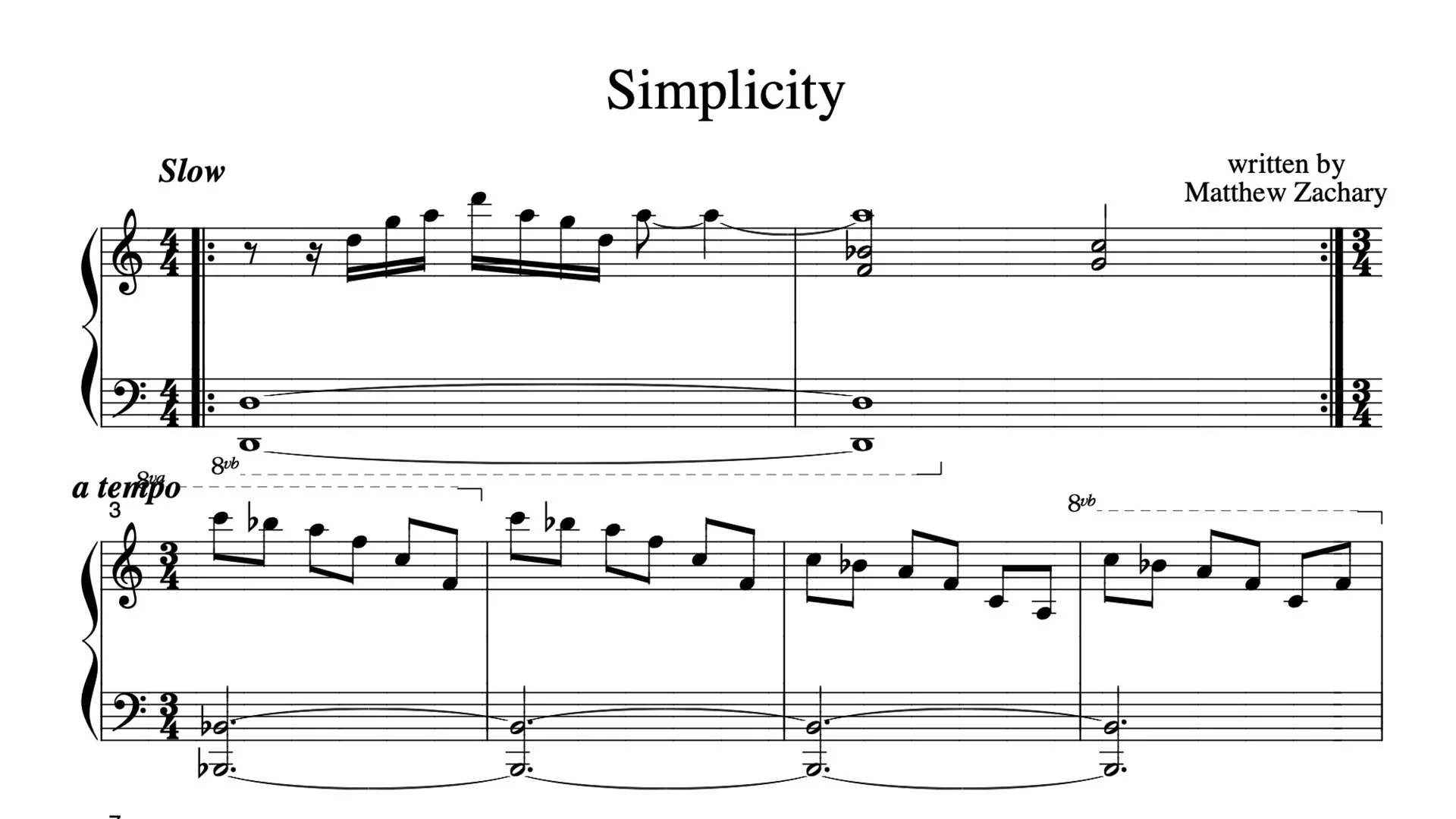
Simplicity: The first song I composed after brain cancer tried to take everything from me.
I grew up absorbing music like oxygen. Synthesizers, orchestration, film scores, counterpoint, harmony. Every technique I could get my hands on, I consumed. By 21, I was training to become a concert pianist and film composer. My hands were my future. Then came the diagnosis.
A malignant brain tumor. The kind that doesn't ask permission. The kind that sits on your brain stem and slowly, methodically, takes things from you before you even realize they're gone. For months, I watched my left hand betray me. The tumor was pressing on the part of my brain that controlled motor function, and my hand stopped doing what I told it to do. Arpeggios that used to flow like water became impossible. Complex passages I had played a thousand times turned into stumbling, halting disasters. My left hand was dying before the rest of me.
But here's the thing about being a musician. The music doesn't stop when your body fails. The melodies kept coming. They lived in my head, fully formed, even as my fingers lost the ability to translate them into sound. I could hear entire orchestras in my mind while my left hand could barely hold a coffee cup.
On January 10, 1996, they wheeled me into surgery to remove the tumor from my brain. For the next week, I lived in that strange hospital twilight. No instruments. No piano. No way to externalize what was happening inside my head. Just me, a hospital bed, and the constant hum of machines keeping track of whether I was still alive. And in that silence, a melody came to me.
Not a symphony. Not a film score. Not the complex, layered compositions I had spent my life building toward. Just a simple melody. A handful of notes. Something a child could play. I didn't fight it. I didn't try to make it more complicated. I just let it exist. Over and over in my head, this simple phrase repeated itself. It became a kind of meditation, a lifeline, the one thing I could control in a sea of chaos.
My life was on the line. Mortality was no longer an abstraction. It was the beeping monitor next to my bed. It was the faces of the doctors who wouldn't quite meet my eyes. It was the weight of knowing that everything I had worked for might end in this room. And in the middle of all that noise, all that fear, all that uncertainty, this simple melody kept playing in my head.
We got home on the morning of January 17, 1996. The tumor was gone. The surgery had worked. I was alive. I should have been celebrating. I should have been grateful. And I was. But I was also terrified, because the tumor had been pressing on my brain stem for so long that my left hand had essentially forgotten how to play piano. All those months of impeded motor function had taken their toll. The neural pathways that connected my brain to my fingers had atrophied. The muscle memory was gone. The coordination was gone. The proprioception was gone. It was as if my left hand had never played piano before.
My right hand was fine. More than fine. It was this prodigal limb, ready and eager to play. But my left hand might as well have belonged to someone else. I felt like a creative paraplegic. You know that movie, My Left Foot? Daniel Day Lewis playing Christy Brown, the artist with cerebral palsy who could only control his left foot? That was my right hand. One functioning limb carrying the entire weight of my musical identity.
I sat down at the piano that morning. The bench felt familiar. The keys looked the same as they always had. But everything was different. I was different. I placed my right hand on the keys and played the melody that had been living in my head for the past week. Those simple notes. That handful of phrases. Nothing complicated. Nothing virtuosic. Just a leitmotif, a musical idea stripped down to its essence.
My left hand found the bass notes. Pedal tones. Long, sustained notes that didn't require any of the coordination I had lost. No arpeggios. No complex chord voicings. Just anchors, roots, the foundation that let my right hand carry the melody. And in that moment, Simplicity was born.
I have spent my entire musical life chasing complexity. More voices. More layers. More orchestration. More technique. I wanted to write for symphonies. I wanted to create the kind of music that required a hundred musicians to perform. The tumor took that from me, or at least it took my ability to execute it. But it also gave me something I didn't know I needed.
When your life is on the line, when mortality is sitting in the room with you, when everything you thought you knew about yourself is suddenly in question, complexity becomes noise. All the things that seemed important before become distractions. The ambitions, the goals, the endless pursuit of more. What remains is what matters. For me, what remained was the piano. Not a symphony. Not an orchestra. Just me and a keyboard and the simplest melody I could imagine.
I didn't want to write for a hundred musicians anymore. I wanted to write for one. For myself. For the person who had just survived something that should have killed him and needed to make sense of what that meant. Simplicity wasn't a compromise. It wasn't settling for less because I couldn't do more. It was a choice, a deliberate decision to strip away everything that didn't matter and focus on the one thing that did. The melody. The moment. The act of creating something from nothing when everything else had been taken away.
In the months that followed, I started rebuilding. Not just my left hand, but my entire relationship with music. The motor coordination came back slowly through practice, perseverance, and patience. My left hand learned to do things it had forgotten. Simple things at first, then more complex movements. The neural pathways reformed. The muscle memory returned.
But something had changed. I no longer felt the need to prove myself through complexity. I no longer measured my worth as a musician by how many notes I could play or how intricate my compositions could be. The tumor had burned all of that away.
What remained was simpler, purer, more honest. I started writing music that reflected this new understanding. Songs that prioritized emotion over technique. Melodies that breathed instead of suffocated. Compositions that left space for silence. Simplicity became the first track on my first post-cancer album. Not because it was the most impressive thing I had ever written, but because it was the most true.
That was 30 years ago.
Three decades of survival. Three decades of rebuilding. Three decades of learning what it means to live after you were supposed to die.
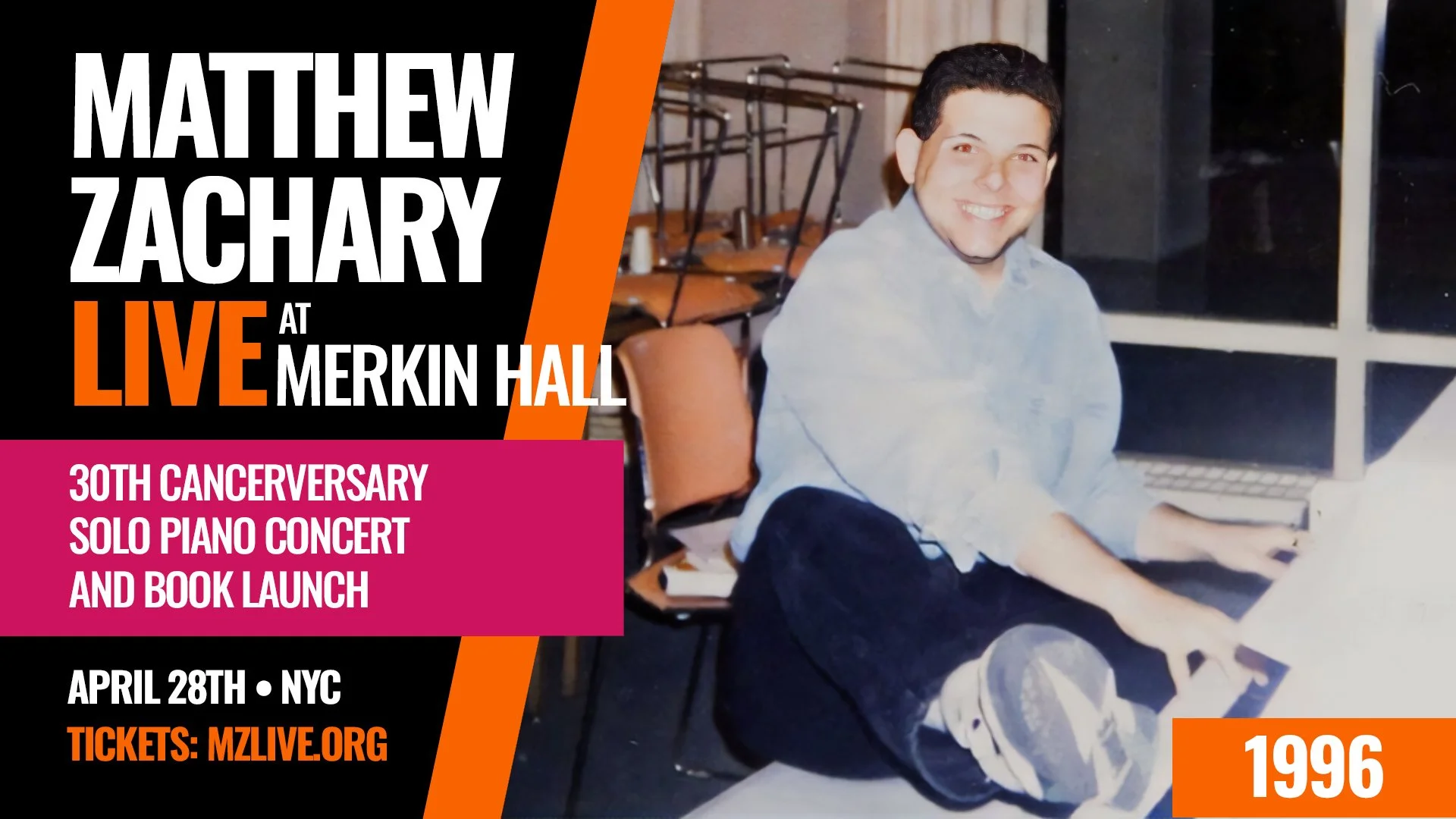
And on April 28, 2026, I will sit at a piano in New York for my first public solo concert in over 20 years. Not as a keynote speaker. Not as a moderator. As the musician I was told I would never be again.
When the curtain rises, the first thing the audience will hear is Simplicity. That simple melody I composed in my head while lying in a hospital bed in January 1996, not knowing if I would survive.
Those handful of notes that became my anchor when everything else was chaos. The song that was born on January 17, 1996, the day I came home and sat down at a piano with a left hand that had forgotten how to play.
I want the audience to understand something before we go any further. Before the other songs. Before the speeches. Before any of it. I want them to understand what it means to have everything stripped away.
To face mortality and come out the other side. To rebuild from nothing. Simplicity is not just a song. It is a statement, a declaration, a reminder that when everything else falls away, what remains is what matters.
I did not ask for brain cancer. I did not ask to lose the use of my left hand. I did not ask for any of the things that happened to me over the past 30 years. But I am grateful for what they taught me.
Complexity is seductive. It makes us feel important. It makes us feel like we are doing something significant. But complexity can also be a hiding place, a way to avoid the hard work of figuring out what actually matters. Simplicity requires courage.
It requires you to strip away the noise and face the truth. It requires you to say, this is who I am, this is what I have, and this is enough.
That is what I learned in that hospital bed in 1996. That is what I learned when I sat down at the piano on January 17 with a left hand that could barely function. That is what I will carry with me when I perform Simplicity for the first time in front of an public audience in decades.
The complexities were gone. And what remained was simple. And beautiful. And true.
*Matthew Zachary is a 30-year brain cancer survivor, healthcare advocate, and the author of "We the Patients: Understanding, Navigating, and Surviving America's Healthcare Nightmare" (Wiley, May 2026). He will perform Simplicity and other original compositions at his April 28, 2026 event in New York.*