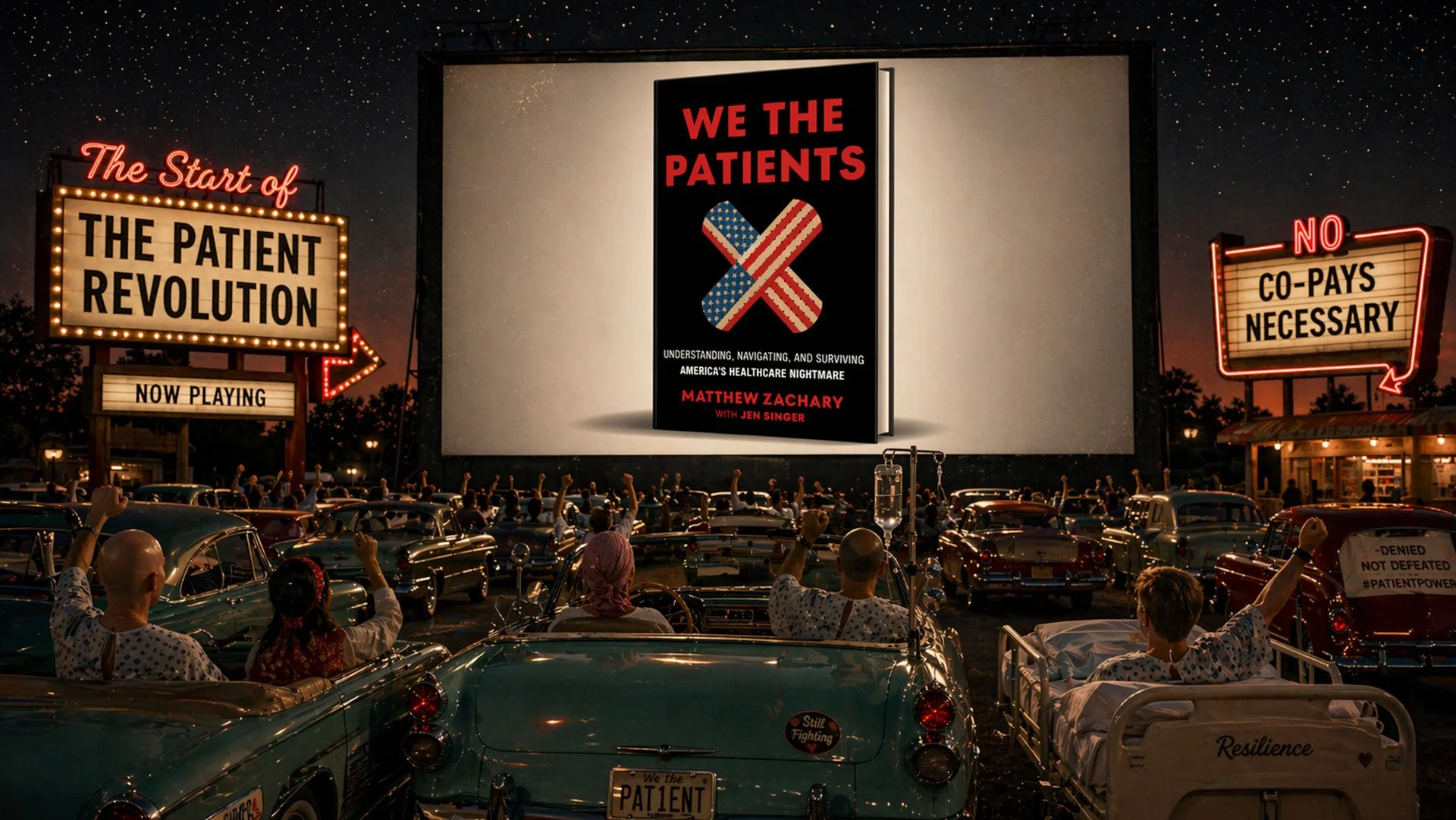
There is a peculiar point in the life of a book when the author loses control of the experiment. For several years, We the Patients: Understanding, Navigating, and Surviving America’s Healthcare Nightmare existed in a relatively contained environment: my head, my computer, my editor’s inbox, and an indecent number of Word documents. I knew what I was trying to say, why I was saying it, and what I hoped someone might understand differently after reading it.
Then the book was published, and the controlled environment disappeared.
There are now hundreds, perhaps thousands, of copies floating around the planet. Some are on nightstands. Some are being passed among doctors, nurses, patients, caregivers, executives, policy people, and people who probably bought the book because they had recently opened an Explanation of Benefits and wondered whether they had accidentally received the closing documents for a small commercial real estate transaction.
What I did not anticipate was how interested I would become in what happens on the other side of the reading experience.
Authors are given a fairly primitive set of instruments for measuring this. Books sell or they don’t. People leave reviews. Someone sends an email. Someone recommends the book to somebody else. A journalist writes about it. Amazon produces stars. Publishers produce spreadsheets. All of this tells you something about whether a book is finding an audience, but very little about whether it actually changed anything inside that audience.
That distinction has become particularly interesting to me because of what has happened with We the Patients since publication. The book has begun finding its way into medical education and conversations with healthcare professionals in ways I had hoped for but could not have predicted. Some of the most interesting responses have come from people who have spent decades inside healthcare and nevertheless discovered parts of the system they did not fully understand.
That should probably concern us.
American healthcare requires extraordinary fluency from the people least likely to possess it. We have constructed a system in which patients are expected to understand networks, formularies, deductibles, coinsurance, coding, prior authorization, appeals, pharmacy benefit managers, facility fees, and assorted other bureaucratic fauna, usually while they or someone they love is sick.
We do not teach people this language in advance. We wait until they need it.
Healthcare literacy therefore tends to arrive under terrible circumstances. You learn what prior authorization means when something has already been denied. You learn what “out of network” means when the bill arrives. You discover the existence of a pharmacy benefit manager when a medication becomes mysteriously difficult or expensive to obtain. By the time most Americans receive their practical education in healthcare economics, they are already enrolled in the laboratory experiment.
One of my ambitions with We the Patients was to move some of that education upstream. I wanted people to understand not merely how to survive encounters with the system, but why the system behaves the way it does. The history matters because much of what feels irrational at the individual level becomes depressingly rational once you understand the incentives, institutions, compromises, and business models that produced it.
But knowledge has side effects.
Learning how something works does not guarantee that you will feel better about it. Sometimes information creates agency. Sometimes it creates anger. Sometimes it merely supplies vocabulary for something you already knew intuitively was wrong. And sometimes it reveals that a protection you thought you had was considerably more conditional than advertised.
That is the part I now find myself wanting to understand.
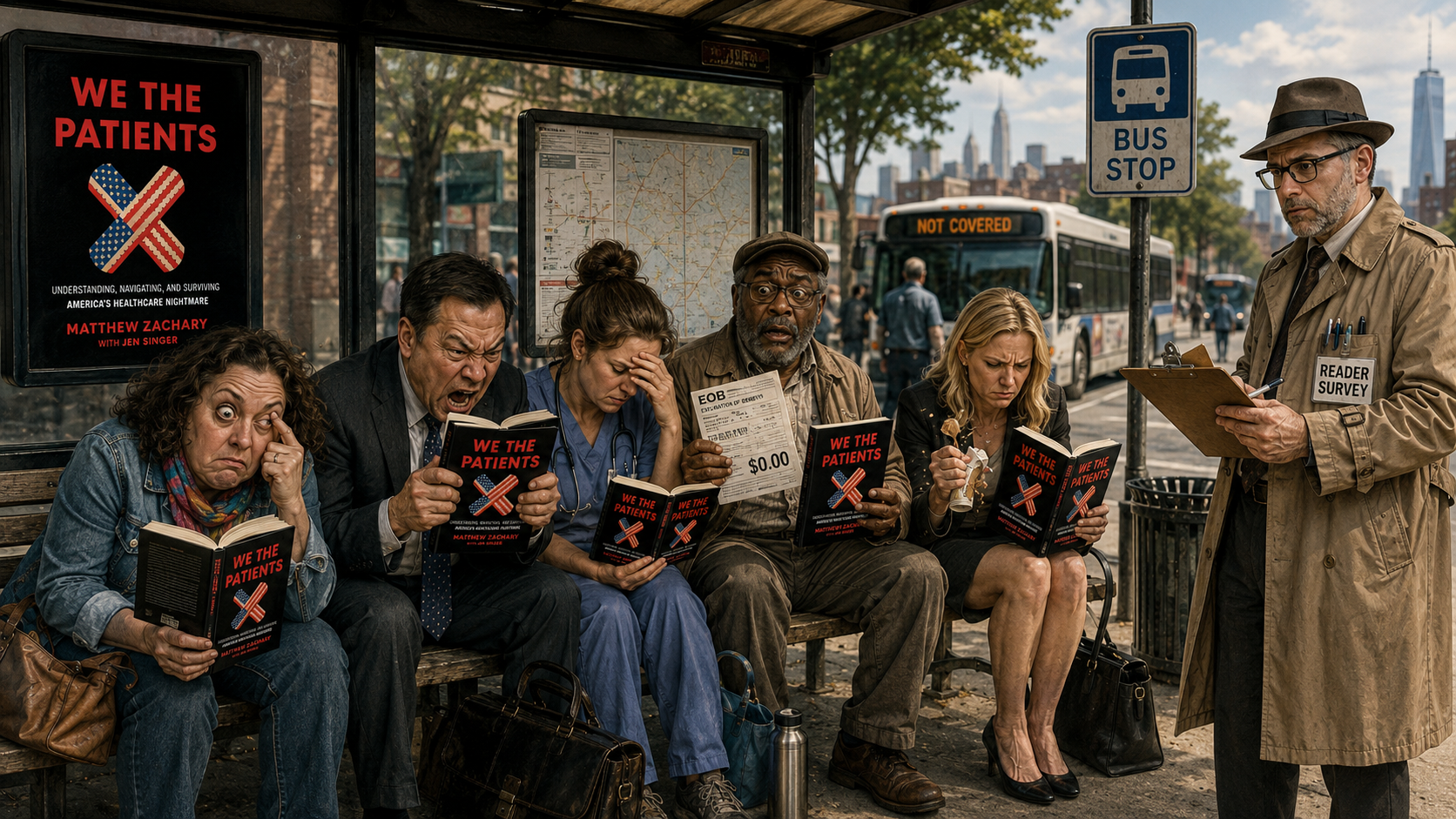
So I created a reader survey.
Admittedly, I could not bring myself to create a normal one. It is called the We the Patients PTSD Reader Survey, which officially stands for Post-Traumatic System Disorder. Post-Traumatic Shitshow Disorder remains a competing nomenclature awaiting peer review.
The comedy is camouflage for questions I actually care about. I want to know what readers understand now that they did not understand before. I want to know whether learning the history of American healthcare changed the way they interpret the present. I want to know whether greater literacy makes people feel more capable of navigating the system, more suspicious of it, more interested in changing it, or some uncomfortable combination of all three.
I am particularly interested in the difference between professional expertise and systemic understanding. Healthcare is so specialized that someone can spend an entire career inside it while seeing only a fraction of the machine. A physician may understand medicine exquisitely while knowing relatively little about the economics determining whether a patient receives that medicine. A patient may become an accidental expert in insurance appeals without ever understanding why the incentives producing those appeals exist. An executive may understand one corner of healthcare extraordinarily well while remaining largely insulated from what the same system feels like when encountered from a waiting room.
That fragmentation is part of the problem. Everyone knows a piece. Very few people are given the whole map.
And patients, inconveniently, are the ones required to travel across all of it.
This is why I am increasingly interested in what happens when patients, clinicians, students, educators, policymakers, and healthcare professionals encounter the same story of the system from the same starting point. The question is no longer simply whether a book can explain healthcare. It is whether a shared understanding of healthcare changes what people believe should happen next.
My survey is not scientific research, and I have no intention of pretending otherwise. There is no control group. Nobody from an institutional review board has inspected my methodology. One of the questions involves determining which part of healthcare deserves to spend 47 minutes on hold listening to MIDI Phil Collins. Another involves The Goonies. The National Institutes of Health will presumably survive without my data.
But underneath the absurdity is a serious curiosity about what healthcare literacy does to people.
For years, the conventional wisdom around patient engagement has focused heavily on giving people more information so they can make better decisions. That assumes information is the endpoint. I am becoming more interested in what information activates. Once someone understands the architecture surrounding their care, does that knowledge change how they behave as a patient, caregiver, clinician, employee, voter, educator, or policymaker?
Does understanding create agency?
Does agency create expectations?
And what happens when millions of people begin expecting something different from a system that has historically depended, at least in part, on their not understanding it very well?
I don’t know yet. Hence the survey.
If you have read We the Patients: Understanding, Navigating, and Surviving America's Healthcare Nightmare, I would genuinely like to know what happened after you closed the cover. The survey takes about five minutes and is completely anonymous. The jokes are there because this subject desperately needs them. The questions underneath them are real.
And if the results eventually tell us something interesting, I’ll report back.
Unless, of course, everyone chooses “Fuckery.”
Then the peer review process may be considerably shorter.