My Uncle Told Me I Might Be Better Off Dying Younger: Behind We the Patients | Story 2 of 5
I was 21 years old when my uncle suggested that living longer might not necessarily be the best outcome.
This requires some context.
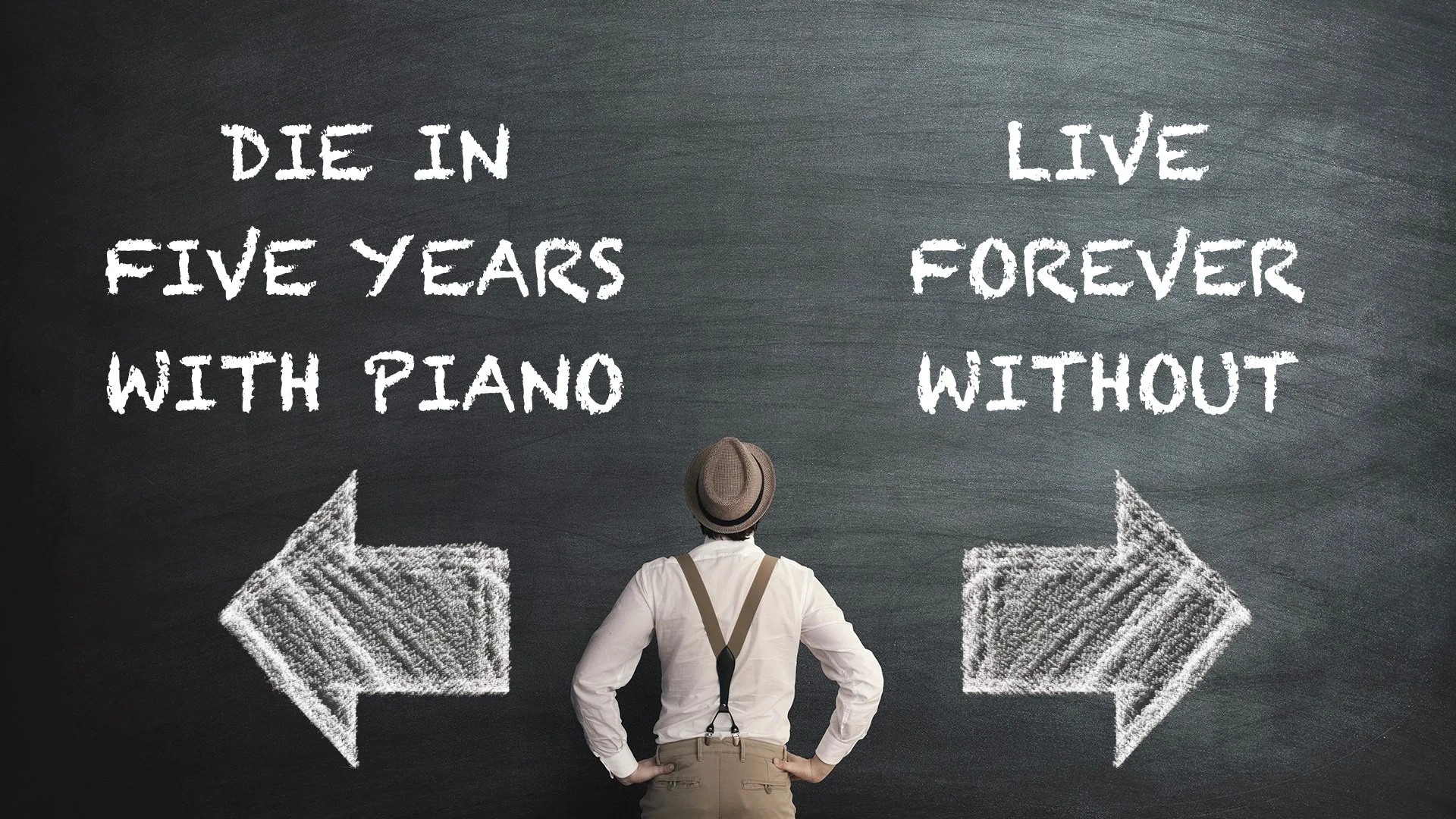
I had brain cancer. I had already undergone surgery and radiation, and now my doctors were recommending chemotherapy. The numbers, at least as they were presented to me, were brutally straightforward. I had roughly a 50 percent chance of surviving five years. Chemotherapy might improve that to around 55 percent.
Five percentage points.
At 21, five percentage points sounds simultaneously enormous and meaningless. If somebody tells you a treatment might increase your odds of staying alive, the obvious response is to take the treatment. You don't need a degree in bioethics to understand the appeal of not dying.
But there was another part of the equation that mattered enormously to me.
I was a musician.
I had been playing piano since I was 11 years old. Music wasn't something I did on weekends. It was my identity, my education, my career plan and the way I understood myself. Before cancer entered the picture, I expected music to be the organizing principle of my adult life.
And the chemotherapy being proposed carried risks to the very things I needed to make music.
My hearing.
My fingers.
My cognitive function.
Suddenly the decision wasn't quite as simple as 50 versus 55.
What Exactly Are We Saving?
Medicine is extraordinarily good at turning uncertainty into numbers.
Survival rates. Response rates. Recurrence rates. Progression-free survival. Overall survival. Risk reduction.
Numbers are useful because illness is terrifying, and numbers give everyone something concrete to hold onto. But numbers can also create the illusion that the most important question has already been answered.
How long might this person live?
There was another question that mattered just as much to me:
What would that life actually be?
I don't remember anyone sitting me down and framing the decision that way. The medical objective was understandable. I had cancer. Cancer kills people. The job was to keep me from becoming one of them.
Then my Uncle Jay got involved.
Jay was a doctor, which meant he could read the medical language surrounding my treatment in a way that my family and I couldn't. He started digging into the chemotherapy regimen, the potential benefit and the possible consequences.
Eventually, he said something I have carried with me for 30 years.
"Don't let them take away your gift."
It was an extraordinary thing to say to a 21-year-old with cancer.
Because what he was really telling me was that I was allowed to consider something besides survival.
The Decision
I declined the chemotherapy.
That sentence requires more humility today than it did when I was 21.
I am still here, 30 years later. It would therefore be incredibly tempting to tell this story as evidence that I made the right decision. That would also be intellectually dishonest.
I don't know what would have happened if I had taken the chemotherapy. I don't know whether I would have experienced the toxicities I feared. I don't know whether it would have changed my outcome. Nobody gets to live both versions of their life and compare the results.
That's precisely what makes these decisions so difficult.
Patients make them prospectively and live with them retrospectively.
What I know is that Uncle Jay gave me something extraordinarily important at a moment when I didn't even realize it was missing.
He gave me permission to think of myself as something other than a cancer patient.
I wasn't merely a tumor that needed to be defeated. I was Matthew. I was 21. I played piano. I composed music. I had ambitions and fears and things I loved doing with my hands and ears and brain.
If treatment changed those things, I was the person who would have to inhabit the life on the other side.
That didn't make the medical evidence irrelevant.
It made me relevant to the medical evidence.
The Patient Has to Live With the Answer
We talk constantly about patient-centered care, shared decision-making and informed consent. These are important ideas, but they can sound remarkably tidy compared with what actually happens when you're sitting in a room trying to decide how much risk you're willing to tolerate to stay alive.
The physician brings expertise about disease.
The evidence brings probabilities.
The treatment brings benefits and consequences.
But the patient brings something nobody else in that room can supply: the definition of a life worth protecting.
For one person, another five percent chance of survival might outweigh almost anything.
For another, preserving cognition may matter enormously.
Someone else may care most about remaining independent, being able to work, having children, avoiding debilitating pain, preserving sexuality, protecting fertility, hearing music, holding a paintbrush or simply having enough good months left to spend them at home instead of inside a hospital.
None of those answers can be found in a clinical trial.
They're found in the person.
And sometimes the hardest part of being a patient is realizing that you are allowed to say them out loud.
Why This Story Is in the Book
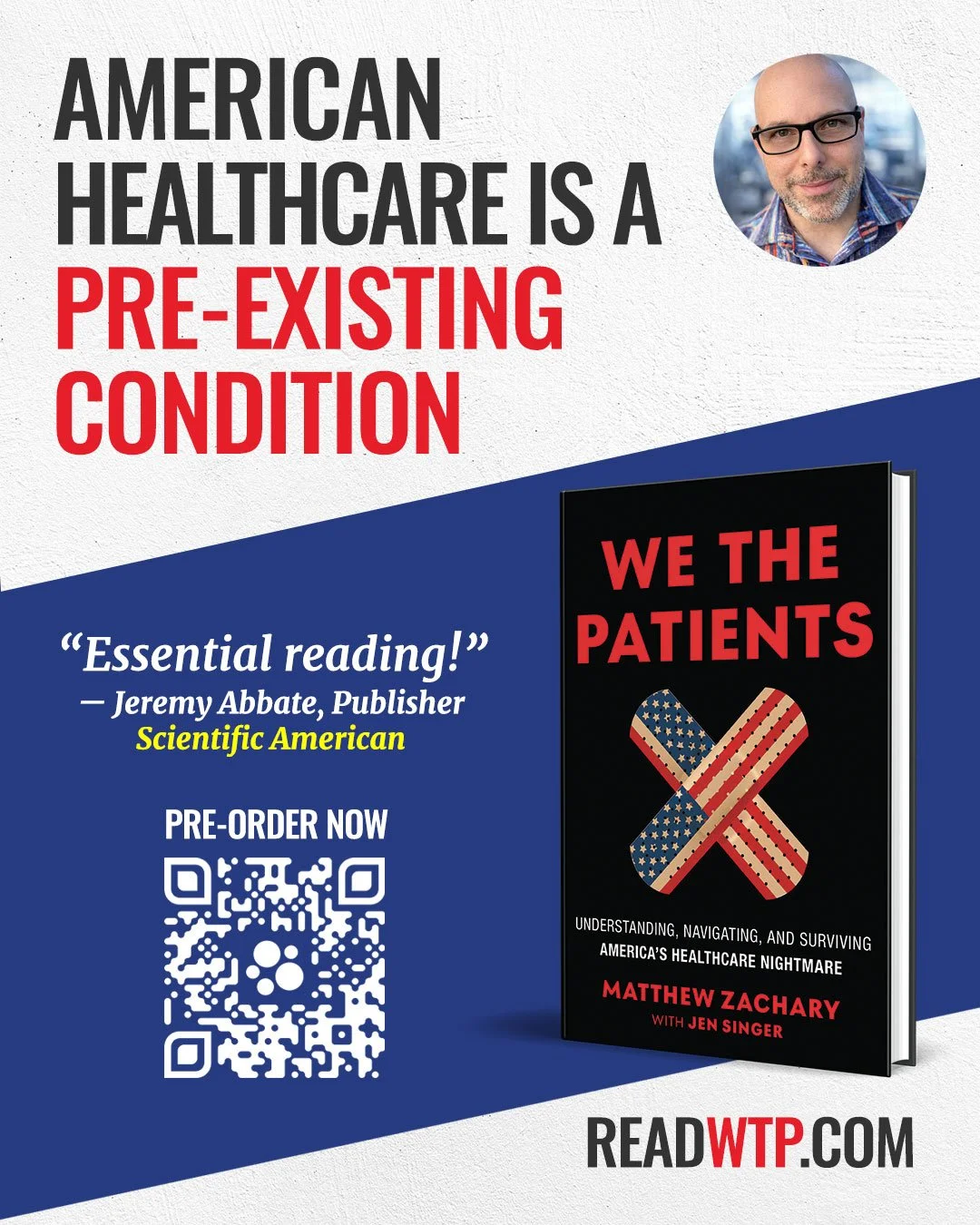
This is one of the reasons I wrote We the Patients: Understanding, Navigating, and Surviving America's Healthcare Nightmare.
The book spends a lot of time explaining the machinery of American healthcare because patients desperately need to understand the machinery. Insurance. Hospitals. Drugs. Billing. Appeals. Networks. Rights. Incentives. The historical accidents and deliberate decisions that created this incomprehensible thing we are all expected to navigate while sick.
But underneath all of that machinery is a much older and more intimate question.
Who gets to decide what matters to the patient?
Thirty years ago, Uncle Jay understood something I didn't yet have the vocabulary to articulate. He wasn't telling me chemotherapy was bad. He wasn't telling me doctors were wrong. And he certainly wasn't promising me that everything would work out if I refused treatment.
He was reminding me whose life everyone was talking about.
Mine.
I can still hear him saying it.
"Don't let them take away your gift."
Thirty years later, I would add only one thing.
Every patient has one.
The healthcare system's job should begin with finding out what it is.
If you've read We the Patients: Understanding, Navigating, and Surviving America's Healthcare Nightmare, I'd love to know whether Uncle Jay stayed with you after you finished the book, or which other story did. And if you haven't read it yet, 85 five-star Amazon reviews can't all be wrong.