When an Insurer Calls Your Treatment Investigational and the Alternative Is Brain Surgery
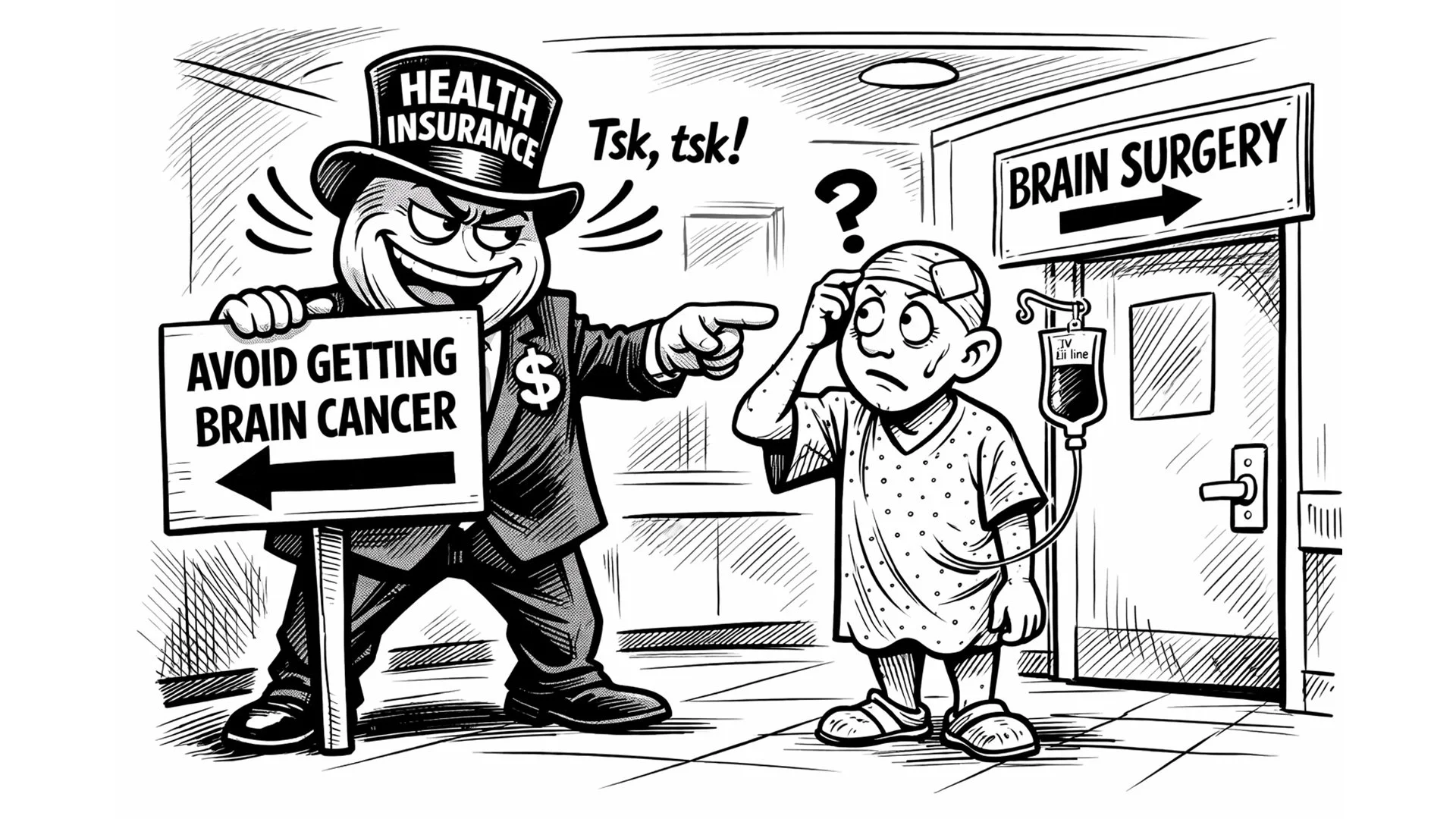
The rational question in Sally Nix’s case sounds almost clinical.
Would a health insurer rather pay for brain surgery than pay for an injection that may prevent it.
That question sits at the center of a denial from Blue Cross Blue Shield of North Carolina involving trigeminal neuralgia, a cranial nerve disorder coded as G50.0. Trigeminal neuralgia involves dysfunction of the trigeminal nerve, which controls facial sensation. When it misfires, patients experience electric shock pain triggered by chewing, brushing teeth, talking, or even a breeze. Clinicians have nicknamed it the suicide disease because uncontrolled pain can drive despair at a level few conditions produce.
Nix has already undergone 2 microvascular decompressions for bilateral trigeminal neuralgia. Surgeons opened her skull, separated compressing blood vessels from the nerve, and attempted to relieve the irritation at its source. Microvascular decompression can produce durable relief. Published recurrence rates range from 10 percent to 30 percent within 5 years, depending on series and follow up length. Some patients require repeat surgery. Each procedure carries risk, cost, and recovery burden.
Her current request involves a far less invasive step in the treatment continuum: trigeminal nerve blocks. These injections, billed under CPT codes such as 64400 for trigeminal nerve branch injection and 64505 for sphenopalatine ganglion injection, serve diagnostic and therapeutic purposes. Physicians use them to localize neuropathic pain and to provide temporary relief when medications fail or produce intolerable side effects. In many care pathways, they function as a bridge between oral medications and more invasive interventions such as radiofrequency ablation, gamma knife radiosurgery, or microvascular decompression.
Blue Cross NC denied coverage under a policy titled Injection Therapy for Headache and Non Spine Management. The company stated that available evidence remains insufficient to establish long term efficacy and net health benefit. The policy requires at least 2 documents of medical and scientific evidence indicating likely benefit or equivalence to established alternatives. The insurer indicated that it will review the policy again in October 2026.
From the insurer’s perspective, this process appears orderly. A policy committee reviews literature, consults specialty panels, and applies a uniform evidentiary threshold. The system seeks to avoid paying for interventions that lack durable benefit. Insurers operate under actuarial constraints. They must manage premiums, maintain reserves, and satisfy regulators. In that frame, denying coverage for procedures deemed investigately or inadequately supported protects the risk pool.
The problem emerges when policy classification diverges from clinical reality.
Trigeminal neuralgia does not represent a headache disorder. The International Classification of Diseases assigns it code G50.0 under disorders of the trigeminal nerve. Applying a migraine policy to a cranial neuropathy may simplify internal categorization, but it risks misalignment between benefit design and disease biology. When classification errors occur, coverage decisions follow the category rather than the condition.
That misalignment produces downstream effects that the spreadsheet does not capture.
If a nerve block costs a few thousand dollars and a repeat microvascular decompression costs tens of thousands of dollars plus hospital facility fees, anesthesia, and potential complication management, the immediate arithmetic appears straightforward. Yet insurers rarely evaluate single cases in isolation. They evaluate categories of services across populations. If they open coverage for trigeminal nerve blocks under a broader headache policy, they may fear expansion of utilization beyond the small subset of severe neuropathic cases. Utilization risk, not single case cost, drives policy caution.
In other words, the insurer does not compare Nix’s injection against her next brain surgery. It compares the injection category across all members against projected premium revenue.
This distinction clarifies the incentive structure.
Insurers retain risk for current members, not for hypothetical future complications that may occur after member churn. Employer sponsored coverage changes frequently. Members switch plans annually. If a patient receives short term relief from nerve blocks and later requires surgery under a different carrier, the original insurer avoids that cost. Actuarial time horizons compress decision making. Long term prevention often loses to short term cost control when enrollment remains unstable.
The system behaves rationally within its incentive boundaries.
Nix’s appeal raises a regulatory dimension. North Carolina Administrative Code 11 NCAC 21.0603 restricts denial of medically necessary services widely recognized by the medical community unless properly substantiated as experimental or investigational. CPT code existence alone does not guarantee coverage, but it indicates standardized procedure recognition. CMS coverage policies recognize certain interventional procedures for trigeminal neuralgia when conservative therapy fails. Insurers often cite CMS as reference. Selective alignment creates confusion.
From a clinician standpoint, nerve blocks represent established tools within a stepwise algorithm. Evidence for long term durability may remain limited. Evidence for short term pain reduction in appropriately selected patients appears in peer reviewed studies and clinical experience. Insurers often demand randomized controlled trials with long follow up. Pain management research rarely satisfies that gold standard due to ethical and practical constraints.
The evidentiary gap therefore reflects structural research limitations, not necessarily clinical futility.
We have seen this pattern before. During the 1990s, managed care organizations limited coverage for various interventional pain procedures citing insufficient evidence. Utilization controls reduced spending in the short term. Over time, advocacy, specialty society engagement, and additional data shifted many policies. Coverage expanded, often with prior authorization and documentation requirements. The system evolved through negotiation between cost containment and clinical practice.
The question today demands similar clarity.
Does denying trigeminal nerve blocks under a headache policy represent prudent evidence based stewardship, or does it represent a category error that shifts patients toward higher risk interventions.
The insurer will argue that it applies uniform standards to protect all members from unproven care. That argument carries legitimacy. History contains examples of overused procedures that produced little benefit. Payers exist to filter those out. The insurer will also argue that it welcomes submission of peer reviewed literature and will review the policy annually. Procedural fairness appears intact.
However, fairness of process does not guarantee accuracy of classification.
When a neuropathic cranial nerve disorder falls under a migraine injection policy, the starting premise skews analysis. Headache injections often target muscle trigger points or migraine pathways. Trigeminal nerve blocks target a defined nerve branch in a defined disease entity. Lumping these categories simplifies administrative management at the cost of clinical precision.
Administrative simplicity reduces internal friction for the payer. It increases friction for the patient.
Nix’s case illustrates the lived consequence. She has already undergone 2 brain surgeries. She reports immediate in office pain score reduction from 8 to 10 down to 2 following prior injections. She cannot tolerate certain alternative procedures due to adverse reactions. Denial does not eliminate her pain. It eliminates a lower risk option.
The economic paradox surfaces clearly. The system invests heavily in high acuity interventions once conservative options fail. It resists covering certain intermediate steps because evidence does not meet strict durability criteria. Patients bear the interim suffering and administrative burden.
We should avoid framing this as villainy. Insurers respond to premium sensitivity from employers and regulators. Employers resist rising healthcare costs. Regulators monitor solvency and consumer protection. Shareholders expect disciplined underwriting. Each actor optimizes within its mandate.
Yet the alignment between those mandates and patient protection remains imperfect.
Patient protection aligns with economic efficiency when incentives reward prevention and stepwise care rather than episodic rescue. That alignment requires stable enrollment, value based contracts that span years, and benefit designs that recognize clinical nuance. It also requires precise policy language that differentiates disease entities rather than grouping them for administrative convenience.
Trigeminal neuralgia affects a small population relative to migraine. Expanding coverage for nerve blocks specifically for G50.0 with defined clinical criteria would likely produce limited budget impact. Clear diagnostic coding, prior medication failure documentation, and specialist attestation could contain inappropriate utilization. Such targeted policy refinement would preserve cost discipline while respecting disease specificity.
The broader lesson extends beyond one insurer and one patient.
Healthcare rationing in the United States rarely occurs through explicit public decrees. It occurs through coverage criteria, coding categories, prior authorization algorithms, and evidentiary thresholds. These mechanisms appear technical. They carry moral weight because they determine access.
When patients must cite CPT codes, administrative law provisions, and peer reviewed studies to secure relief from documented neurological disease, the burden shifts from system to individual. Some patients possess the education, time, and stamina to fight. Many do not. Insurers know that appeals drop off with each administrative step. Attrition functions as a cost control lever.
The system does not require malicious intent for that outcome. It requires only friction.
In the 1980s film WarGames, a computer simulation nearly triggered catastrophe because it optimized for winning scenarios without understanding human stakes. Healthcare coverage algorithms operate with similar blind spots when they optimize for evidentiary purity and utilization control without fully integrating disease specific nuance. The machine follows its programming. Humans must update the code.
Policy refinement demands collaboration among specialty societies, insurers, and regulators. It requires transparent data on utilization, outcomes, and budget impact. It requires acknowledgement that evidence hierarchies must adapt to conditions where large randomized trials remain impractical. Most importantly, it requires recognition that misclassification can produce downstream cost and suffering that no spreadsheet forecasts accurately.
If Blue Cross NC reviews its policy in October 2026, it should evaluate whether trigeminal neuralgia belongs within a migraine injection framework. It should model the budget impact of limited coverage under defined criteria. It should consider the churn rate of members and how short term cost avoidance may shift long term expense to another payer while exposing patients to higher risk interventions.
If regulators review complaints, they should examine whether administrative categorization aligns with statutory definitions of medical necessity. They should assess whether uniform evidentiary thresholds inadvertently exclude recognized standard of care practices in rare or severe conditions.
If clinicians engage, they should submit data and document outcomes to strengthen the evidentiary base that payers demand.
Continuing current incentives will produce predictable outcomes. Insurers will deny borderline categories to control utilization. Patients with stamina will appeal. Some will win after months of effort. Others will forgo treatment or proceed directly to invasive options. Costs will surface later, often under a different carrier. The system will call this efficiency.
Realignment would produce a different trajectory. Precise policy language would reduce misclassification. Multi year value based arrangements would reward prevention across longer horizons. Transparent appeal metrics would discourage reliance on attrition. Patients would spend less time acting as unpaid policy analysts and more time pursuing care.
Nix’s case does not demand outrage. It demands clarity.
A rational system should not force a patient with documented cranial neuropathy and prior surgical history to choose between untreated severe pain and repeat brain surgery because an injection policy groups her condition with migraine. A rational market can protect premiums while refining categories to reflect clinical reality.
Incentives shape behavior. When incentives reward short term cost containment over stepwise, disease specific care, patients absorb the mismatch. When incentives align with accurate classification and long term outcomes, both patients and payers benefit.
The question therefore extends beyond one denial letter.
Will we continue to allow administrative convenience and compressed actuarial horizons to define access for severe neurological disease, or will we refine the rules to reflect the actual biology, economics, and human consequence at stake.
Markets respond to design. Healthcare policy operates no differently. The code can change. The only uncertainty lies in who chooses to update it, and how many patients must endure unnecessary escalation before the revision occurs.
Welcome to 2026: The Year of the Patient where the sick shall inherit the ballot. See the Year of the Patient Collection and join the movement