Twenty Four Thousand People Follow Me on LinkedIn. Healthcare Should Be Paying Attention.
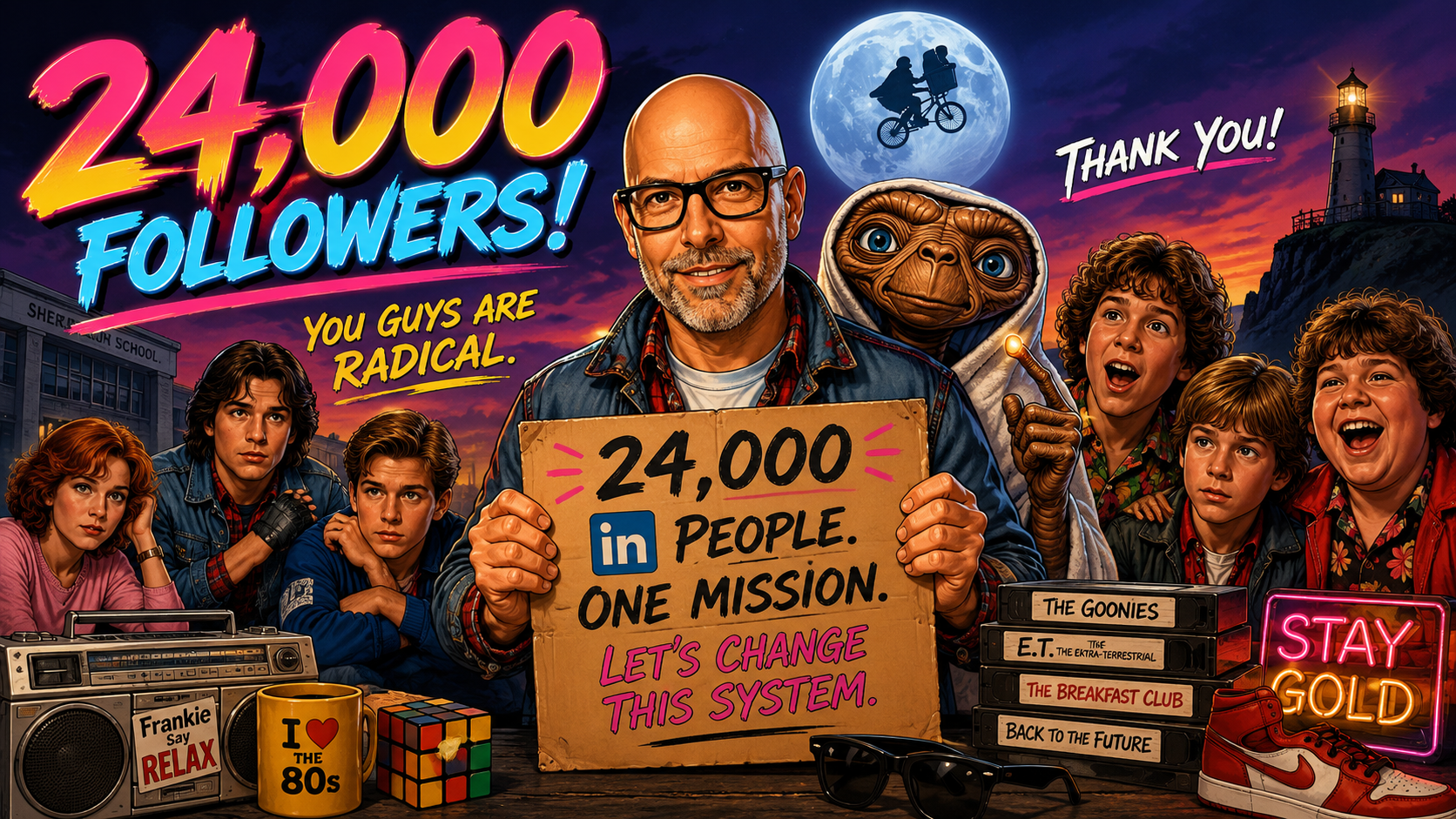
Yesterday, my LinkedIn community crossed 24,000 followers. On its face, that’s a pleasant milestone, the kind of number social media platforms encourage us to celebrate with confetti emojis and humblebrags. But I couldn’t care less about the number itself. What interests me is who those people are and why they keep showing up.
Nobody wakes up in the morning thinking, I hope my feed is full of prior authorization policies and insurance denials today. Healthcare bureaucracy is hardly the stuff of viral internet culture. Yet every day thousands of people engage with conversations about claim denials, medical debt, pharmacy benefit managers, surprise billing, and the strange reality that the wealthiest nation in the world somehow built a healthcare system that requires ordinary people to become amateur lawyers just to receive medically necessary care.
That tells me something important is happening.
The people following these conversations are not collecting healthcare trivia. They are looking for answers because they have already lived through the problem. Some are patients who received a denial letter after their physician approved treatment. Some are caregivers who spent an entire afternoon on hold while sitting beside a hospital bed. Others are physicians and nurses who increasingly spend their days negotiating with insurance companies instead of caring for patients. They come from different backgrounds, different political beliefs, different parts of the country, yet they arrive carrying remarkably similar stories.
That pattern has fascinated me for years because it exposes one of the biggest myths in American healthcare. We tend to believe our own bad experience is somehow unique. We assume we were unlucky, or filled out the wrong form, or simply encountered the wrong customer service representative on the wrong day. Then we hear someone else’s story. Then another. Then another. Eventually it becomes impossible to ignore the obvious conclusion. These are not isolated failures. They are features of a system that produces the same outcome over and over again.
When I was diagnosed with brain cancer at twenty one, I did not understand any of this. My focus was survival. My parents handled the paperwork while surgeons and oncologists handled everything else. Like most patients, I assumed the healthcare system existed to help people navigate one of the worst moments of their lives.
Thirty years later, I know better.
American medicine is extraordinary. American healthcare administration is something else entirely.
Those are two different things, and we confuse them all the time.
Our scientists can decode tumors at the molecular level. Our surgeons perform procedures that would have sounded like science fiction when I was a child. We develop therapies capable of extending and saving lives in ways previous generations could barely imagine. Then we hand those remarkable advances to a financing system that often rewards delay, confusion, and denial. We have created breathtaking innovation on one side of the equation and breathtaking administrative friction on the other.
No amount of medical innovation can fully overcome a system that makes access itself a barrier.
That is why these conversations continue to grow. People are no longer looking only for sympathy. They are looking for translation. They want someone to explain why their insurer reversed a decision after treatment had already begun. They want to know why one MRI requires three phone calls while another sails through without question. They want someone to admit that none of this feels normal because, despite how familiar it has become, it isn’t.
Social media, for all its faults, has done something remarkable for patients. It has collapsed the illusion of isolation. Twenty years ago, people fought these battles alone. Today, a denial letter posted online can generate hundreds of responses from people who have navigated the exact same situation. Someone shares an appeal strategy. Someone recommends a nonprofit. A physician explains the medical language. An attorney points to a legal protection the patient never knew existed. Knowledge that once lived in scattered pockets now moves at internet speed.
That collective knowledge changes the balance of power.
It also explains why I wrote We the Patients: Understanding, Navigating, and Surviving America’s Healthcare Nightmare with my friend and collaborator Jen Singer. I did not want to write another book describing everything that is wrong with American healthcare. Most readers already know something is wrong because they have experienced it firsthand. I wanted to write the book people reach for after the denial arrives. The book that explains how the machinery actually works. The book that replaces confusion with understanding and panic with a plan.
If the response to my work over the past year has taught me anything, it is that patients are done accepting complexity as an inevitable part of healthcare. They are asking harder questions. They are comparing notes. They are demanding transparency from organizations that have long benefited from the public’s inability to see how decisions are made.
That is healthy.
Healthcare should welcome informed patients instead of fearing them.
So while LinkedIn tells me I have 24,000 followers, I see something else entirely. I see 24,000 reminders that people are hungry for honesty. They want plain English instead of corporate language. They want someone willing to connect policy with lived experience. Most of all, they want reassurance that they are not crazy for believing the system often makes an already terrible situation even harder.
If you already follow me on LinkedIn, thank you. You have helped turn daily conversations into something much larger than an audience.
If you only know me through Substack, come join us there. The conversation continues every day, and every story adds another piece to a puzzle that has remained hidden in plain sight for far too long.
And if you want to understand how we got here, and more importantly what you can do when the system turns against you, I hope you’ll order We the Patients: Understanding, Navigating, and Surviving America’s Healthcare Nightmare. I wrote it because nobody should have to navigate America’s healthcare nightmare without a map.