Freedom to Go Broke
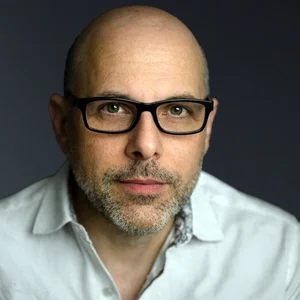
I survived brain cancer at 21. American healthcare taught me its first lesson early. It kills with paperwork long before it threatens you with biology.
I remember fluorescent hospital lights that never shut off. I remember adults discussing my body as if I were not in the room. I remember charts talking louder than I did. I remember bills arriving with perfect punctuality after the tumor had already taken enough.
At 21, you assume adults know what they are doing. You assume systems exist for a reason. Cancer teaches you otherwise. Cancer teaches you that American healthcare speaks fluently in procedure codes and liability disclaimers, not in people.
30 years later, the language has changed. The logic has not.
We now live in an era where political leaders sell healthcare policy like a lifestyle upgrade. The newest pitch comes wrapped in freedom language and cash language and personal choice language. Donald Trump calls it a Great Healthcare Plan. The promise sounds simple. Send subsidy money directly to patients. Cut out the middleman. Let people decide how to spend it.
It sounds empowering if you have never been sick.
The policy reality underneath the pitch looks familiar to anyone who has navigated a diagnosis with a pulse and a bank account. It shifts financial risk from insurers to patients and reframes abandonment as autonomy.
Rent shows up every month. Food shows up every day. Utilities do not wait for an MRI. That subsidy money never sits quietly in a savings account labeled future cancer. People use it to survive the short term because survival does not pause for actuarial theory. Then the diagnosis arrives and ignores whatever balance remains.
This outcome surprises no one who understands how people actually live.
High deductible plans already run this experiment in real time. Health savings accounts already test the fantasy that patients will behave like disciplined financial planners while sick. Prior authorization already delays care until damage accrues interest. None of this produces better outcomes. It produces thinner margins between stability and collapse.
The check does not change the math. It just moves the blame.
Trump claims his plan will lower drug prices by 300 to 500 percent. A price cannot fall below zero. That statement belongs to marketing, not policy. It belongs in a late night infomercial between kitchen gadgets and celebrity collectibles.
Yet the absurdity slides by because healthcare discourse has trained Americans to accept nonsense as long as it sounds decisive.
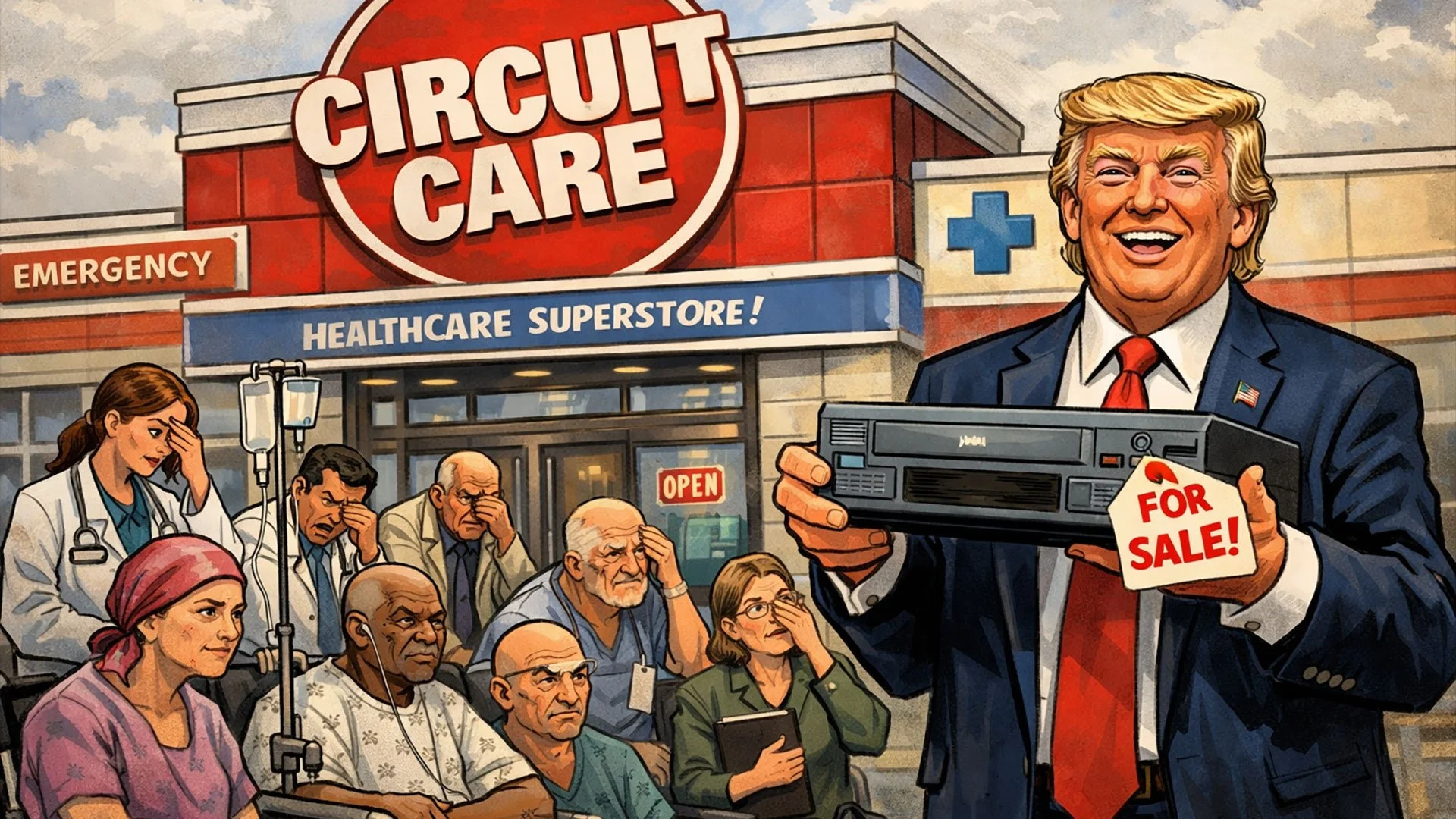
He wants people to shop for healthcare the way they once shopped for electronics. Compare prices. Read reviews. Walk away if the deal feels wrong. The analogy collapses on contact with reality.
You can delay buying a VCR. You cannot delay sepsis. You can return a toaster. You cannot return a diagnosis. Healthcare decisions happen under stress, pain, fear, and urgency. No amount of shopping language changes that.
Anyone who remembers the 1980s remembers Circuit City. Big promises. Wall after wall of choice. Sales associates reading from scripts. The illusion of control. The outcome rarely matched the pitch.
Healthcare never behaved like consumer electronics. It never will.
This design does not fail accidentally. It performs exactly as intended.
Strip rules that require coverage. Replace guarantees with cash. Reduce the insurer role. When patients fall through the cracks, point to their spending choices. Call it personal responsibility. Call it freedom.
The risk never disappears. It just migrates.
For patients, that migration shows up as delayed care, skipped tests, untreated symptoms, and medical debt that outlives the illness. For families, it shows up as financial triage. For clinicians, it shows up as moral injury. For insurers, it shows up as improved balance sheets.
The system has learned to market its own retreat.
When I was 21, nobody explained this to me. They did not need to. I felt it. I learned that the system prioritizes process over people and paperwork over prognosis. I learned that surviving the disease does not spare you from the administrative aftershocks.
What has changed in 30 years is not the harm. It is the storytelling.
Now the withdrawal of protection gets framed as innovation. The removal of guardrails gets framed as efficiency. The absence of accountability gets framed as trust in the consumer.
None of that language holds up when illness enters the room.
If a politician wants your vote on healthcare, slogans are not enough. Promises are not enough. Checks are not enough. Demand to see the protections in writing. Demand to see how coverage survives diagnosis. Demand math that functions outside a campaign rally.
Ask who carries the risk when the money runs out. Ask who gets blamed when care gets delayed. Ask who benefits when responsibility shifts downward.
Healthcare policy reveals its values at the moment of vulnerability. Any plan that collapses under illness was never designed for people who get sick. It was designed for people who want to stop paying for them.
2026 stands as the Year of the Patient. That phrase means something specific or it means nothing. It means patients organizing around policy, not platitudes. It means refusing plans that treat illness like a budgeting error. It means voting with memory, not slogans.
The sick already paid the price. Now they inherit the ballot.