MZLIVE and the Accidental Creation of America’s Survivorship Movement
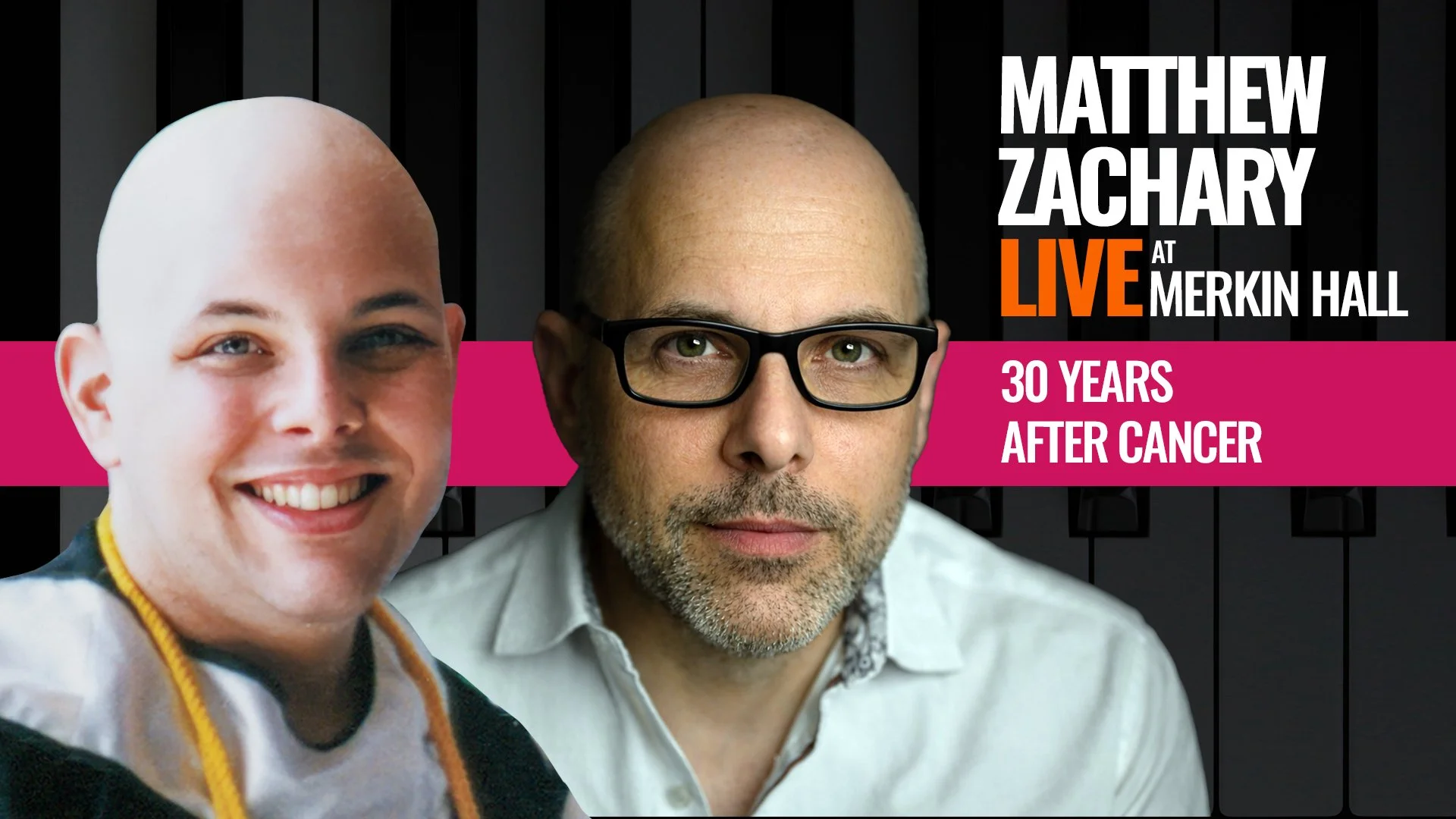
MZLIVE began as an idea I could not fully explain to people without sounding slightly unwell.
I told people I was returning to the stage as a concert pianist for the first time in almost 22 years. I told them I was launching my first book at Merkin Hall near Lincoln Center on the 30th anniversary of my brain cancer diagnosis. I told them the evening would include music, chapter readings, survivors, advocates, clinicians, executives, journalists, nonprofit founders, pharmaceutical sponsors, and conversations about what survival actually costs over time. Most people nodded politely while trying to determine whether I was organizing a concert, a healthcare summit, a memoir reading, or some strange Gen X telethon for emotionally exhausted cancer people.
By the end of the night, I realized the confusion itself explained why the event worked.
American healthcare fragments people professionally, financially, psychologically, and chronologically. Specialists see body parts. Insurers see claims exposure. Employers see productivity loss. Pharmaceutical companies see market access and adherence. Hospitals see throughput. Investors see growth curves. Advocacy organizations often see narrow disease categories. Patients experience all of it simultaneously while trying to remain functional enough to survive.
Very few spaces allow those realities to occupy the same room honestly.
MZLIVE did.
For 2 hours at Merkin Hall, people from every corner of the cancer world sat together listening to 30 years of institutional memory unfold in public. Survivors discussed infertility, disability, delayed diagnoses, fear, financial toxicity, loneliness, and the strange emotional afterlife of surviving something that permanently rearranges your identity. Clinicians listened. Executives listened. Pharmaceutical sponsors listened. Nobody hid behind panel moderation or conference branding. Nobody pretended survivorship resolves neatly once treatment ends.
The room carried an emotional texture that healthcare systems rarely acknowledge correctly. People cried constantly and laughed just as hard. Not inspirational speaker laughter. Survivor laughter. Dark humor. Gallows humor. The kind of humor people develop when they spend enough time sitting in infusion rooms, emergency departments, waiting rooms, funeral homes, fertility clinics, radiation suites, and insurance appeals processes to understand that absurdity and grief often occupy the same breath.
That emotional ecosystem matters because survivorship itself changes people structurally.
When I was diagnosed with a rare primary brain tumor in 1996 at age 21, nobody explained survivorship to me because modern survivorship infrastructure barely existed. I planned to attend UCLA film school and study composition with Jerry Goldsmith. Instead, I spent my senior year at Skidmore College slowly losing dexterity in my dominant left hand while doctors cycled through misdiagnoses that ranged from carpal tunnel syndrome to Epstein Barr virus to the flu. By the time an MRI revealed the tumor, I had already lost much of my ability to arpeggiate at the piano. A neurologist eventually diagnosed me over an answering machine.
The system focused correctly on keeping me alive. It had far less to say about what surviving would cost psychologically, neurologically, professionally, socially, or financially over the next 30 years.
Nobody hands a 21 year old a manual explaining how to build a life after brain cancer.
That vacuum accidentally created an entire generation of organizers.
Many of the people who stood on stage that evening helped build what we now casually refer to as the cancer survivorship movement before the movement even had language to describe itself. Craig Lustig reminded the audience that when we first met in the early 2000s, the phrase cancer advocate barely existed publicly. Shelly Fuld Nasso spoke about the generation of survivors and advocates who built support systems because formal healthcare institutions still lacked age appropriate psychosocial infrastructure. Maimah Karmo described how a loose collection of frightened young survivors slowly became nonprofit founders, organizers, policy voices, and public disruptors because nobody else seemed willing to address what patients actually needed after treatment.
None of this emerged from institutional charity.
Patients built parallel systems because the healthcare economy historically reimbursed intervention more reliably than navigation, continuity, or long term psychosocial support. A $150,000 infusion cycle moves through the system efficiently. A patient navigator helping a family avoid financial collapse often struggles to secure sustainable funding despite the fact that navigation frequently reduces downstream utilization, improves adherence, prevents abandonment, and stabilizes outcomes.
Healthcare systems tend to reward interventions with immediate measurable transactions while underinvesting in functions that create diffuse long term stability.
That incentive structure shapes behavior rationally even when the downstream consequences become collectively irrational.
Insurers defend prior authorization as utilization management because unchecked utilization does increase costs. Employers shift expenses onto workers through deductibles and narrow networks because healthcare inflation pressures balance sheets. Pharmaceutical companies defend intellectual property because research and development require enormous capital exposure. Hospitals consolidate because scale improves negotiating leverage against payers. Investors pursue predictable returns because markets reward growth consistency.
Every institution responds logically to the incentives placed in front of it.
Patients absorb the friction generated between those competing interests.
Over time, those accumulated frictions create something healthcare leaders increasingly underestimate at their own peril. Institutional distrust.
Patients now encounter healthcare less as a coordinated care ecosystem and more as a prolonged administrative endurance test. Delays, denials, fragmented communication, opaque pricing, prior authorization barriers, staffing shortages, burnout, and financial toxicity slowly erode confidence not only in insurers but in hospitals, regulators, media organizations, pharmaceutical companies, and public health institutions simultaneously.
That erosion carries economic consequences.
Healthcare spending in the United States now exceeds $4.5 trillion annually. Employers absorb productivity losses from delayed and inaccessible care. Families burn through retirement savings while navigating prolonged treatment cycles. Hospitals hire armies of administrative personnel to negotiate against payer bureaucracy. Entire sectors of the healthcare economy now exist primarily to manage friction produced by other sectors of the healthcare economy.
That represents economic inefficiency masquerading as cost containment.
The audience at MZLIVE understood this instinctively because many of them had spent decades living inside the consequences personally.
What surprised me most about the evening was how secondary the piano eventually became.
I spent the last 6 months retraining both hands to return to public performance. Brain cancer compromised my left hand at 21. I had not given a solo public piano concert in almost 22 years. Rebuilding that ability required repetition, physical rehabilitation, endurance work, neurological conditioning, and a level of stubbornness that occasionally bordered on psychological instability. Recovery rarely arrives through cinematic breakthrough moments. Most of the time it looks like a middle aged cancer survivor sitting alone at a piano repeating scales while wondering whether muscle memory still exists.
But once the event began, the larger meaning of the evening moved beyond personal closure.
The room itself became the story.
People who normally occupy separate corners of healthcare suddenly recognized themselves inside a shared institutional memory. Survivors who spent years feeling isolated realized they belonged to a much larger civic identity. Clinicians recognized the emotional downstream effects of fragmented systems they themselves often feel powerless to change. Industry leaders recognized that patient distrust now threatens long term institutional legitimacy. Advocates recognized how much infrastructure they had quietly built over 3 decades without fully stopping to acknowledge it.
By the end of the evening, MZLIVE no longer felt like a concert or a book launch.
It felt like proof of concept.
Healthcare already responds to organized leverage. Insurers organize through trade associations. Hospitals consolidate through mergers. Employers negotiate collectively. Pharmaceutical companies coordinate lobbying infrastructure and market access strategies. Investors influence governance through capital allocation.
Patients largely remain fragmented despite representing one of the largest civic constituencies in the country.
Cancer survivors alone now number nearly 19 million Americans. Add caregivers, chronic illness communities, disability populations, and aging families, and the scale becomes politically and economically impossible to ignore.
Yet healthcare still treats patients primarily as episodic consumers instead of organized stakeholders.
That model becomes increasingly unstable over time.
MZLIVE offered one small glimpse of an alternative future where survivors hold institutional memory publicly, where advocacy functions as infrastructure instead of decoration, where industry listens without fully controlling the narrative, and where patients begin recognizing themselves not simply as recipients of care but as a constituency capable of shaping incentives politically, culturally, and economically.
Healthcare will continue following the incentives placed in front of it.
The question now centers on whether patient protection becomes economically and politically unavoidable before institutional trust deteriorates beyond repair.