The Internet Demanded That She Look More Like She Was Dying
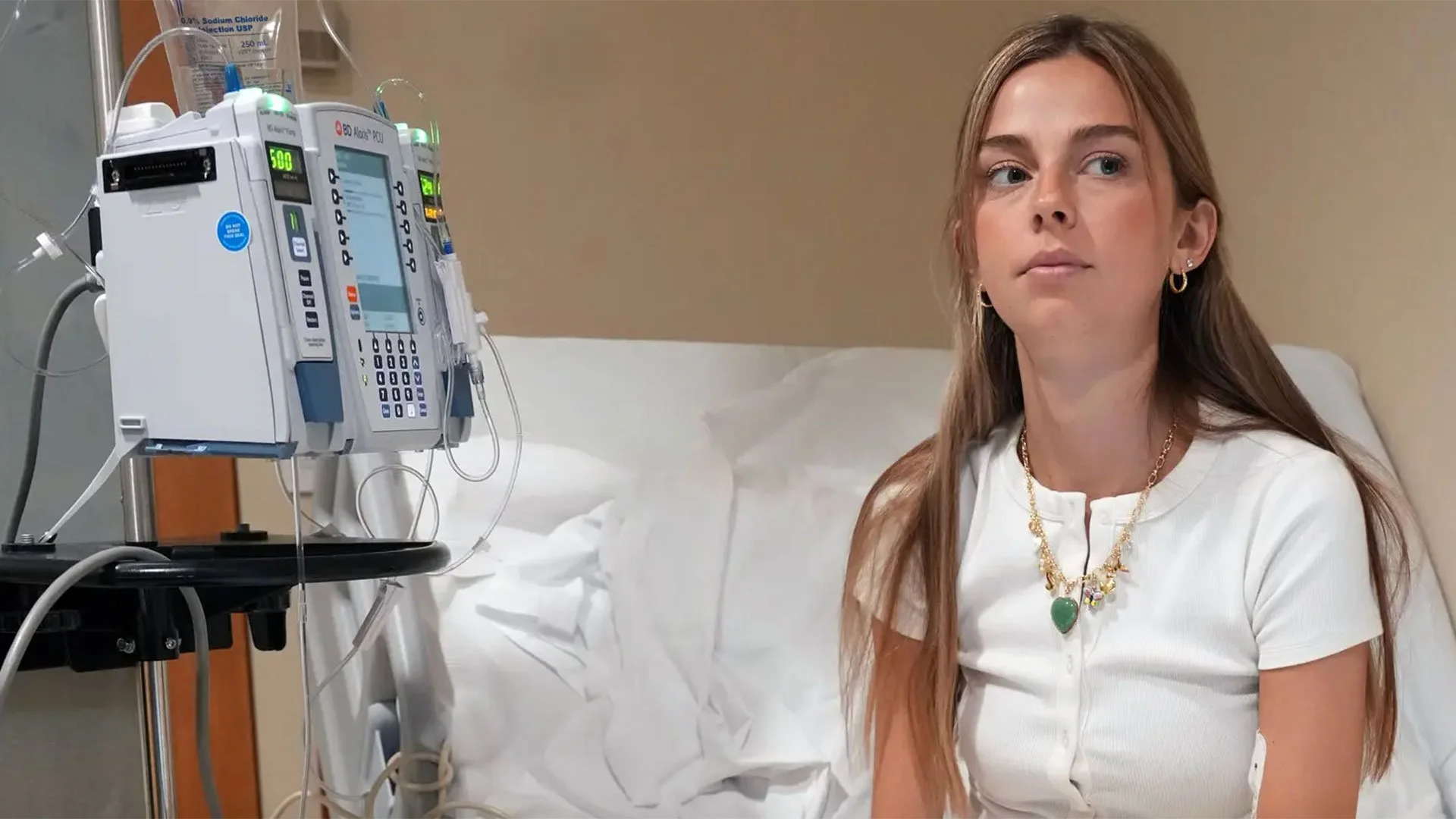
Sydney Towle died this week at twenty-six years old after a three-year battle with cholangiocarcinoma, a rare and devastating cancer of the bile ducts. She spent those three years doing something that would have been almost unimaginable a generation ago. Rather than retreat from public view, she invited the public into her life. More than a million people followed her journey as she documented chemotherapy, surgeries, difficult conversations, moments of grief, unexpected joy, solo trips to Europe, days wandering New York between treatments, and the strange, impossible balancing act of trying to build a life while simultaneously trying to save it.
Most people saw exactly what she intended them to see: a young woman refusing to let cancer become the entirety of her identity. Others saw something else entirely. They saw someone who did not fit their expectations of what terminal illness was supposed to look like, and they decided that the problem was not their expectations. It was her.
A Reddit community emerged with a singular purpose: expose Sydney Towle as a fraud. The group's rules included one simple directive: "No defending Syd." Members scrutinized her appearance, questioned her medical timeline, analyzed photographs for evidence of deception, mocked her personality, criticized her clothing, complained that she smiled too much, and insisted she looked too healthy to have Stage IV cancer. They contacted companies she partnered with in an effort to cost her sponsorships. Anonymous complaints reached Memorial Sloan Kettering after she posted videos of bringing gifts to nurses. Others emailed her medical providers and businesses she visited, convinced they were participating in an elaborate scam. One commenter wrote, "I literally feel like punching her in the face."
Think about that sentence for a moment. Not because someone had been caught exploiting sick people. Not because someone had fabricated a diagnosis. But because a twenty-four-year-old woman with terminal cancer looked too alive.
It would be comforting to dismiss this as just another story about internet trolls behaving badly. It is something much more unsettling than that. Sydney's experience exposed a belief that has existed long before Reddit, TikTok, or social media itself. We have quietly constructed a cultural script for serious illness, and we become deeply uncomfortable when patients refuse to perform it.
We expect cancer to announce itself visually. We expect patients to look exhausted, defeated, visibly diminished. We expect suffering to be obvious enough that no explanation is required. Hair should disappear. Energy should vanish. Smiles should become rare. Vacations should stop. Joy should become suspect. When reality refuses to cooperate with that script, we often conclude that the patient must be lying.
Medicine has changed dramatically over the last several decades. Public imagination has not.
Many cancers that were once immediate death sentences have become chronic illnesses that people live with for years. Immunotherapy, targeted therapies, improved supportive care, better management of side effects, and more personalized treatment have fundamentally altered what life with cancer can look like. Patients receive chemotherapy in the morning and answer work emails in the afternoon. They attend weddings between treatment cycles. They exercise when they feel well enough. They travel when their doctors approve it. They celebrate birthdays, fall in love, complain about bad weather, binge television shows, and argue with their siblings.
None of those things mean they are not sick. They mean they are still alive.
Sydney's oncologist understood that better than anyone. As he explained to The New York Times, the purpose of treatment was to steal only one day each week for chemotherapy while protecting the other six days for living. If she had enough energy to run ten miles, she should run ten miles. If she wanted to travel, she should travel. The goal of cancer treatment is not simply to prolong biological existence. It is to preserve the life that still exists between appointments.
The internet interpreted those same moments as evidence against her.
She smiled. Therefore she must be lying.
She went scuba diving after receiving medical clearance. Therefore she must be lying.
She still had long hair because of modern treatment techniques and scalp cooling. Therefore she must be lying.
Every ordinary human moment became another exhibit in a case against someone whose only real offense was refusing to look miserable enough for strangers.
What struck me most was not the cruelty. The internet has conditioned us to expect cruelty. It was Sydney's response. She never publicly engaged with the people trying to dismantle her credibility. She never devoted herself to proving her diagnosis over and over again. Instead, she offered one sentence that may be among the most profound observations I have ever heard from someone facing terminal illness.
"I'm sorry that they are so angry that living with cancer can look different than they think it should."
That sentence deserves to outlive every hateful comment ever written about her.
I was diagnosed with brain cancer at twenty-one. This year marks thirty years since my diagnosis. Throughout much of my twenties, I heard some version of the same observation again and again.
"You don't look sick."
"You seem fine."
"You look great."
People almost always intend those comments as compliments. They rarely recognize what sits beneath them. Hidden inside those words is an assumption that illness should be visible enough to satisfy everyone else's expectations. If it isn't, then perhaps it wasn't really that bad. Perhaps you've recovered completely. Perhaps your experience doesn't quite count.
Survivors know better. The most difficult parts of illness are often the ones no one can see. Fear rarely leaves visible bruises. Neuropathy doesn't announce itself across a room. Cognitive changes don't introduce themselves at dinner parties. Chronic fatigue has no uniform. Anxiety doesn't require a wheelchair. Long-term survivorship is filled with invisible negotiations that never appear in photographs. Yet we continue to judge suffering primarily by appearance.
Sydney understood something that took me years to articulate. The world has designed a costume for sick people. Wear it, and you receive sympathy. Refuse it, and eventually someone accuses you of pretending.
Before she died, Sydney posted another message that deserves to be remembered.
"Go get a pint of Ben & Jerry's, watch your favorite movie, remember that life is good and bad things happen sometimes but that doesn't make it a bad life."
She wrote those words while strangers were organizing campaigns against her, contacting companies she worked with, anonymously reaching out to her medical providers, and insisting she wasn't dying quickly enough to satisfy their standards of authenticity.
Grace is difficult under ordinary circumstances. She somehow found it while carrying the weight of terminal illness.
Sydney entered hospice earlier this week at the National Institutes of Health in Bethesda. She died surrounded by the people who loved her. She was twenty-six years old.
The tragedy is not simply that cancer took her life. It is that she spent so much of the life she had left defending herself against people who believed patients owe the public visible proof of their suffering.
We spend an enormous amount of time talking about the ways healthcare fails patients. We debate insurance denials, prior authorization, administrative burden, unaffordable drugs, fragmented care, and all the institutional failures that make illness harder than it already is. Those conversations matter because they shape policy and determine whether people receive the care they need. But the healthcare system is not the only place patients encounter disbelief.
When they leave the hospital, they enter the rest of society. They enter workplaces where invisible disabilities are questioned. They enter friendships strained by illnesses that cannot be seen. They enter families that mistake appearance for recovery. They enter comment sections where skepticism has become a substitute for empathy and anonymous cruelty masquerades as accountability.
Sydney Towle deserved better from cancer. She deserved better from the internet. Most of all, she deserved better from a culture that still cannot accept one simple truth.
Sometimes people who are dying still laugh. Sometimes they travel. Sometimes they dance. Sometimes they post videos from chemotherapy. Sometimes they have wonderful days in the middle of terrible years. And none of that makes their illness any less real.