What My Annual ASCO Mosaic Reveals About Cancer Care
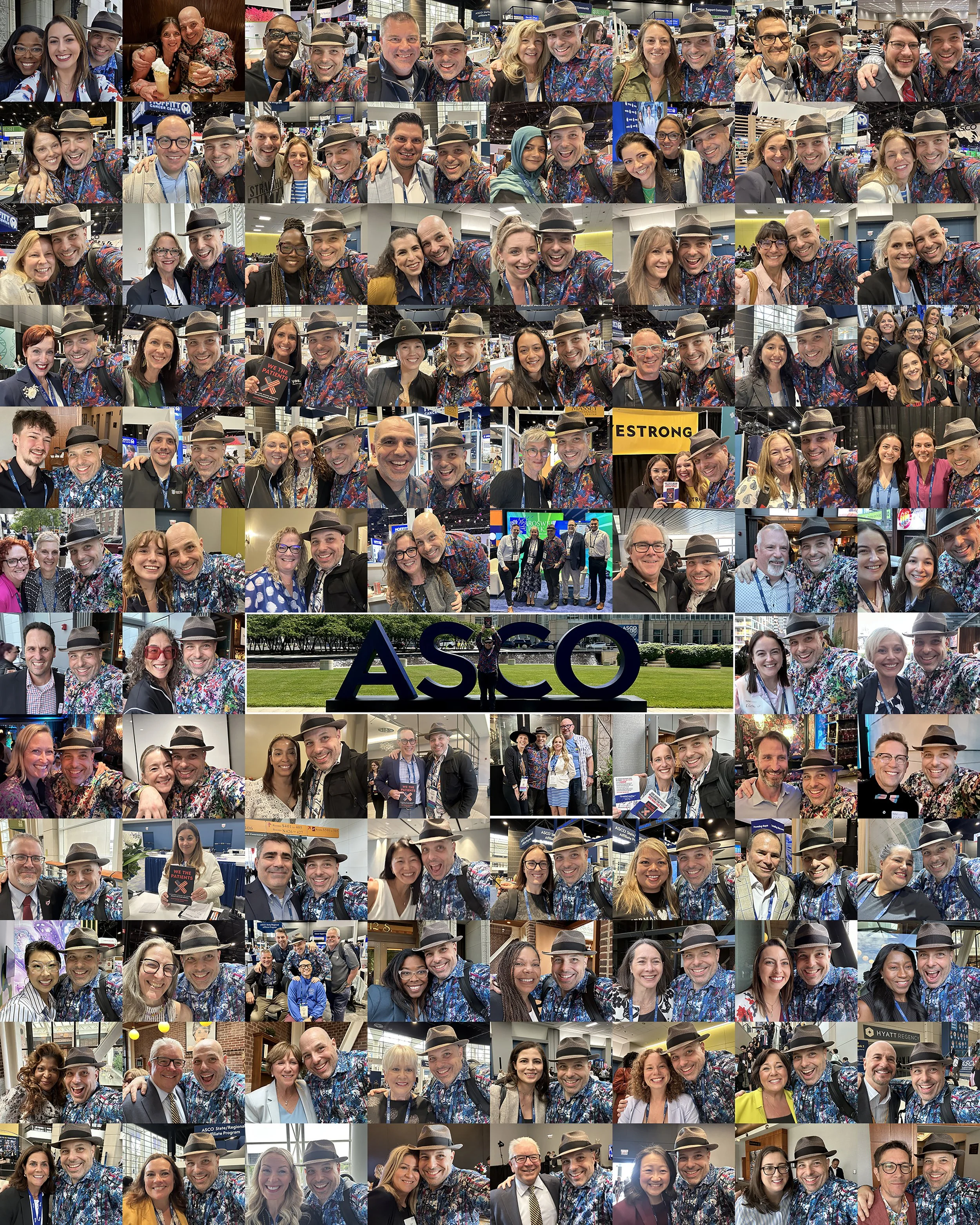
Every year, after the American Society of Clinical Oncology Annual Meeting comes to an end, I sit down with hundreds of selfies and build what has quietly become one of my favorite traditions and, frankly, what you all expect of me anyway.
The finished mosaic usually gets more attention than any single photograph, but the picture has never really been about me. It’s a snapshot of an entire community. Every face represents a conversation, a reunion, a new friendship, or someone whose work quietly influences the lives of cancer patients long after the convention center lights go dark.
I’ve been attending ASCO for nearly 20 years, and every year I tell myself I’m going to slow down, but my lower back has other ideas. Radiation that saved my life nearly 30 years ago also left me with a permanent reminder that my body keeps score. By the third day of ASCO, walking McCormick Place feels less like covering a conference and more like competing in an endurance event I definitely did not train for. Every year I promise myself I’ll schedule fewer meetings, sit down more often, and stop trying to walk every aisle.
Every year I break every one of those promises.
The reason is simple. I genuinely love being there.
For 4 days, oncology builds its own temporary city. More than 40,000 physicians, researchers, nurses, survivors, advocates, pharmaceutical leaders, entrepreneurs, investors, policymakers, journalists, and caregivers gather under one roof. The science draws everyone to Chicago, but the conversations keep us there. There are very few places where a physician developing a clinical trial, a startup founder building an AI platform, a patient advocate fighting insurance denials, and a survivor who has lived through all of it can end up standing in the same coffee line.
That’s where I spend most of my time.
The official program tells one story. The hallways tell another.
This year’s science was remarkable. The standing ovation for the pancreatic cancer presentation was one of the most powerful moments I have witnessed at ASCO. Everyone in that room understood the significance of what had happened.
Researchers had spent decades pursuing meaningful progress against one of the deadliest cancers we know. Patients volunteered for trials knowing they might never personally benefit. Families waited through years of incremental advances hoping one day the data would finally change. For a few minutes, thousands of people stood together to celebrate the fact that science still moves forward.
What surprised me was how quickly the conversations shifted once everyone walked out of the auditorium.
I probably had well over 100 conversations during the week. Some lasted 2 minutes. Others stretched over breakfast or dinner. They started with discussions about new therapies, artificial intelligence, diagnostics, precision medicine, or clinical trials. Almost every one of them eventually drifted somewhere else.
Health insurance fuckery.
Not because anyone planned to talk about those things. They simply kept surfacing.
One physician stopped me after spotting We the Patients sticking out of my backpack. He thanked me for “saying what we cannot.” Another conversation about an exciting breakthrough turned into a discussion about patients waiting weeks for approval to receive the treatment we had just been celebrating. An advocate who should have been talking about new options for patients found herself worrying about the future of Medicaid. A nonprofit leader quietly wondered how long patient assistance programs could keep up if more financial support disappears. Even conversations about the ongoing debate surrounding 340B eventually came back to the same question. Billions of dollars move through the system, but can anyone clearly explain how patients benefit?
Nobody coordinated these conversations.
They all reached the same destination on their own.
That, more than any individual study or product announcement, became my biggest takeaway from ASCO 2026.
For years, healthcare debates revolved around blame. Insurers blamed hospitals. Hospitals blamed insurers. Drug companies blamed pharmacy benefit managers. Politicians blamed one another. This year felt different.
I sensed something I haven’t felt before. People across oncology increasingly agree about where the next challenge lies. Modern medicine has become remarkably good at creating innovation. The harder problem is helping patients reach it.
Patients don’t experience healthcare as separate industries. They don’t distinguish between hospitals, insurers, employers, pharmaceutical companies, regulators, and policymakers. They experience one journey. A delayed scan, a denied authorization, an unexpected bill, a transportation problem, or a confusing explanation of benefits all become part of the same story. Institutions divide responsibility. Patients accumulate consequences.
Looking back at this mosaic, I don’t see job titles. I don’t see organizations. I don’t even remember every conversation. What I remember is the shared sense that everyone wants the same ending, even if they disagree about how to get there. Every face in this picture represents someone who woke up that morning hoping to make life better for people living with cancer. They approach the mission from different angles, sometimes with competing priorities, but they keep showing up.
I also can’t help smiling when I look at the rooftop receptions every year. The views over Chicago are spectacular, the conversations are genuine, and somewhere between the skyline and the passed hors d’oeuvres I always find myself thinking, “Well…I guess this is where part of the marketing budget went.” Healthcare may be complicated, but nobody has ever accused oncology of throwing a boring party.
That’s part of the story, too.
Relationships matter. Trust matters. The conversations that happen after the sessions often matter just as much as the sessions themselves.
So I keep taking the selfies.
Not because I need another picture.
Because one day we’ll look back at this moment in cancer history and remember the breakthroughs. I hope we’ll also remember the people behind them. The physicians who stayed late to answer one more question. The advocates who refused to stop pushing. The researchers who spent decades chasing impossible ideas. The survivors who reminded everyone why the work matters. The conversations that never appeared on the agenda but somehow became the most important ones I had all week.
That’s what this mosaic captures.
It’s not a collage of faces.
It’s a snapshot of a community trying to figure out how to make sure the future of cancer care reaches the people who need it most. And despite my annual negotiations with my lower back, I already know I’ll be back next year, camera in one hand, coffee in the other, ready to add a few hundred more faces to the story.
See you in 2027!