Prior Authorization Works Exactly as Designed and That Is the Problem
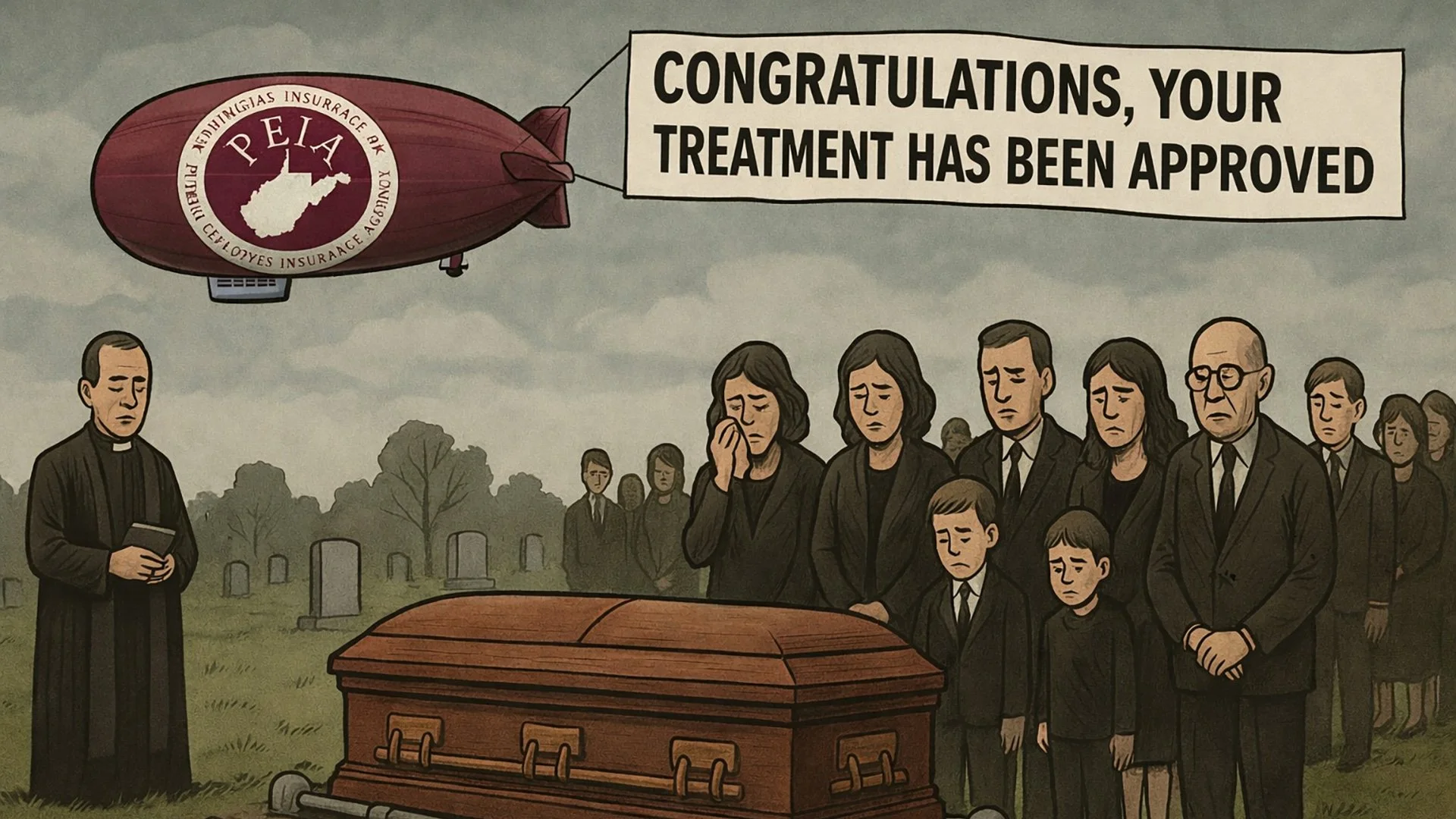
Prior authorization does exactly what it gets paid to do.
That sentence sounds clinical, even detached, which helps. It forces a more useful question than outrage ever will. What incentives produce a system where a man can secure approval for a treatment only after public pressure, then lose access to it because the delay made him ineligible?
The answer sits in plain view. Insurers earn returns by managing risk and controlling cost. Time functions as a cost control tool. Delay screens demand. Denial shifts liability. Every additional step between a physician’s order and a delivered intervention creates friction that reduces utilization. In a system where high cost care drives the largest financial exposure, friction becomes strategy.
The case of Eric Tennant in West Virginia offers a clean example because it strips away abstraction. His physicians recommended histotripsy, a noninvasive cancer treatment priced around $50,000. The state plan denied coverage multiple times, labeling the treatment experimental. His family appealed with records and expert input. The plan reversed course only after media inquiry. By then, his condition had deteriorated to the point where he no longer qualified for the procedure. He died months later.
The system did not fail. It executed its logic.
The new West Virginia law attempts to correct one narrow part of that logic. If a plan approves a course of treatment, patients can pursue an alternative of equal or lower cost without restarting authorization. The governor framed it as common sense. The bill sponsor called it rational. Both statements hold up on their own terms. If a payer accepts a certain level of financial exposure, then blocking a cheaper alternative adds administrative cost without reducing risk.
The law also carries a projected cost of $13,000,000 per year for the state plan. That number matters. It explains why the system behaved the way it did before the law and why similar reforms move slowly.
To understand why prior authorization persists, you have to follow three flows at once. Money, risk, and time.
Start with money. Health plans operate on thin margins relative to total spend. A one percent change in utilization can translate into tens or hundreds of millions of dollars depending on the population size. West Virginia’s Public Employees Insurance Agency covers about 215,000 people. A $13,000,000 annual increase equals roughly $60 per member per year. That figure might sound modest, but in aggregate it pressures premiums, employer contributions, and state budgets. Plans respond by tightening controls elsewhere.
Now track risk. Insurers carry actuarial responsibility for covered populations. They price premiums based on expected utilization patterns. New therapies introduce uncertainty. Even when clinical evidence shows promise, variation in outcomes creates exposure. Labeling a treatment experimental allows the plan to defer that risk until evidence stabilizes or pricing adjusts. That decision protects the balance sheet even if it frustrates patients and clinicians.
Finally, time. Time operates as both filter and defense. Each additional review step reduces the number of completed interventions. Some patients improve, some decline, some abandon care due to administrative fatigue. From a financial perspective, all three outcomes reduce near term spend. Time also shifts accountability. A denial on day one looks different from a denial on day thirty after multiple appeals. The process itself becomes part of the decision.
When those three flows align, prior authorization becomes predictable. Plans will defend it as a safety mechanism and cost control. They will cite data showing that most requests receive approval quickly. Industry groups argue that the process prevents unnecessary care and protects patients from harm.
Those claims deserve a fair reading. Medicine does produce overuse. Financial incentives on the provider side can drive unnecessary procedures. A system without utilization controls would increase costs and expose patients to interventions with limited benefit. Prior authorization, in theory, introduces a checkpoint.
The problem sits in how the checkpoint operates in practice.
Denials and delays concentrate in high cost, time sensitive care. That pattern reflects rational prioritization from the payer’s perspective. It also creates the highest clinical risk. Cancer care, advanced imaging, specialty drugs, and novel therapies all fall into this category. The patients who encounter the most friction also face the greatest consequence from delay.
That tension defines the current moment. States across the country have introduced or passed laws to constrain prior authorization. At least 48 states have some form of regulation on the books. Many have implemented gold card programs that exempt physicians with high approval rates. Others impose response deadlines or restrict retrospective denials. A new set of laws targets the use of artificial intelligence in decision making.
These efforts share a common structure. They adjust the edges of the process without changing the core incentive. They reduce friction for certain categories of providers or services. They set time limits. They create exceptions. Each intervention improves conditions at the margin. None remove the underlying financial logic that rewards delay.
The West Virginia law fits this pattern. It eliminates redundant approvals when a cheaper alternative exists. It does not address how long initial approvals take. It does not change how plans classify treatments as experimental. It does not alter the economic benefit of delaying high cost care.
That does not diminish its value. Incremental reforms can produce real gains. A patient who avoids a second authorization cycle for a lower cost treatment experiences a tangible benefit. Clinicians recover time otherwise spent on administrative work. The plan reduces processing overhead. All three outcomes align with efficiency.
The question remains whether incremental change can keep pace with the scale of the problem.
Consider the industry pledge announced last year in which major insurers committed to reducing prior authorization burden, improving communication, and accelerating decisions. The commitments sound reasonable. The enforcement mechanism remains unclear. Without external pressure or financial incentives tied to compliance, voluntary reforms tend to drift.
Skepticism from patients and clinicians follows from experience. The system has promised simplification for decades. Administrative complexity has increased, not decreased. Electronic records digitized paperwork but did not eliminate it. Each new control layer adds compliance cost that ultimately flows back into premiums or provider overhead.
To move beyond incrementalism, reform has to change the payoff structure.
One path involves shifting from transaction level authorization to population level accountability. Value based contracts attempt this by tying reimbursement to outcomes rather than volume. In theory, if a provider bears financial risk for a patient population, the need for case by case authorization declines. The provider has an incentive to deliver appropriate care without overuse.
In practice, these models have struggled with scale and measurement. Defining outcomes, attributing patients, and managing risk across diverse populations introduces complexity. Many providers lack the capital or infrastructure to absorb downside risk. Payers maintain authorization processes as a backstop.
Another path focuses on transparency and audit rather than preapproval. Instead of requiring permission before care, plans could review patterns after the fact and penalize outliers. This approach shifts time from front end delay to back end accountability. It allows patients to receive care without waiting while preserving a mechanism to control overuse.
The challenge lies in political tolerance for retrospective enforcement. Denying payment after a service occurs generates conflict with providers and patients. It also requires robust data systems and clear standards to avoid arbitrary decisions.
A third path targets the classification of treatments. Many denials hinge on labels such as experimental or investigational. These categories often lag behind emerging evidence. Independent review bodies with transparent criteria could update classifications more rapidly, reducing the gray zone where plans can deny coverage based on outdated definitions.
This approach raises questions about governance and funding. Who sets the standards. How often do they update. How do they manage conflicts of interest. These questions do not have simple answers, but they point toward a more dynamic system than the current patchwork.
Artificial intelligence introduces both risk and opportunity. Plans already deploy algorithms to process authorization requests at scale. New state laws seek to regulate these tools. The concern centers on automation of denial without adequate clinical oversight. If an algorithm can reject thousands of requests in seconds, it amplifies the time based cost control dynamic.
At the same time, AI could support faster approvals if aligned with the right incentives. A system that prioritizes rapid authorization for evidence based care could reduce administrative burden and improve outcomes. The technology itself remains neutral. The incentive structure determines its use.
The lived experience of patients provides a reality check on all of this. During my own treatment decades ago, my father managed the administrative side. He absorbed the calls, the letters, the negotiations. I focused on survival. Many patients today do not have that buffer. They navigate a system that demands persistence during the most vulnerable period of their lives.
That experience aligns with what Becky Tennant described when she told lawmakers that families should not have to appeal repeatedly or go public to access time sensitive care. Her statement reflects a structural truth. The current system rewards escalation. Media attention can trigger reversals. Political pressure can accelerate decisions. These pathways exist outside the formal process. They create inequity because access to attention varies.
Insurers will respond that they process millions of claims and that outlier cases do not represent the whole. That defense holds at a statistical level. It fails at a system design level. When outliers cluster in high stakes situations such as advanced cancer care, they reveal where the system concentrates risk.
The economic argument for reform does not require moral framing. Delayed care can increase downstream cost. A patient who loses eligibility for a less invasive procedure may require more expensive treatment later. Hospitalizations rise. Complications increase. End of life care costs escalate. The initial denial saves money in the short term. The total cost over the episode of care can increase.
Aligning incentives around total cost rather than immediate spend would change decision making. Plans would have a financial reason to approve timely interventions that reduce long term expense. That shift requires integrated data and payment models that track outcomes across time, not just individual transactions.
Employers and public purchasers hold leverage here. They fund a significant portion of the system through premiums and taxes. They can demand contracts that tie reimbursement to total cost of care and patient outcomes. They can require reporting on authorization timelines and denial rates. They can reward plans that demonstrate efficiency without excessive administrative burden.
Regulators also play a role. State level action has increased because federal reform has stalled. States can set minimum standards for response times, transparency, and appeals. They can enforce penalties for noncompliance. They can experiment with alternative models such as the West Virginia law.
Investors and capital markets influence behavior as well. Publicly traded insurers respond to earnings expectations. Private equity and venture capital shape the growth of companies that build tools for utilization management. Capital allocation signals which strategies receive support. If markets reward companies that reduce administrative cost while maintaining outcomes, behavior will follow.
The current system claims to protect patients while controlling cost. It achieves cost control through friction and defers patient protection to appeals and exceptions. That imbalance produces predictable outcomes. Patients who require complex, expensive care encounter delay. Some navigate through it. Some do not.
The West Virginia law represents a targeted correction. It removes one layer of redundant approval. It acknowledges that once a plan accepts a certain level of cost, blocking a cheaper alternative lacks logic. It will cost the plan money. It will likely reduce administrative burden. It will help some patients.
It will not change the fundamental equation.
As long as time reduces cost, systems will use time. As long as risk sits with payers at the transaction level, they will manage each transaction aggressively. As long as accountability for outcomes remains diffuse, no single actor will bear the full cost of delay.
Realignment requires shifting incentives so that timely, appropriate care becomes the financially rational choice. That means tying payment to outcomes over time. It means reducing reliance on preapproval and increasing accountability after care. It means updating evidence standards faster than the current cycle. It means using technology to accelerate approvals rather than automate denials.
None of these changes require dismantling markets. They require redesigning how markets price risk and reward behavior.
The alternative continues the current pattern. Incremental reforms at the state level. Voluntary pledges from industry. Persistent administrative burden for clinicians. Delays concentrated in high stakes care. Public attention on individual cases that reveal systemic dynamics.
The system will keep doing what it gets paid to do. The question now sits with those who control the incentives.