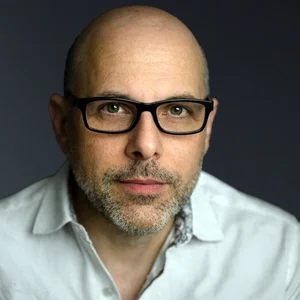
52 Years Old and Still Here
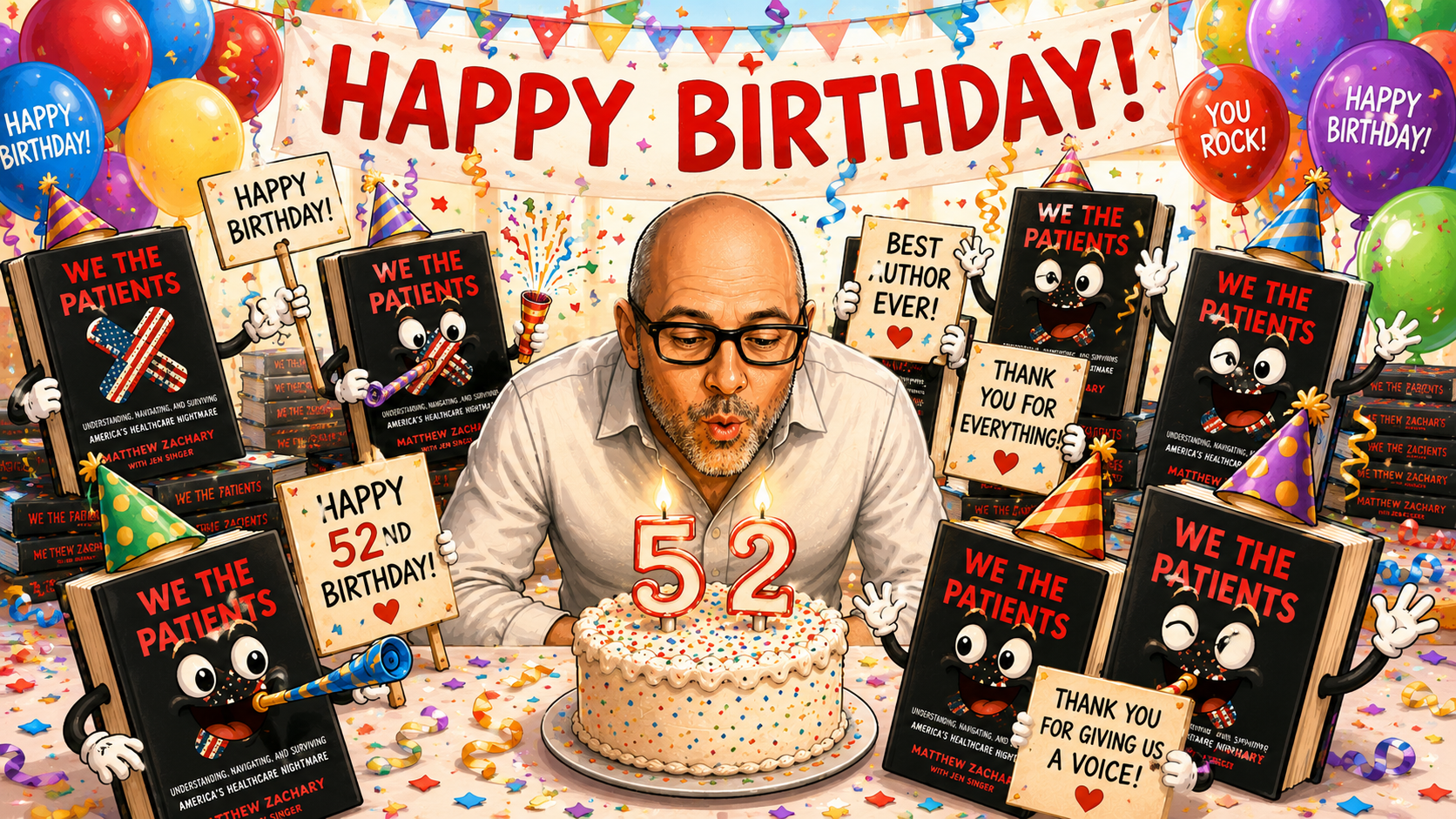
At 52, birthdays stop feeling symbolic and start feeling statistical. You begin measuring time differently. You think less about ambition and more about consequence. You audit what survived, what compounded, what produced meaning, and what quietly consumed years you never expected to lose. For me, that audit always begins in 1996, when brain cancer arrived at 21 years old and permanently altered the trajectory of my life before adulthood had even properly started.
Cancer introduced me to the American healthcare system through the least theoretical route imaginable. I did not enter as a policy observer, journalist, entrepreneur, or advocate. I entered as a terrified young patient whose future suddenly depended on institutions I barely understood. Radiation damaged my hands. Steroids altered my body. Fatigue rewired my relationship with time. My father spent his days fighting insurance companies, billing departments, and administrative systems that already understood a brutal economic truth most Americans only discover once illness enters the room. Sick people have very little leverage.
That experience shaped the next 30 years of my life far more profoundly than the tumor itself.
People love asking survivors what cancer taught them about life, usually because they expect some variation of gratitude, resilience, or spiritual clarity wrapped in language suitable for a hospital fundraiser. What cancer actually taught me involved incentives. It taught me how institutions behave when money, regulation, risk transfer, and human vulnerability collide inside a fragmented marketplace masquerading as coordinated care. It taught me that most dysfunction inside healthcare persists because somebody benefits financially from the arrangement remaining complicated. It taught me that administrative friction functions as a business model. It taught me that patients perform enormous amounts of unpaid labor simply trying to survive systems that claim to serve them.
Most importantly, it taught me how to see patterns.
That ability became the foundation for everything that followed. My career. My media work. My advocacy. My skepticism toward healthcare marketing. My refusal to romanticize institutions that routinely externalize harm onto patients while branding themselves as compassionate innovators. Over time, those observations accumulated into something much larger than survivorship alone. They became institutional memory. And eventually, after 3 decades of living long enough to watch the same structural failures repeat themselves under different branding cycles, that institutional memory became a book.
We the Patients: Understanding, Navigating, and Surviving America’s Healthcare Nightmare exists because I stayed alive long enough to synthesize what I witnessed.
That distinction matters deeply to me because survivorship culture often flattens experience into sentimentality. American culture loves clean narratives. Ring the bell. Beat the odds. Return to normal. Everybody hugs while some emotionally manipulative piano music plays softly in the background like a pharmaceutical commercial directed by somebody who still thinks thirtysomethings aspire to live inside a Pottery Barn catalog. Real survivorship rarely works that way. The longer you remain alive after diagnosis, the more operational knowledge you accumulate about how healthcare actually functions beyond the marketing language.
You start noticing how financial toxicity compounds quietly over decades. You watch employers shift costs onto workers while describing the process as consumer empowerment. You observe insurers refining utilization management systems sophisticated enough to exhaust patients without technically denying care outright. You watch hospitals consolidate regional market power while patient access narrows. You watch private equity acquire physician groups, oncology practices, emergency staffing companies, and hospice infrastructure because investors correctly identified healthcare fragmentation as a lucrative extraction opportunity. You realize the system behaves rationally within its own incentive structure even while patients experience the outcomes as chaos.
The book emerged from that realization.
I did not write it for catharsis. I wrote it because almost nobody translated the healthcare system into plain human English for intelligent readers capable of understanding complexity without being buried beneath jargon, ideology, or institutional self protection. Policy experts speak one language. Patients speak another. Executives communicate through earnings calls and shareholder obligations. Physicians absorb operational burnout while regulators move at the pace of election cycles and procurement committees. Meanwhile ordinary Americans struggle to understand why navigating healthcare increasingly feels like managing a hostile subscription service designed by Kafka and staffed by the cable company from 1987.
That disconnect creates enormous vulnerability.
Healthcare complexity weakens public leverage because complexity obscures accountability. Every layer generates revenue for somebody while patients absorb administrative burden without compensation. Americans spend billions of unpaid hours coordinating appointments, correcting billing errors, appealing denials, comparing formularies, chasing referrals, transferring records, and repeatedly explaining their medical history across disconnected systems that still barely communicate with one another despite trillions spent digitizing healthcare infrastructure. The economy treats that labor as invisible because patients historically lacked institutional power capable of quantifying the cost.
The book names that cost directly.
It also challenges the lazy assumption that healthcare dysfunction exists primarily because bad people run the system. Most institutions behave rationally according to the incentives surrounding them. Insurers manage utilization because uncontrolled risk destroys profitability. Hospitals pursue consolidation because reimbursement compression threatens margins. Employers shift financial exposure onto workers because healthcare inflation destabilizes compensation models. Pharmaceutical companies maximize pricing leverage because shareholder expectations reward growth. Every institution responds logically inside the architecture we collectively built.
Patients still absorb the consequences.
That distinction changes the conversation because moral outrage alone rarely realigns trillion dollar industries. Incentives do. Once people understand the underlying mechanics driving institutional behavior, healthcare becomes easier to decode. You stop interpreting dysfunction as accidental incompetence and start recognizing predictable economic patterns. That clarity gives patients leverage. It also explains why the book resonates across groups that rarely agree on anything else. Patients recognize themselves in the lived experience. Clinicians recognize operational truth. Executives recognize the economic analysis. Policymakers recognize structural realism. Investors recognize long term sustainability risks hiding underneath short term profitability metrics.
The book functions as translation infrastructure between worlds that typically talk past each other.
Personally, though, it represents something even more significant. For years I minimized my own story because survivorship often conditions people to apologize for remaining alive. You deflect attention. You credit everyone else first. You convince yourself the work deserves acknowledgment while the person doing the work should remain secondary. Some of that instinct comes from humility. Some comes from survivor’s guilt. Some comes from spending decades navigating systems that train patients to remain grateful for access while quietly accepting dysfunction as inevitable.
Then one day you wake up at 52 years old preparing to head to ASCO while your 16 year old twins mock your music taste and your book sits on shelves explaining American healthcare to strangers across the country. At some point you either continue apologizing for surviving or you accept responsibility for using the extra time effectively.
I finally chose the second option.
That shift changed something fundamental in me because I stopped viewing survival as the achievement itself. Survival created the opportunity. What came afterward became the actual work. The book represents 30 years of accumulated observation, frustration, pattern recognition, institutional memory, dark humor, professional experience, and lived consequence distilled into something durable enough to outlast social media cycles and quarterly attention spans. Books still matter because books create permanence. They travel into classrooms, boardrooms, policy discussions, waiting rooms, podcasts, conferences, and private conversations between people trying to understand systems larger than themselves. They survive algorithm changes. They circulate long after launch week ends.
At 52, permanence interests me more than visibility.
That perspective probably comes from spending half my life inside healthcare ecosystems where everybody chases immediacy while very few people build durable public understanding. Survivors possess enormous operational intelligence about how systems fail over time because we experience delayed compounding firsthand. We understand what fragmented care produces after decades. We understand how financial toxicity reshapes family decisions. We understand how administrative exhaustion changes human behavior under stress. We understand how isolation compounds medically, psychologically, and economically. Yet healthcare still underutilizes survivor expertise in meaningful operational roles because institutions continue privileging credentials over lived systems fluency.
The book challenges that imbalance directly.
And honestly, after 30 years inside this machine, I finally stopped feeling guilty about saying that out loud.
At 52, the greatest accomplishment no longer involves simply surviving brain cancer. The greatest accomplishment involves surviving long enough afterward to convert experience into something useful for other people. That became the book. The crown jewel byproduct of still being alive.