The Fact That Patients Need Survival Guides Is the Scandal
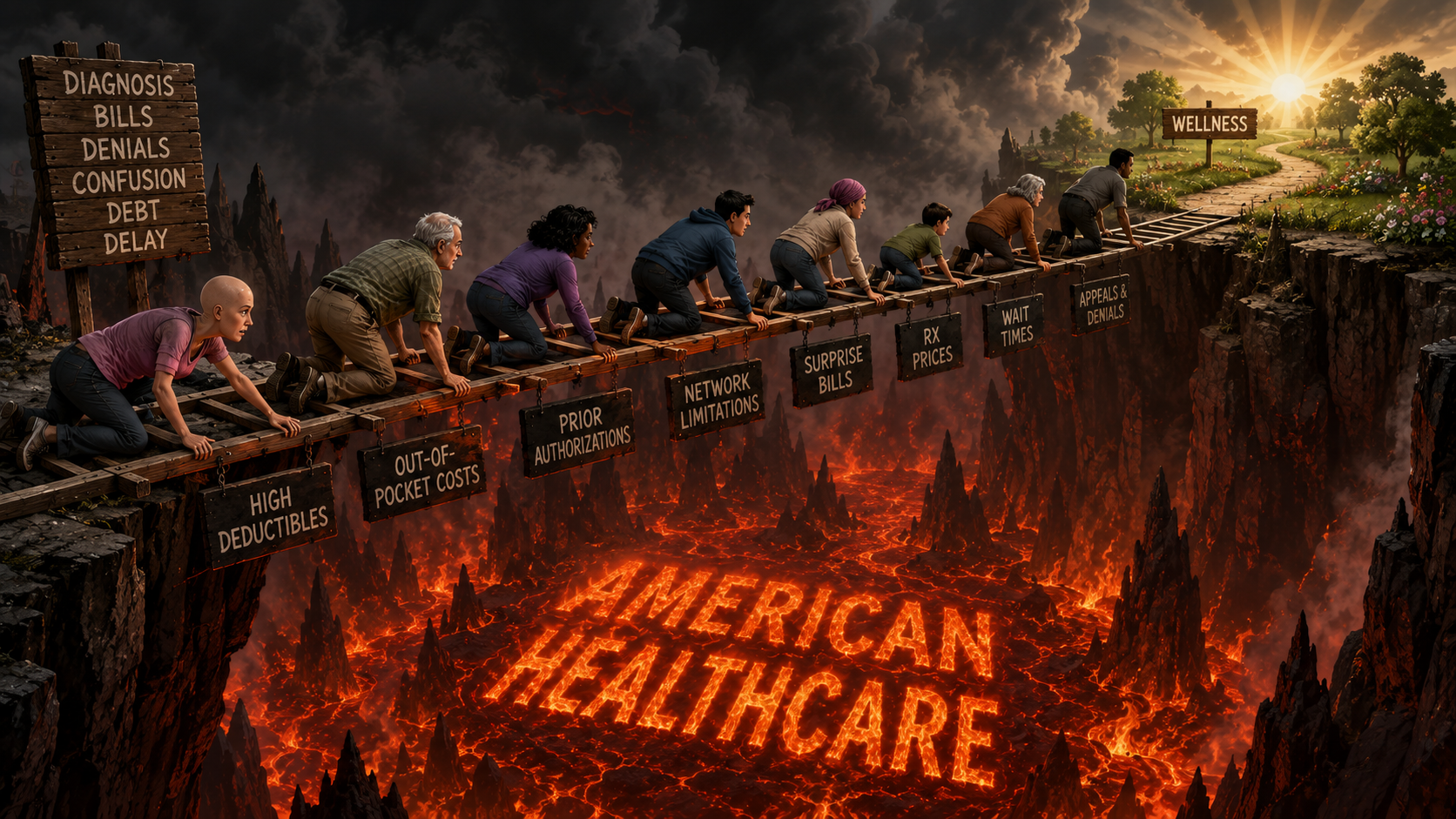
Another physician has written another book about how to survive American healthcare, and the most damning part is not the book itself. The book may be useful. It may be necessary. It may help people make better decisions in a system that has become intentionally bewildering to anyone without a law degree, a medical degree, an insurance background, a spreadsheet habit, and the emotional stamina of a hostage negotiator.
The damning part is that this is now a category. We have created an entire bookshelf for Americans who need to be taught how not to get crushed by the very system that exists, in theory, to care for them.
Dr. Terry Adirim’s forthcoming book, The Prepared Patient: Your Guide to Surviving the Health Care System, arrives with impeccable timing because the latest West Health-Gallup Affordability Index confirms what millions of families already know in their bones. For the first time since the index began, fewer than half of American adults are considered “Cost Secure,” meaning they can consistently afford quality care and have recently been able to pay for needed visits and prescriptions.
That number is now 49 percent. In one year, millions more Americans fell out of the category of people who can reliably afford healthcare. Not boutique medicine. Not elective indulgence. Healthcare.
For decades, Americans were told a comforting story about healthcare insecurity. It was framed as a problem of poverty, bad planning, poor choices, or lack of sophistication. Get a better job, get better insurance, read your benefits, choose your plan wisely, ask the right questions, and you would be protected.
That story has collapsed.
The Gallup data show that affordability problems now reach deep into the middle and upper-middle class, including households earning well into six figures. When even financially stable families can be destabilized by a diagnosis, a denial, a surprise bill, an uncovered medication, or an out-of-network technicality, the issue is no longer personal responsibility. It is structural rot.
Yet the standard response from healthcare leadership remains depressingly familiar. Patients need to understand their coverage. Patients need to learn how to navigate. Patients need to ask better questions. Patients need to prepare, advocate, appeal, compare, document, escalate, negotiate, and persist.
The language sounds benevolent, but beneath it sits a brutal transfer of responsibility. Every institutional failure becomes a patient homework assignment. Every administrative obstacle becomes an opportunity for “empowerment.” Every act of corporate and bureaucratic cruelty gets softened into a teachable moment.
This is where the entire conversation needs to be turned on its head.
Patient education can be valuable, but it is not reform. A checklist is not justice. A guidebook is not accountability. Teaching people how to survive a maze does not excuse the people who keep building mazes around sick bodies and scared families.
At some point, we have to stop applauding Americans for becoming better navigators and start asking why navigation became a prerequisite for receiving care in the first place.
Nobody would tolerate this logic anywhere else. If an airline required passengers to study aviation policy before boarding, dispute hidden fees after landing, and appeal denied luggage claims through a six-week review process, we would not celebrate “prepared passengers.”
We would regulate the airline.
If a bank forced customers to become amateur forensic accountants simply to access their own money, we would not publish a cheerful guide to checking-account resilience. We would demand investigations, penalties, and reform. Healthcare, somehow, continues to receive an exemption from standards that would be unacceptable in every other major sector of American life.
The people most harmed by this arrangement are often the least able to carry the extra burden. The newly diagnosed patient is not sitting around waiting for a masterclass in prior authorization. The caregiver managing a child’s complex condition is not looking for another binder.
The woman with metastatic breast cancer does not need a lecture on persistence while she is vomiting from treatment and trying to keep her job. The older adult on Medicare, the person with depression, the patient with a compromised immune system, the family living paycheck to paycheck, and the supposedly “comfortable” household one medical crisis away from financial freefall are all being asked to perform unpaid administrative labor created by the system’s own design.
That is not empowerment.
That is abandonment with better branding.
The healthcare industry has become very good at taking words that should belong to patients and laundering them into institutional cover. “Navigation” sounds compassionate until you admit that it exists because the terrain is hostile. “Advocacy” sounds noble until you acknowledge that people are being forced to fight for care they should have received without combat. “Preparedness” sounds responsible until it becomes clear that we are asking Americans to brace for impact instead of preventing the crash.
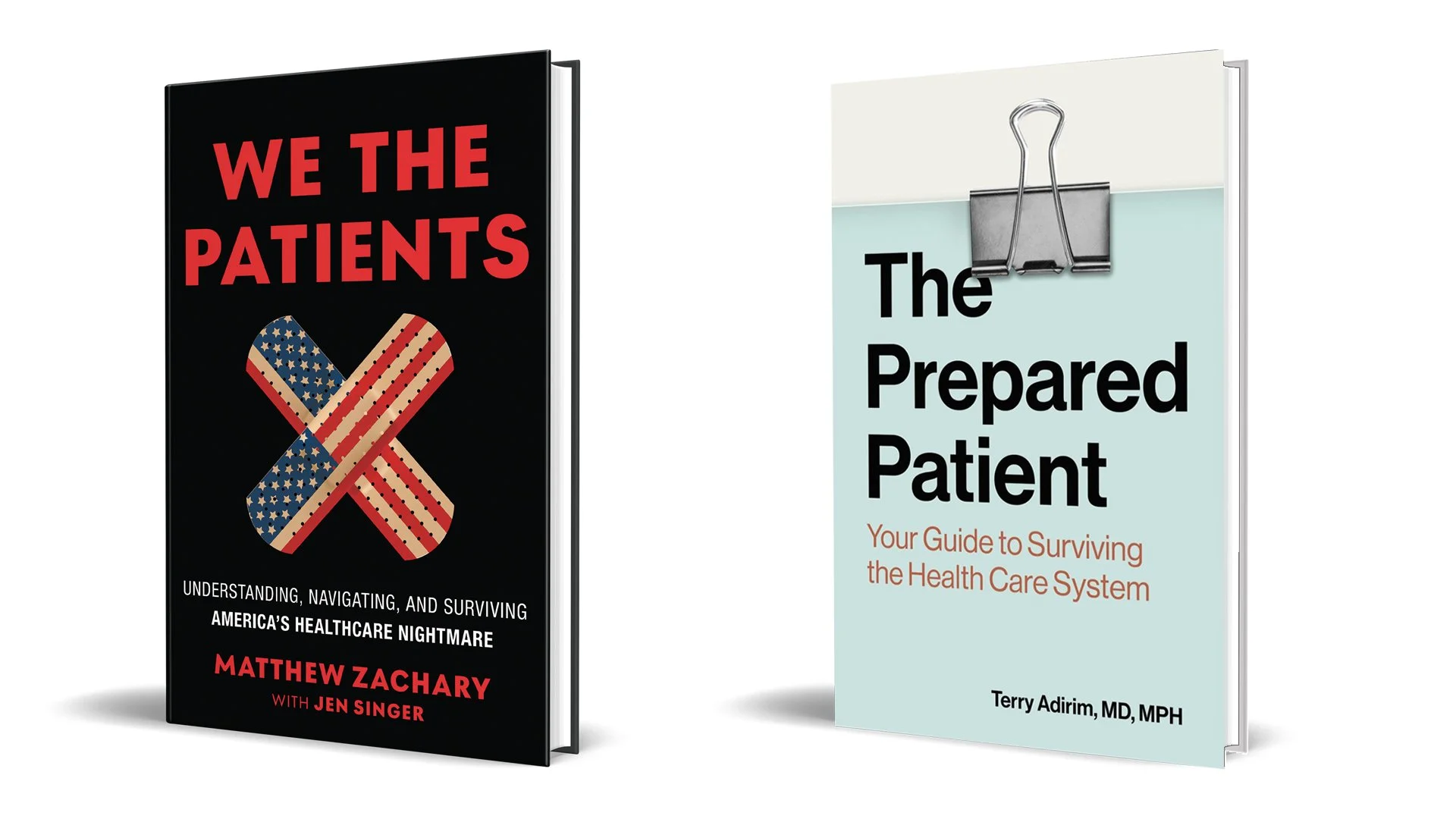
This is where my own book, We the Patients: Understanding, Navigating, and Surviving America’s Healthcare Nightmare, enters the conversation from a different direction.
I did not write it from inside the command center. I wrote it from the blast radius. I wrote it as someone who has lived inside the consequences of American healthcare for thirty years, not as an abstraction, not as a policy exercise, and not as a consumer experience, but as a patient whose life was rerouted by diagnosis, treatment, late effects, denials, costs, confusion, bureaucracy, and the endless indignities we have trained people to politely endure.
The overlap between Dr. Adirim’s book and mine is real, but the posture is different. Her book appears to help people understand the machinery as it exists. Mine asks why the machinery is allowed to exist this way at all. Both books are responding to the same national emergency, but they stand on opposite sides of the glass.
One comes from a physician executive who has seen the system from the inside. Mine comes from a patient advocate who has spent decades watching people get ground down by that system and then blamed for not navigating it well enough.
Together, they form a bleak kind of duet: one book helps patients survive the room, while the other asks who locked the door.
The deeper tragedy is that neither book should have to exist.
A functioning healthcare system would not require sick people to become insurance experts. It would not require caregivers to become claims analysts. It would not require families to master billing codes, formularies, appeal letters, network adequacy, charity care policies, specialty pharmacy rules, and the dark arts of getting a human being on the phone. It would not produce an entire economy of advocates, navigators, consultants, coaches, webinars, toolkits, and survival manuals simply to compensate for institutional malfeasance.
This is the indictment policymakers and industry leaders keep trying to avoid. America has not merely created an expensive healthcare system. It has created a system in which complexity is profitable, opacity is tolerated, delay is weaponized, and the consequences are pushed onto patients at the worst moments of their lives. Government has failed to protect people. Industry has failed to restrain itself. Institutions have failed to simplify the experience. The result is a country where patients are told to be resilient while insurers, hospitals, pharmaceutical companies, employers, vendors, and elected officials continue feeding from the same trough.
So yes, patients should read useful books. They should learn what they can, protect themselves where possible, and enter the system with eyes open. But we should never confuse survival strategies with solutions. The fact that Americans need these books is not a victory for patient empowerment. It is evidence of systemic failure in hardcover. Every patient survival guide on the shelf should be treated as an exhibit in a national malpractice case against a healthcare system that has become too expensive to afford, too complex to understand, too adversarial to trust, and too politically protected to reform without organized civic pressure.
The real scandal is not that another doctor wrote another guide to surviving healthcare. The scandal is that she had to. The scandal is that I had to. The scandal is that millions of Americans will recognize both books not as warnings from the edge, but as field manuals for the lives they are already living.